
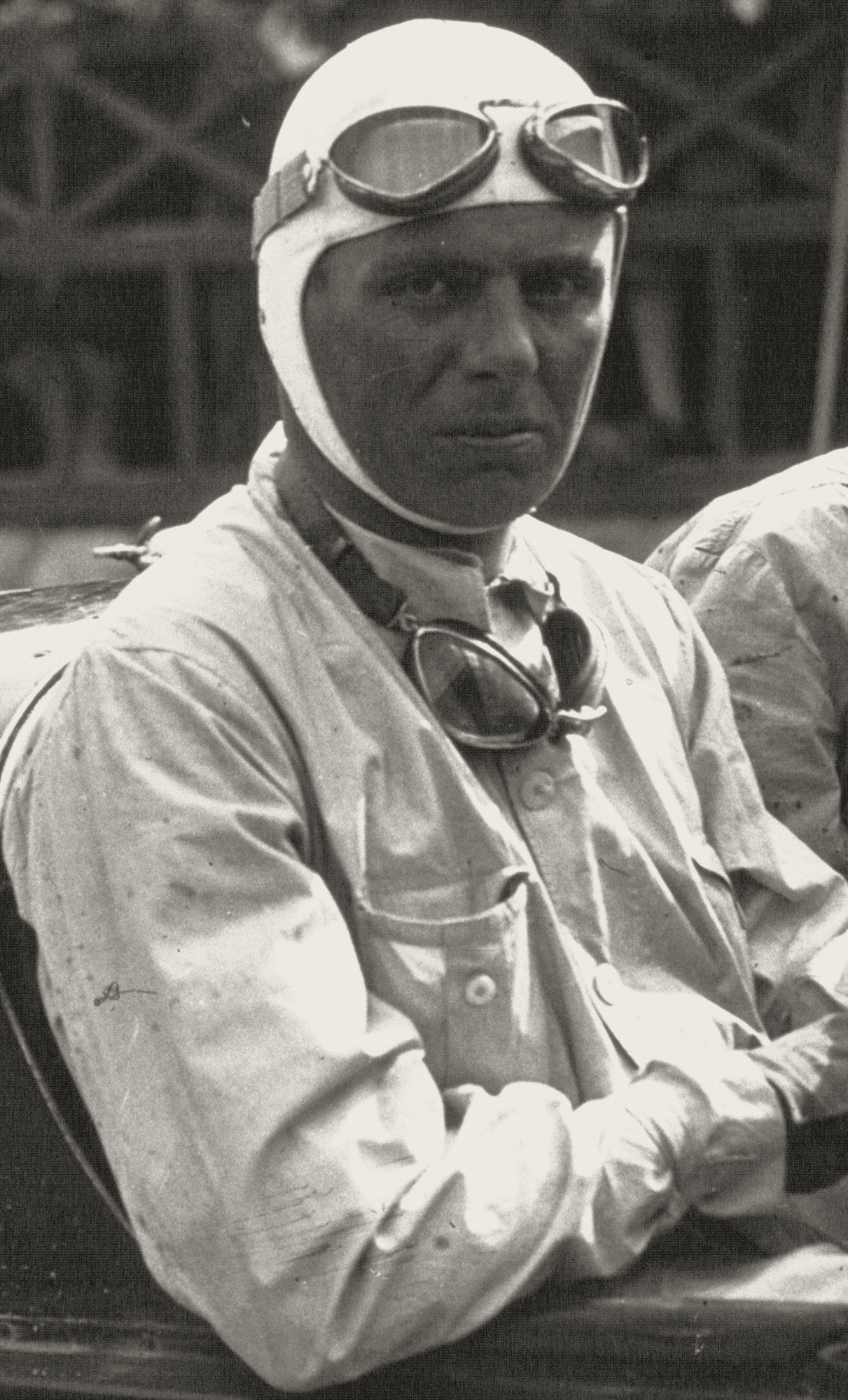
The year Varzi was killed in practice for the Swiss Grand Prix at Bremgarten, Bern, on 1 July, in wet conditions.
Two schools
Varzi, born in Galliate in 1904 to a textile manufacturing family, was the calculating counterpart to Tazio Nuvolari's improvisation.
Contemporaries described a driver who found the correct line and repeated it with almost no variation, and who was notably undemonstrative.
The record
Three Targa Florio wins, the 1934 Mille Miglia, the Tunis Grand Prix three times, and grand prix victories with Alfa Romeo, Maserati, Bugatti and Auto Union.
The 1930 Mille Miglia
The most repeated story of the rivalry has Nuvolari trailing Varzi at night with his lights extinguished before overtaking him close to the finish.
The account is disputed in its details and Varzi always regarded it as a trick rather than a defeat on pace.
The lost years
From the mid-1930s Varzi became addicted to morphine. His performances collapsed and he effectively left top-level competition by 1937.
The return
He recovered after the Second World War and won again, including the 1946 Turin Grand Prix, and raced with great success in Argentina, where he became a major public figure.
Fangio
The Automovil Club Argentino established a driving school named after Varzi. Juan Manuel Fangio was among those it supported in coming to Europe.
Why it goes on a wall
Because the sport remembers the man who drove like a storm, and the man who drove like a proof was just as fast and considerably harder to explain.
Achille Varzi.