
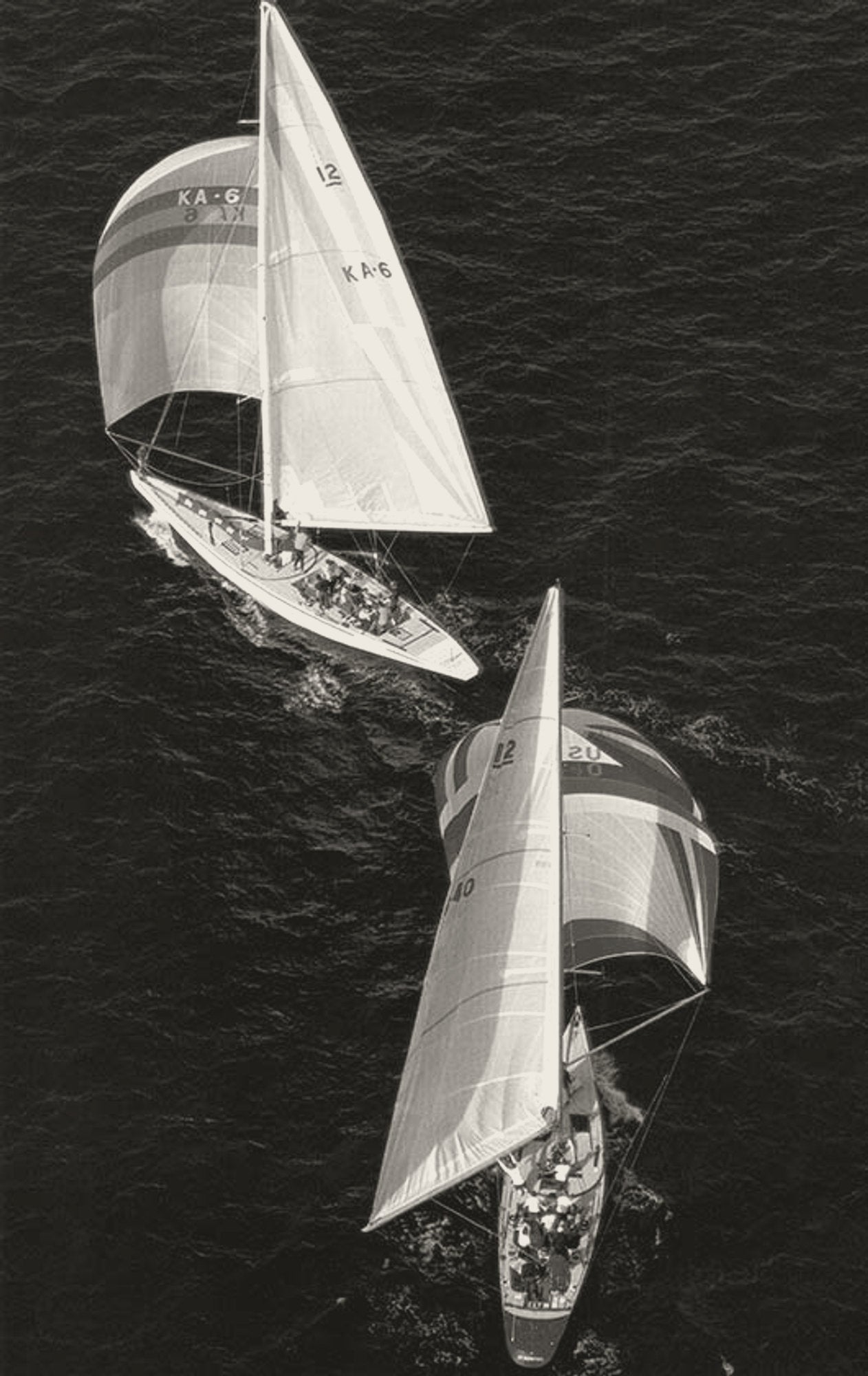
In 1851 a schooner named America sailed to England and beat a fleet of British yachts around the Isle of Wight. The cup she won was given to the New York Yacht Club under a deed of gift, to be held as a perpetual challenge trophy.
The club then held it for a hundred and thirty-two years.
Twenty-four separate challenges were mounted, by Britain, Canada, Australia, and by a series of very wealthy men who wanted it badly. Every single one failed. The Irish tea merchant Thomas Lipton spent thirty years and an enormous fortune on five attempts and never won a match series. Between 1851 and 1983 the America's Cup did not leave a building in Manhattan.
There is no other streak like it. Not in football, not in tennis, not anywhere. The nearest comparisons are dynasties measured in decades. This was measured in generations, and the reason it lasted was not only that the Americans sailed well. The defender wrote the rules, chose the venue, and set the terms of the match. The system was designed to hold.

Bond
Alan Bond was a sign-writer from Perth who became a property developer and then a very large and eventually notorious businessman. He challenged for the America's Cup in 1974, in 1977 and in 1980. He was beaten each time.
Most people would have stopped. Bond's response to losing three times was to conclude that the boat needed to be fundamentally different rather than incrementally better, and to fund a design programme aimed at finding an advantage the defenders could not match inside one summer.
He was, by every account, an extremely difficult man and a spectacular self-promoter, and a decade later he was at the centre of one of the largest corporate collapses in Australian history and went to prison for fraud. None of that was known in 1983, and none of it changes what the boat did.
Lexcen, and the thing underneath
Ben Lexcen designed it. He had left school at fourteen, taught himself, and built a reputation in Australian sailing as an intuitive and slightly chaotic designer of fast boats.
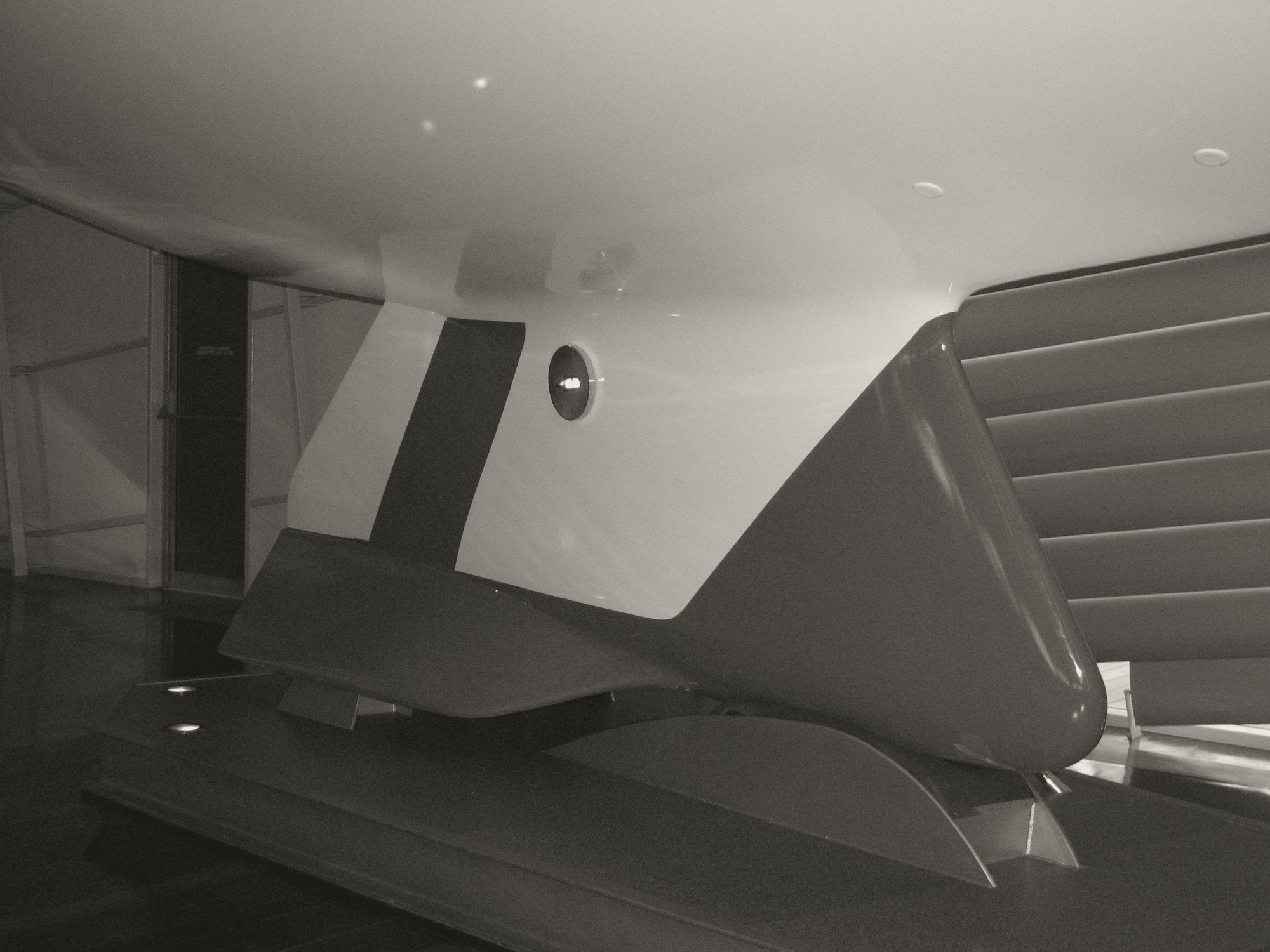
The keel he drew for Australia II was upside down by the standards of the day: narrow at the hull, wider at the bottom, with two horizontal winglets at the base pointing out and slightly down. The effect was to put the ballast lower, which is good, and to reduce the sideways slip that a sailing boat suffers when going upwind, which is better. The boat could turn more tightly and lost less ground in a tacking duel, which in match racing is close to everything.
Lexcen had done tank testing at the Netherlands Ship Model Basin at Wageningen, with Dutch engineers involved. This became the legal battleground. The rules required the boat to be designed by nationals of the challenging country. The New York Yacht Club argued that the keel was substantially Dutch work and that Australia II should therefore be disqualified. The challenge was rejected. The argument went on all summer and is still had in yacht clubs by people who were not born at the time.
Meanwhile the keel was kept under a green canvas skirt whenever the boat was lifted, guards were posted on the dock at Newport, and there were reports of divers in the water at night trying to get a look. The Australians leaned into it enthusiastically. Secrecy was worth more to them than the design was.
Seven races
The final series against Liberty, skippered by Dennis Conner, was the best of seven, off Newport, Rhode Island, in September 1983.
Australia II lost the first race. It lost the second. It won the third. It lost the fourth. At three races to one down in a first-to-four series, no challenger had ever recovered, and there was no particular reason to think this one would.
It won the fifth. It won the sixth. That took it to a deciding race, the first in the history of the event.
Race seven was on the twenty-sixth of September. Liberty led at the fourth mark. Australia II went the other way up the run, found more wind, took the lead, and held it. The winning margin was forty-one seconds.
Two in the morning
In Perth it was the middle of the night and a very large number of people were awake.
Bob Hawke, who had become Prime Minister of Australia six months earlier, appeared on television in a jacket covered in green and gold and said that any boss who sacked a worker for not turning up that day was a bum. It is one of the most quoted sentences in modern Australian public life and it is quoted because it caught something accurately: this was a national event in a way that a yacht race has no business being.
The reasons for that are worth stating without sentiment. Australia in 1983 was a country with a long habit of measuring itself against Britain and America and finding the comparison unsatisfying. The America's Cup was the most exclusive trophy in the world, held by the most exclusive club in the world, and it had just been taken by a self-made man from Perth and a designer who left school at fourteen. That is a specific kind of satisfaction and it does not require an interest in sailing.
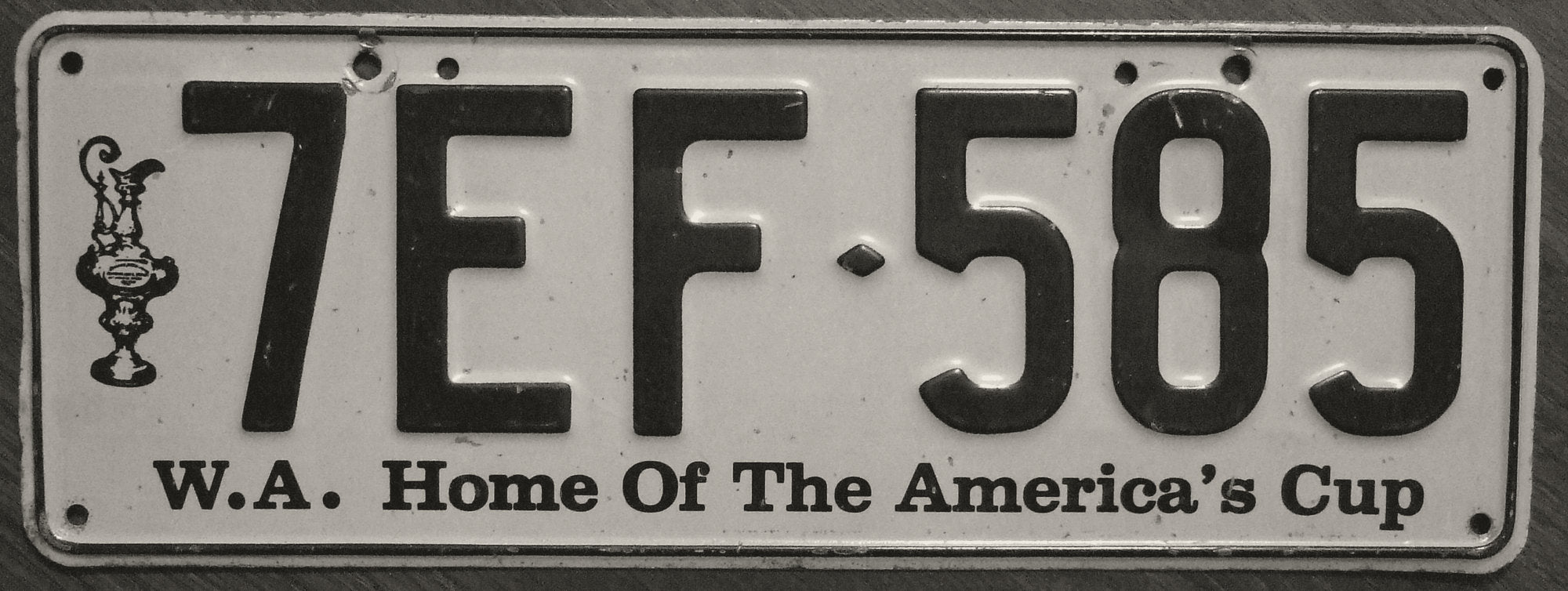
Western Australia put "Home of the America's Cup" on its number plates. One of them appears in this piece.
Conner, and the boats they were sailing
It is worth being fair to the man who lost, because he is usually treated as scenery in the Australian telling.
Dennis Conner was not a complacent inheritor of somebody else's streak. He was a ferociously prepared professional who had successfully defended the Cup in 1980 and who, in 1983, was sailing a boat that was simply slower than the one opposite. He worked out fairly early in the series that he could not win a straight speed contest and spent the rest of it trying to win tactically, which is why the thing went to seven races at all. A less able skipper in Liberty loses it four one.
The boats were twelve-metre yachts, a class designed under a rule that traded length against sail area and displacement so that superficially different hulls would race competitively. They were about twenty metres long, weighed around twenty-five tonnes, carried eleven crew and were, by any modern standard, extremely slow. A race took several hours. Television coverage of it required considerable optimism.
That is part of why 1983 mattered so much and why nothing since has matched it. The Cup was still a contest between two nearly identical objects, decided by small margins of design and seamanship, and the design margin that summer was a piece of metal that nobody was allowed to look at.
After
The rest is quicker and less happy.
Australia defended in 1987, off Fremantle, and lost. The winner was Dennis Conner, who had come back with a new boat and a new syndicate and took the Cup to the San Diego Yacht Club. The whole apparatus that Western Australia had built around hosting the event, the marinas and the hotels and the expectation, was left pointing at nothing.
Ben Lexcen died in 1988 of a heart attack. He was fifty-two.
Alan Bond's business empire came apart at the end of the decade. He was convicted of fraud and served time in prison. He died in 2015.
The winged keel itself was copied, refined, and then made irrelevant by successive rule changes and by a shift to entirely different classes of boat. Modern America's Cup racing is done in foiling catamarans that leave the water altogether and have nothing in common with a twelve-metre yacht beyond the name of the trophy.
What remains is the record: one hundred and thirty-two years, twenty-four defences, and then an afternoon off Rhode Island when it ended.
Two of the photographs here show the keel as it is now: the boat suspended on a plinth in a museum in Western Australia, lit from below, with the wings pointing out into an empty gallery. For one summer it was the most closely guarded object in sport, hidden under canvas with men posted to stop anyone looking. You can walk round it on a weekday afternoon and there is nobody else in the room.