
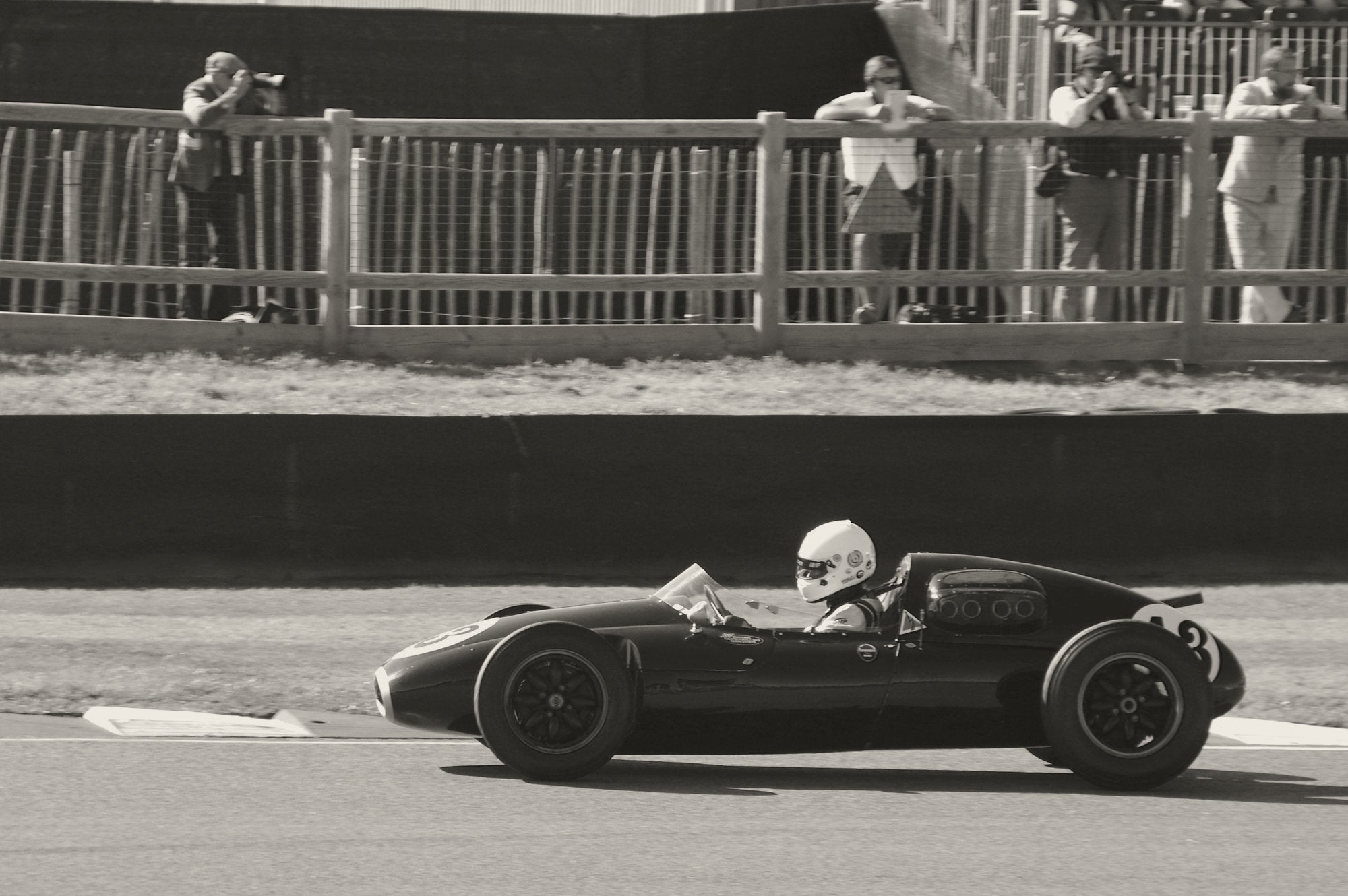
Coventry Climax made industrial engines. In the years after the war they developed a portable pump for fire brigades, powered by a small aluminium petrol engine that was designed above all to be light, because it had to be carried by hand to places a vehicle could not reach.
That engine, and the family of engines that grew out of it, went on to win the Formula One world championship.
It is worth pausing on that. The problem the designers were solving was how to get water onto a fire in a bombed street. The solution was a compact, low-weight, aluminium-block engine. The qualities that made it good at that turned out to be exactly the qualities that made it good at the other thing, and by the end of the 1950s a derivative of it was in the back of the fastest cars in the world.
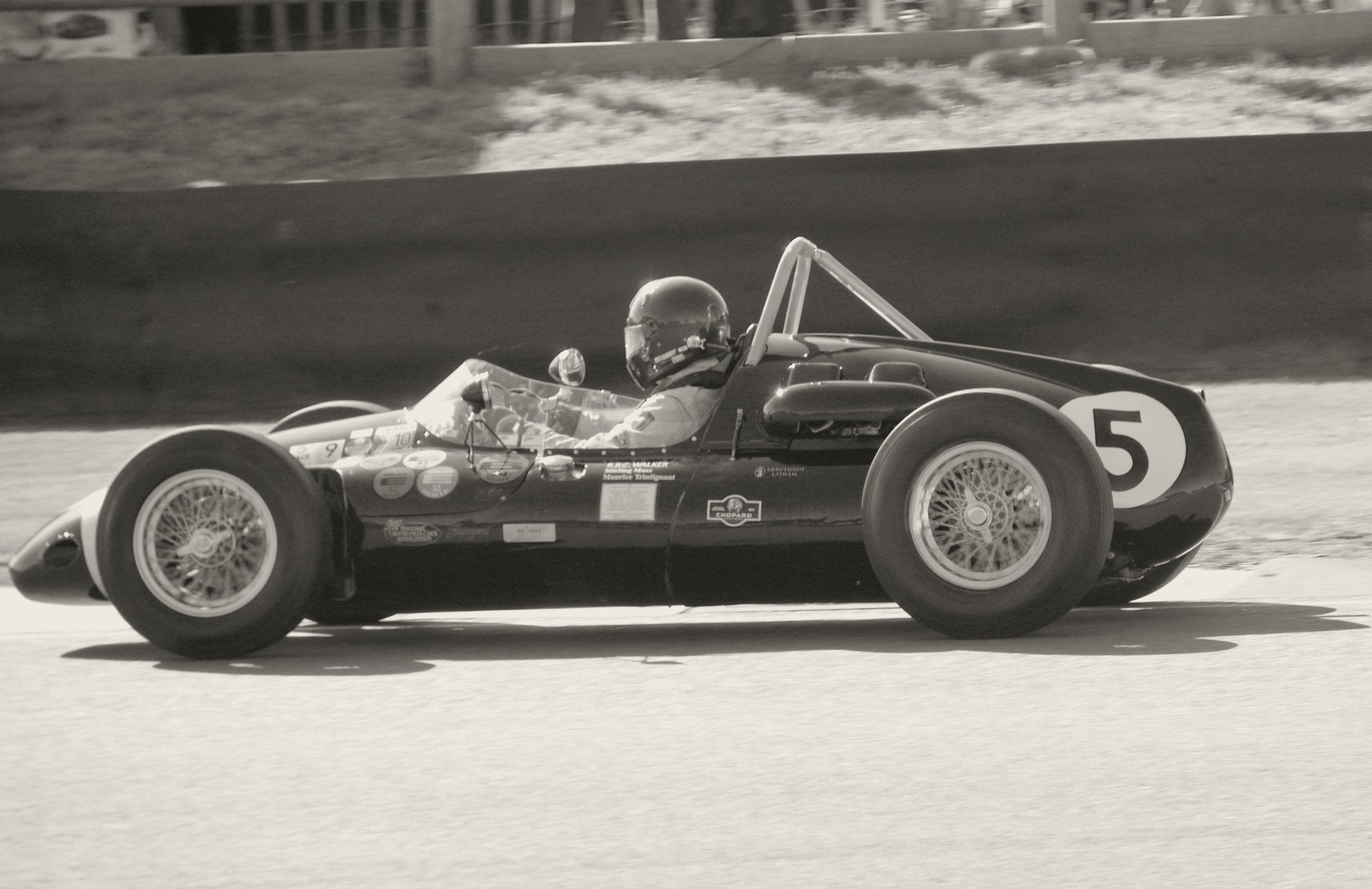
The garage on the Ewell Road
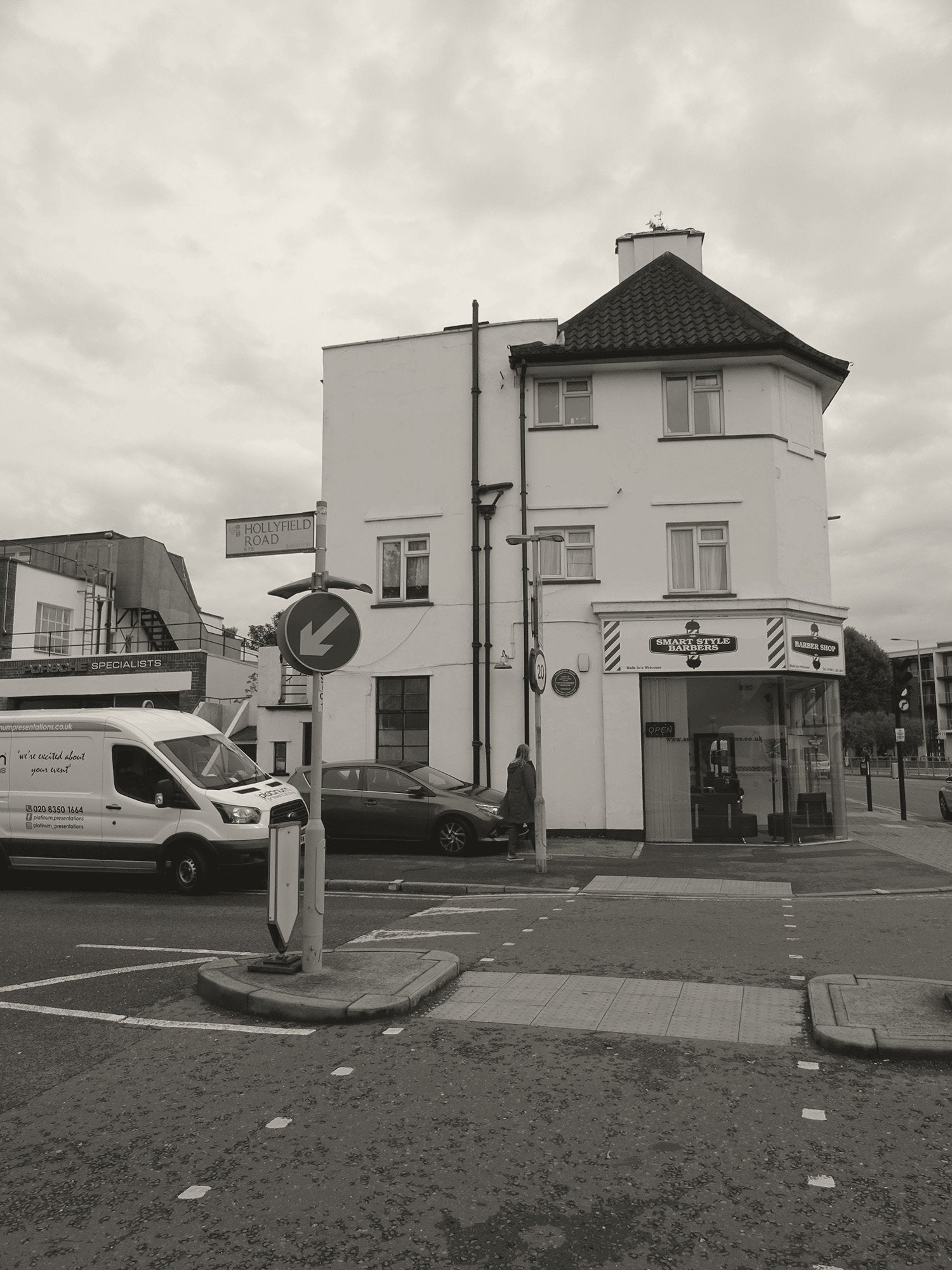
The Cooper Car Company operated from premises at 243 Ewell Road in Surbiton, which is a perfectly ordinary suburban road in south-west London. Charles Cooper had been a riding mechanic and ran a garage. His son John was a young man with a workshop, a welding torch and the postwar habit of making things out of whatever was available.
Their first cars were built for the 500cc formula, a cheap category invented so that people with no money could go motor racing. The recipe was a small chassis, parts from wrecked Fiats, and a single-cylinder motorcycle engine. A motorcycle engine transmits its power by chain over a short distance, so the sensible place to put it is directly behind the driver, driving the rear axle without a long propeller shaft running under the seat.
That was the whole of the reasoning. It was not a philosophy of weight distribution or polar moment of inertia. It was where the engine went, given the parts they had.
Why it was faster
Once the layout existed, its advantages became obvious to people who thought about them.
With the engine behind the driver there is no transmission shaft running the length of the car, so the driver can sit lower and the body can be smaller and narrower. Less frontal area means less drag. The mass is concentrated near the centre of the car rather than hung out at the nose, which makes it change direction more willingly. And the whole thing weighs less, which improves everything at once.
The established teams knew all of this was theoretically true. The reason nobody had done it was partly that front-engined cars had been winning for fifty years, and partly that a big powerful engine behind the driver creates cooling and handling problems that a small one does not. The Coopers came at it from underneath, with cars too small for the objections to apply, and by the time the objections did apply they had already solved them.
Enzo Ferrari's remark on the subject is quoted so often that it has worn smooth: the horse pulls the cart, it does not push it. He was building a rear-engined Formula One car within two years.
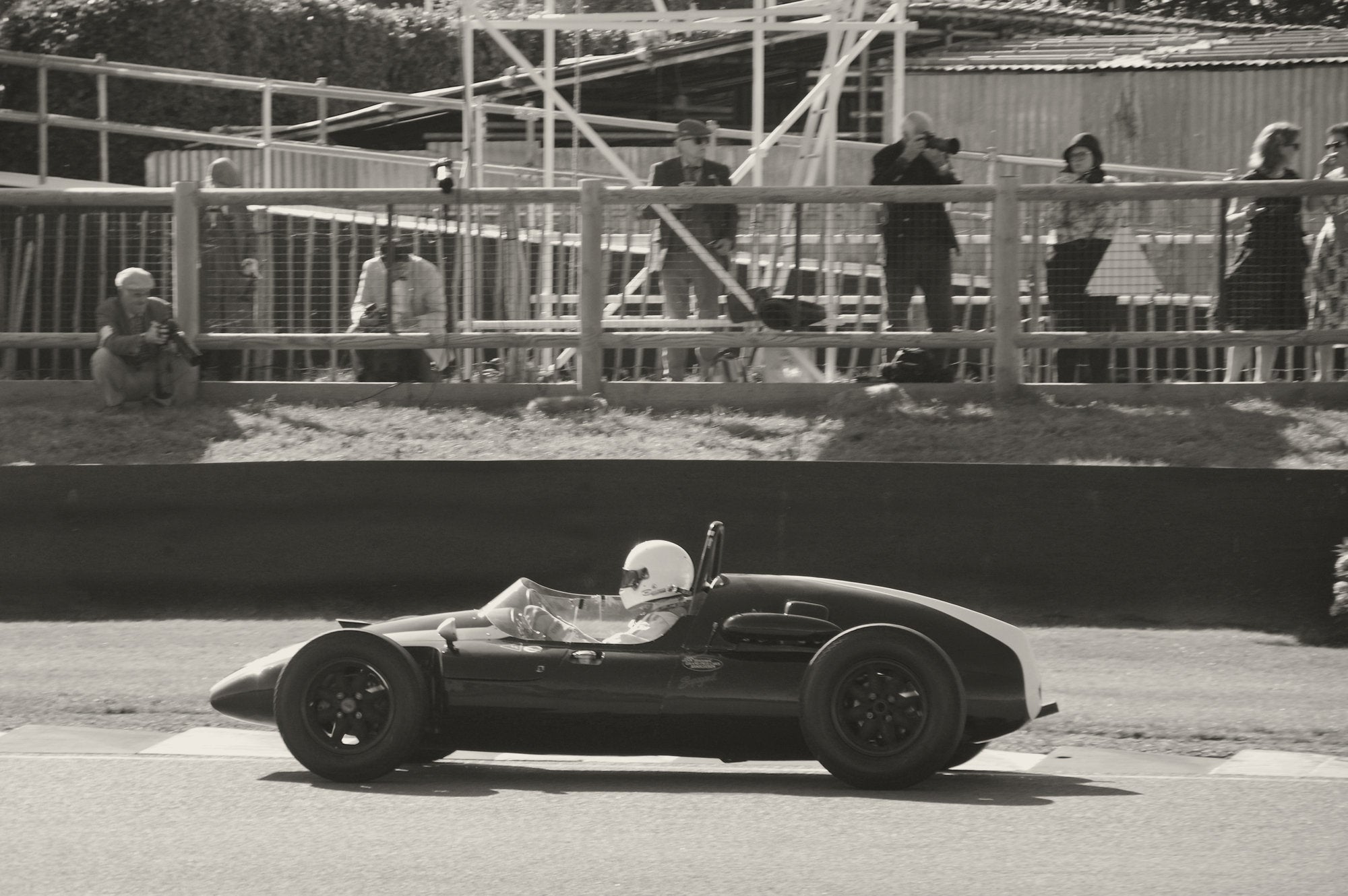
1958, 1959, 1960
The first world championship Grand Prix won by a rear-engined car was in Argentina in January 1958, and it was won by Stirling Moss in a Cooper entered privately by Rob Walker. It was not even a works car. It was a customer machine, on the wrong tyres, that stayed out while everyone else stopped.
In 1959 Jack Brabham won the drivers' championship in a works Cooper Climax and Cooper won the constructors' title. The season ended at Sebring in Florida, where Brabham ran out of fuel on the last lap and pushed the car several hundred yards to the line in serious heat to secure the points he needed. He collapsed afterwards. There is film of it, and he looks like a man who has been asked to do something unreasonable and has decided to do it anyway.
In 1960 he won it again, with five consecutive victories in the middle of the season, and Cooper took the constructors' championship for the second year.
Two world titles, from a firm operating out of a yard on a suburban high street, against Ferrari and Maserati and BRM.
Indianapolis
The second revolution followed from the first, and it happened in America.
In 1961 Brabham took a Cooper Climax to the Indianapolis 500. The car was tiny by the standards of the place, underpowered against the front-engined roadsters that had dominated the race for decades, and it finished ninth.
Ninth is not a headline. What it did was demonstrate, in front of the American racing establishment, that a small rear-engined car could run at Indianapolis and keep up. Colin Chapman was watching. Within four years Jim Clark had won the race in a rear-engined Lotus, and the roadster, which had defined the Indianapolis 500 for a generation, was obsolete within about five seasons.
Two of the most conservative categories in motorsport were turned over inside a decade, and the sequence starts in Surbiton.
What came out of the garage
The Coopers' most durable product was not a car. It was a set of people who worked there, learned how the thing was done, and left to do it themselves.
Bruce McLaren was a New Zealander who joined the works team as a very young man and won the United States Grand Prix at Sebring in December 1959, at twenty-two, which made him the youngest winner of a world championship Grand Prix at the time. He stayed at Cooper for several seasons and then set up his own operation in 1963. He was killed in 1970 testing one of his own cars at Goodwood, at thirty-two. The team that carries his name is now one of the two oldest in Formula One and has won more than two hundred Grands Prix.
Jack Brabham left in 1961 and built his own cars too. In 1966 he won the world championship driving a Brabham, which remains the only time anybody has won the title in a car bearing their own name. He also won the constructors' championship that year, as the constructor.
So the accounting is unusual. Cooper won two world championships and then declined. But the layout it invented became universal, and two of the drivers it employed founded teams that are still winning or were winning long after Cooper had gone. The influence radiating out of a Surbiton yard is out of all proportion to the size of the operation, and none of it is visible unless you go looking.
The end, quickly
Cooper did not last.
Charles Cooper died in 1964. The company was sold the following year. John Cooper had a serious road accident and his involvement reduced. And the fundamental problem was that the innovation had been copied by everybody, including by people with more money and better engineers, so the advantage evaporated.
The last Formula One win came in 1967. The team left the championship at the end of 1969, about ten years after winning it twice.
John Cooper had one more thing in him, and it is the reason his name is still on cars today. He looked at Alec Issigonis's new small saloon, the Mini, and worked out that it could be made to go very fast for very little money. The Mini Cooper won the Monte Carlo Rally three times in the 1960s. The badge outlived the racing team by half a century and is now on cars built by a German company, which is its own kind of ending.
What is left
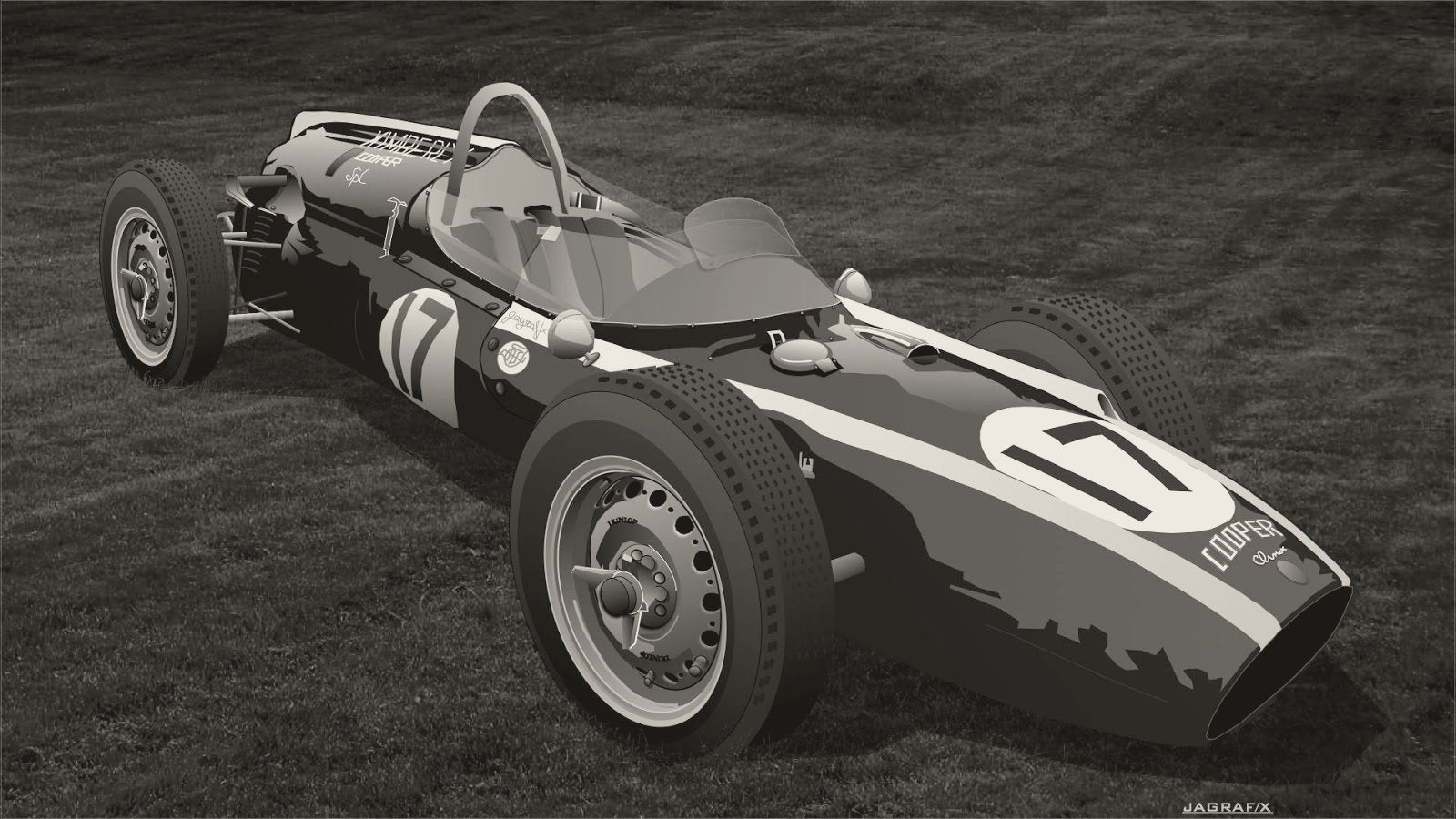
Three of the photographs here are of Cooper Climax cars built in 1957, 1958 and 1959, photographed at historic race meetings in recent years rather than at the time. That is worth saying plainly, and it is also part of the story: the cars are still running, driven hard, in front of people with cameras, sixty-odd years on. They are low and small and rather plain, and they are the shape that made everything else obsolete.
One is of a Cooper Climax T54, the type Brabham took to Indianapolis in 1961, the car that ended the roadster.
The last is a red plaque on a wall at 243 Ewell Road, Surbiton, put up by the Transport Trust, recording that the first rear-engined cars to win the Formula One world championship were built on that spot. It is a normal road with normal traffic on it. There is no museum. The plaque is the whole of the memorial.
Every Formula One car built since about 1962 has the engine behind the driver. So does every Indianapolis car. The layout is so completely standard that no one thinks of it as a decision at all, which is the most complete form of victory available to an idea, and also the one that guarantees nobody remembers who had it.