
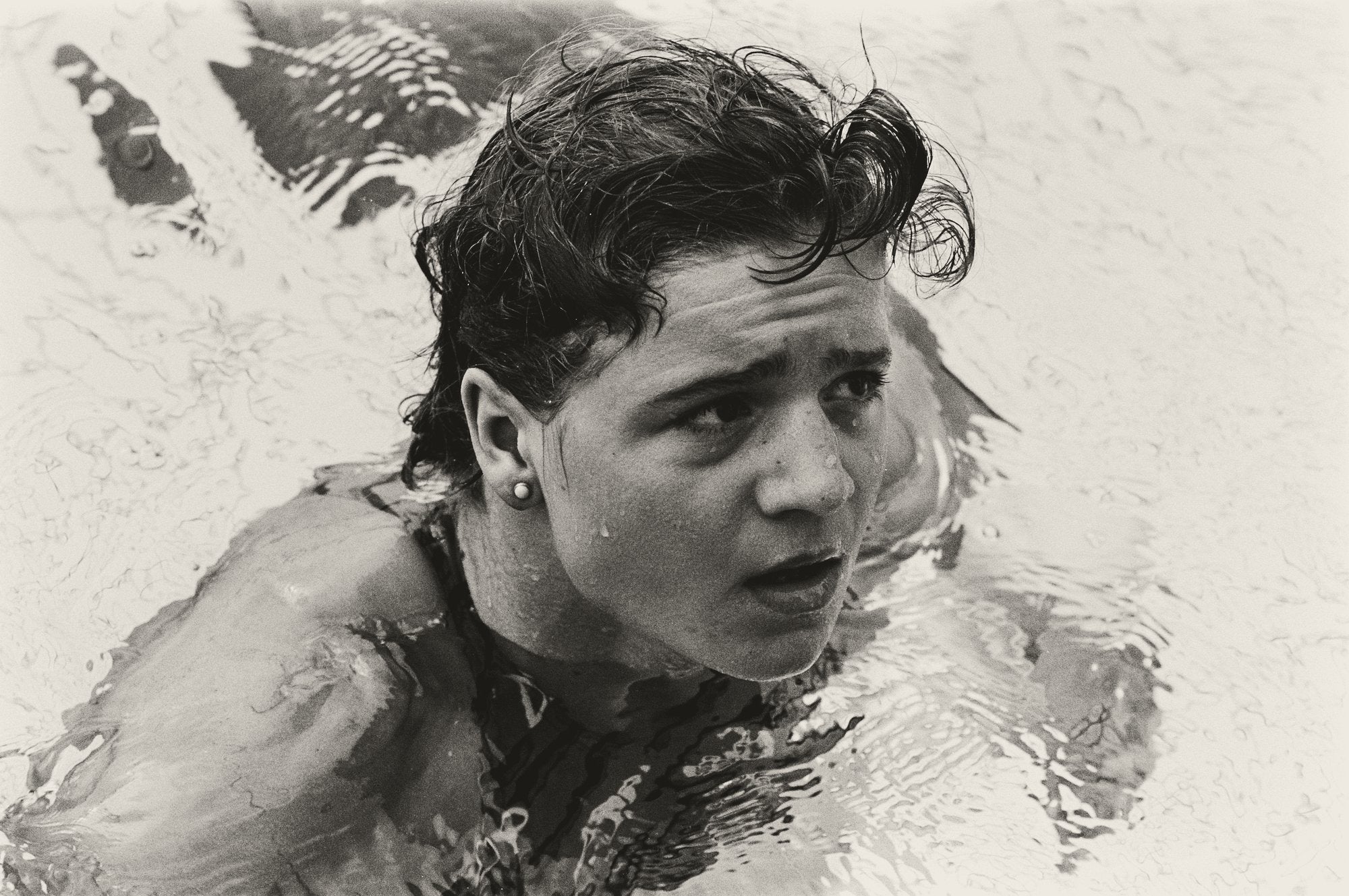
The swimming at the Montreal Olympics ran to thirteen events for women in the summer of 1976. East Germany won eleven. Won outright, first hand to the wall, in a fortnight that read afterward like a misprint someone had forgotten to correct. The two events they did not take became the exceptions people mentioned precisely because they were the exceptions.
One swimmer accounted for four of the golds. Kornelia Ender was nineteen, and on one day she won two finals inside the hour, out of the water from the first with barely time to breathe before the second. She set world records as she went. The rest of the East German women filled the podiums around her and carried the relays, until the medal ceremonies started to feel like a formality with the anthem already chosen.
The world noticed the way the swimmers had changed shape, and some of it said so out loud. There were remarks about their build, about voices lower than expected around the pool. An official of the delegation brushed the comments aside with a joke about singing. The results stood. No test caught anything, and for a long time the scoreboard was the only evidence anyone had, and the scoreboard said East Germany, again.
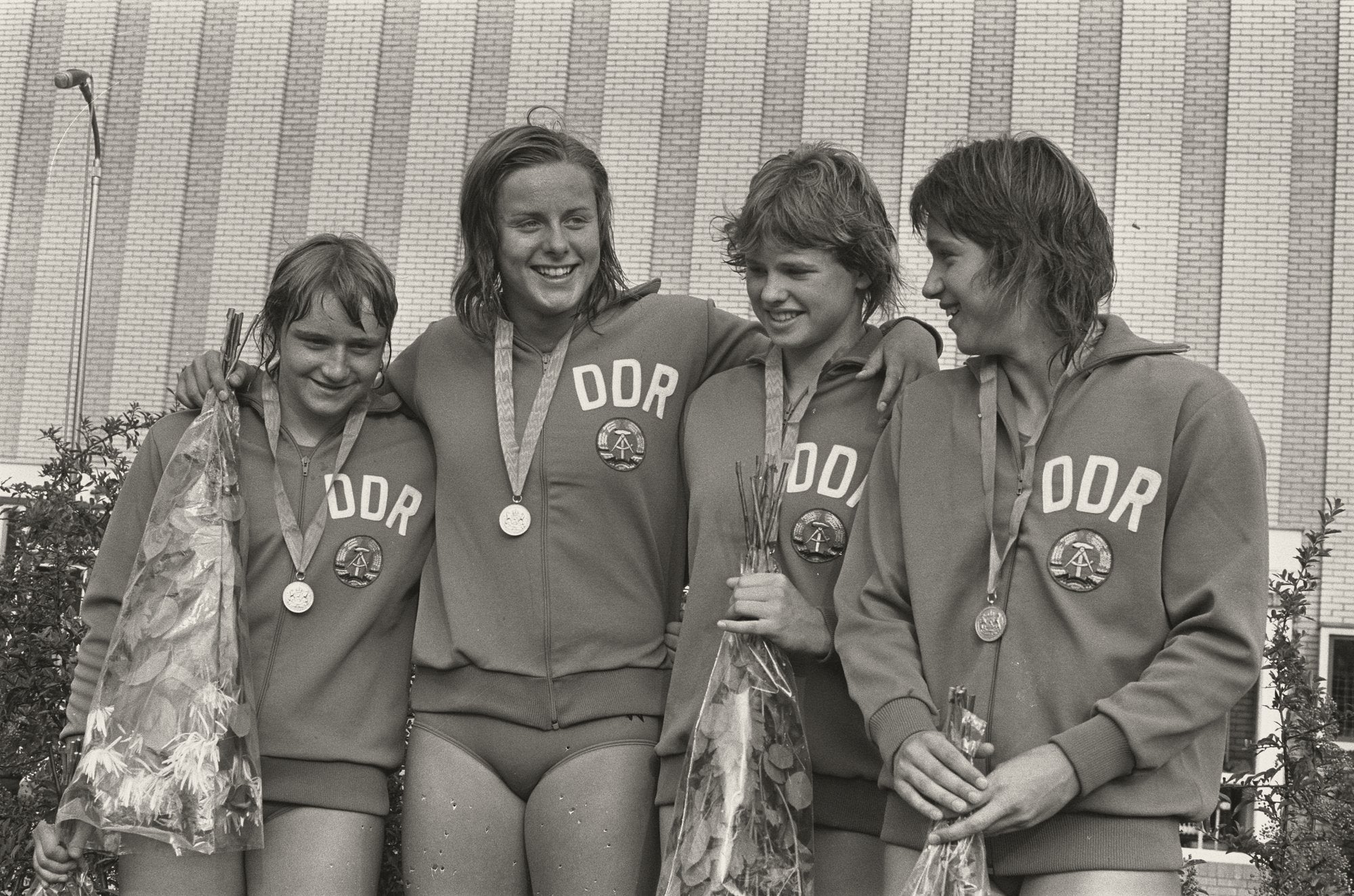
A country run like a results table
East Germany was a small place, sixteen or seventeen million people behind a guarded border, and it had decided early that sport was a way to be seen. Legitimacy was the one thing the state could not manufacture. Medals it could. So it built medals and put them on television. At Montreal the country finished second in the overall table, ahead of nations many times its size, and the point of the exercise was exactly that comparison. Medals were foreign policy conducted in lanes. Swimming and track were the priority, the events with the most medals to hand out for the outlay, and the women's pool gave a particularly good return. A country that produced champions could show itself to be a country that worked.
The schools that fed the pool
The machine that produced the swimmers was deliberate. Children were picked young, measured, sorted, and moved to sports schools that often stood a long way from home. What looked from the outside like a gift for the water was, in part, an administrative decision taken about a nine-year-old. Days were built around training loads that would have flattened most adults. This much was known at the time, and admired in some quarters as a model of how a country might organise talent so that none of it went to waste. Parents were kept at the edge of it. A child chosen for one of these schools passed into a world of coaches and team doctors who answered upward rather than to the family, and the family was mostly grateful for the chance. What was added to the talent stayed hidden for another fifteen years.
The decade that would not end
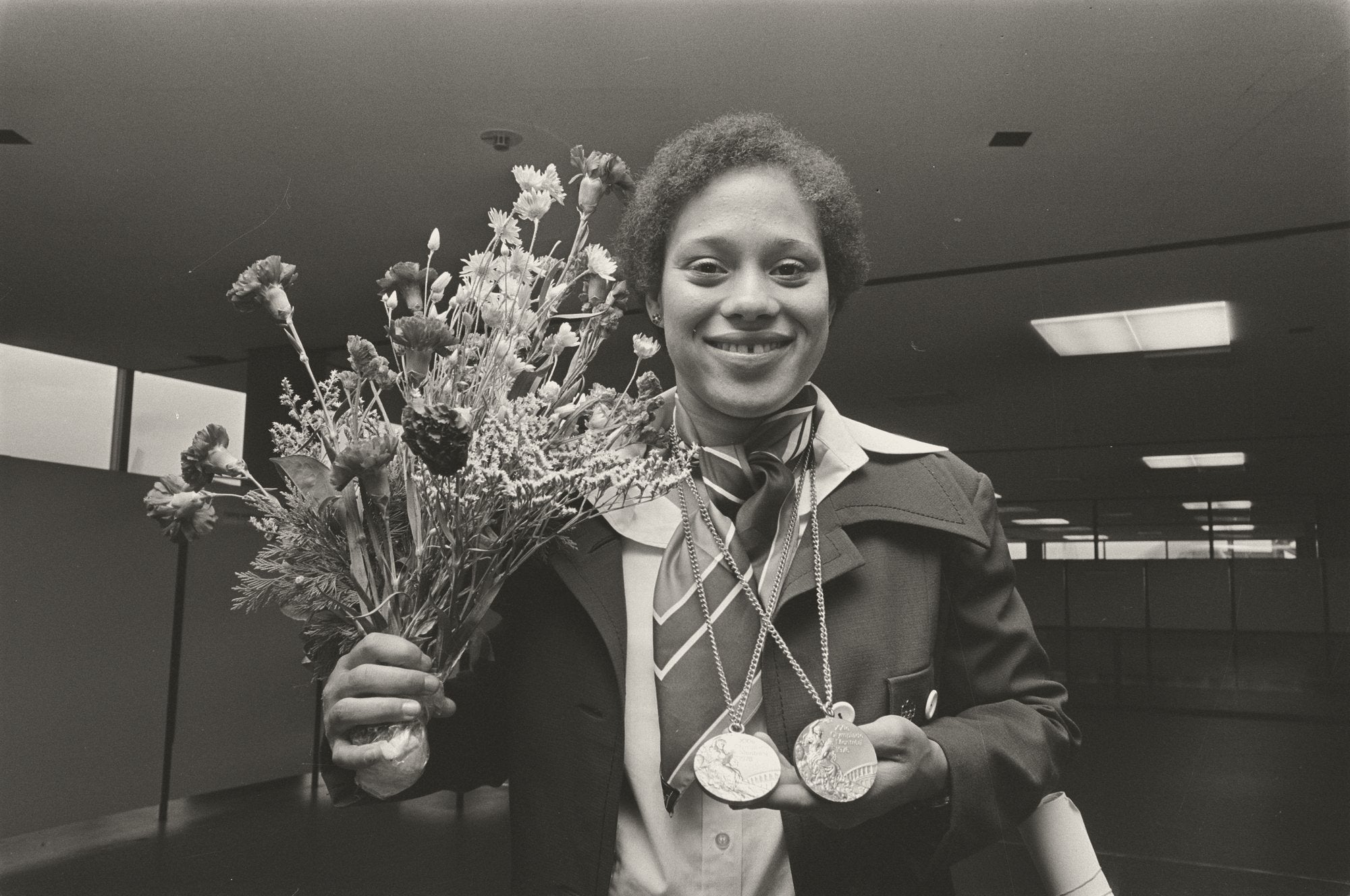
It did not fade the way dominance usually fades. At the Games in Moscow in 1980, the East German women again took almost everything worth taking in the pool; the exact tally matters less than the shape of it, which was the shape of Montreal. In 1984 they were simply absent, kept home with most of the eastern bloc from the Games in Los Angeles, and the absence was its own remark about a rivalry that was never only about swimming.
Then Seoul, in 1988, and Kristin Otto, who won six gold medals at a single Olympics, more than any woman had managed before. By then the pattern was twelve years old. A generation of swimmers elsewhere had grown up and retired into the certainty that on a given night the woman in the East German suit would touch first. The question that trailed the whole run was never really who. It was how, and the answer was being kept in a filing system.
What was in the training halls
The country was wound up in 1990, and the papers did not burn in time. What they described was a programme run from the top: a plan, catalogued and budgeted like any other state undertaking, to improve athletes chemically and to keep the improvement out of sight. Anabolic steroids were handed out in the training halls as routine. The pill most often named afterward was a small one, and the swimmers who swallowed it were frequently told it was a vitamin, or a tablet to help them recover.
A number of them were children. Thirteen and fourteen, at an age when a coach stands close to a parent and a tablet handed over in a training hall is not questioned. They signed nothing, because consent was never part of the design; in many cases the entire point was that they did not know. Accounts of how many were caught up in it across all sports run well into the thousands, and any single figure should be handled with care, but the scale was not small and the intent was not an accident.
The doses were not left to a swimmer's judgement, because the swimmer was seldom told a dose existed. Coaches and team doctors set the amounts and timed them around competition and around the tests that international sport had begun to run. Staying a step ahead of the testing was itself part of the method.
There is a reason the women's results ran so far ahead of the men's. The drugs at the centre of the programme did proportionally more to a young female body than to a male one, which the people running it understood and used. The dominance in the women's pool was partly a measurement of how much damage a particular chemistry could do to girls who had not been asked.
Most of this stayed buried until two scientists went looking. A researcher and his wife, Werner Franke and Brigitte Berendonk, pulled the records out of a military archive after reunification and put the numbers into the open, dosages and code names and all. What had been rumour for two decades became documentation, and the documentation was what eventually reached the courts.
The bill, and the people it was sent to
The performances were genuine in the only sense a stopwatch understands. The bodies that produced them were altered, some of them for good. Effects surfaced in the years after the swimming stopped, in health that did not hold and, for some, in the children they went on to have. The specifics belong to the women who lived them, and not all of it sits on any record; it would be a second imposition to catalogue their injuries here as freely as the state once catalogued its plans.
Voices deepened and did not always come back up. Some of the women carried muscle and bone the drugs had laid down long after they had left the water. Others have linked later illness, and trouble carrying a healthy pregnancy, to substances they were given as teenagers without a name for them. None of it tidies into a table, and the attempt would repeat the first error, which was to treat these women as data.
What can be said plainly is that the people who paid were mostly the ones who had chosen nothing. They had been enrolled as girls into a system that treated them as equipment, and the system had entered them in the results as champions while doing them a harm they would carry long after the noise died down. Champions and victims at once: the phrase is clumsy because the situation was, and no cleaner one has been found that stays true to both halves of it.
The courtrooms in Berlin
When the harm was finally argued in front of judges, in Berlin, in the late 1990s and into the new century, the people in the dock were not the swimmers. They were the men who had run it. The senior figures of the sports-medicine apparatus and the head of the state sports federation were convicted, the charge amounting to a share in the deliberate injuring of the athletes in their care. The sentences were modest. A law came later to compensate some of those harmed, arriving for many of them well after it could have done the most good. By then a support group set up by former athletes had spent years helping people establish what had been given to them.
There remained the question of the records and the medals, which no court could resolve, because they had been won inside rules that could not detect what was being done. Some of the times still stand in the books, or stood for years, next to names that were never permitted to explain them. Sport has mostly chosen to leave them there, with an asterisk that lives in the memory rather than on the page.
The reckoning, and the awkwardness of it
Germany, once it was a single country again, had to decide what to feel about a haul of medals won partly by chemistry and partly out of children. It was an uncomfortable inheritance. In law and in most public sympathy the athletes were the injured party, yet their names sat on the results, and the results were part of the national story whether the nation wanted them or not. Some of the women asked for their records to be struck. Others wanted them kept, on the grounds that they had still done the swimming, had still stood on the block at dawn for years on end. There was no clean answer, and the country mostly declined to force one.
How to read a number now
Eleven from thirteen. Seen cold, it is the finest run a swimming country ever had. Seen with what is now known, it is a record of what was done to a group of young women, most of whom did not know it was being done, in the name of a state that has since ceased to exist. Both readings are looking at the same result. Neither cancels the other, and the discomfort of holding both at once is the honest response; anything simpler is a story told to make the number easier to live with.
It helps to hold on to one fact: the swimmers wrote none of it. They were the youngest people in the room and the last to be told anything. Whatever is taken away from the achievement is taken from the state that engineered it, not from a fourteen-year-old who did as her coach instructed.
There is a print of that count, the eleven and the thirteen set down plainly, made for a wall where it will be seen and, sooner or later, asked about. The number does the work a number can. The rest has to be said out loud by whoever is standing next to it.
What became of most of those swimmers is not a matter of public record. A few have spoken; more have not. They were girls in a training hall in a country that no longer appears on any map, handed a small tablet by someone they trusted, and told it would help.