
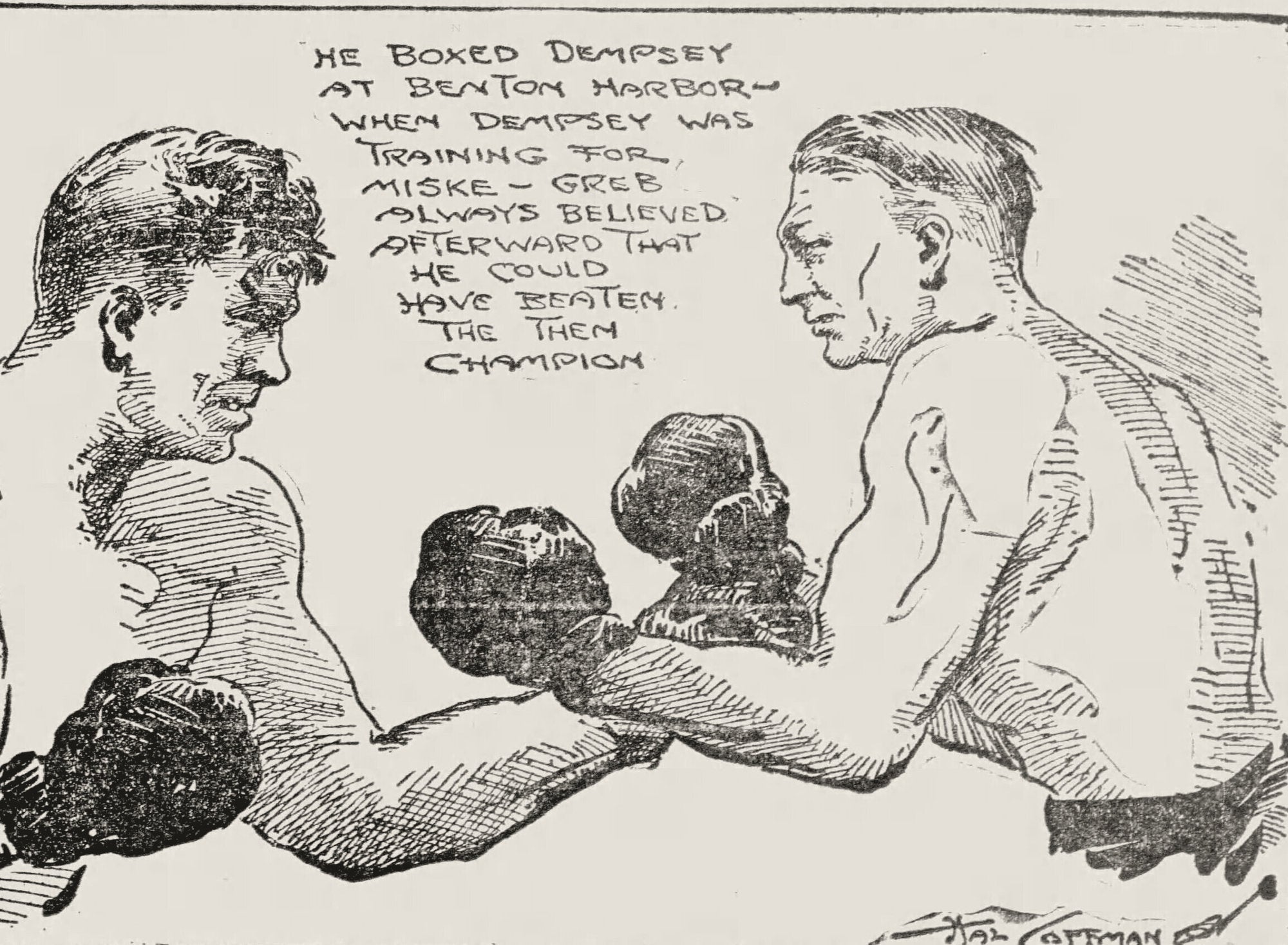
The number of working eyes he had for the last five years of his career, and the number of men who ever beat Gene Tunney.
The volume
Greb's record is generally given as around 299 bouts between 1913 and 1926, an extraordinary total even for the era.
He fought across weight classes, regularly conceding significant size, and rarely refused an opponent.
The eye
In a 1921 bout against Kid Norfolk, Greb suffered an eye injury that led to a detached retina and, eventually, blindness in the right eye.
He concealed it from boxing commissions, which would have withdrawn his licence, and continued to fight at championship level.
The style
The nickname Pittsburgh Windmill describes the method: continuous punching from unorthodox angles, constant movement, and a willingness to use the rougher edges of the rules.
Contemporary reports are consistent that he was difficult to hit cleanly and unpleasant to fight.
Tunney, 23 May 1922
Greb beat Gene Tunney for the American light heavyweight title in Madison Square Garden.
Tunney's nose was broken early and he lost a substantial amount of blood. He described it afterwards as the most severe beating he took in his career.
It is the only defeat on Tunney's professional record.
They met four more times, with Tunney winning the subsequent bouts.
World champion
Greb held the world middleweight championship from August 1923 to February 1926.
His two bouts with Tiger Flowers, both lost on decision, were widely disputed by ringside reporters.
The end
Greb died on 22 October 1926, aged thirty-two, during or shortly after an operation to address facial fractures sustained in a car accident.
Why it goes on a wall
Because it is not a comfortable story and should not be made into one. He hid a disabling injury to keep working, and inside that decision he produced boxing that nobody has matched for sheer volume and difficulty.
The Pittsburgh Windmill.