
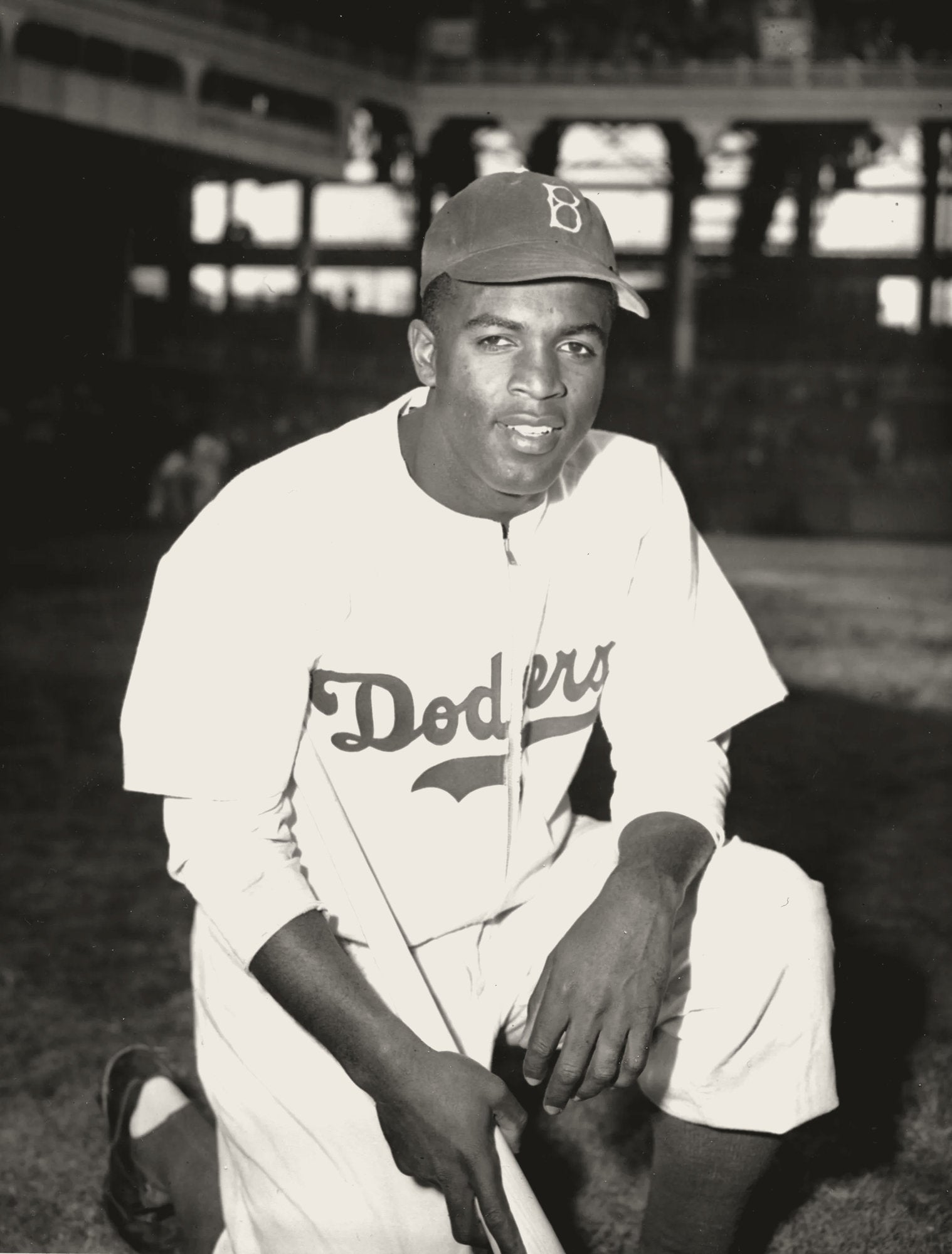
Three years. That was the length of the silence Jackie Robinson agreed to keep before he signed with Brooklyn, and it is the number this print carries.
The meeting
In August 1945 Branch Rickey met Robinson in his Brooklyn office. Accounts of the meeting agree on its shape: Rickey did not describe the abuse to come, he performed it. Hotel clerks, waiters, opposing players, spectators, in character and using the real language.
Robinson asked whether Rickey was looking for someone afraid to fight back. Rickey said he needed someone with the courage not to fight back, for three seasons, regardless of provocation.
Who was being asked
This matters. Robinson was not chosen for meekness. In 1944, as an army lieutenant at Fort Hood, he had refused an order to move to the back of a military bus, was court-martialled for it, and was acquitted.
Rickey was asking a man with a documented record of refusing to comply to comply, deliberately, for three years.
1947
Before the season began, a group of Dodgers circulated a petition objecting to playing alongside him. Manager Leo Durocher shut it down.
The abuse from Ben Chapman's Philadelphia Phillies was severe enough that it became a story in itself and moved public opinion. Pitchers threw at him. Baserunners went in with spikes high. Hotels in several National League cities refused him rooms his teammates were given.
He did not respond to any of it.
The season itself
151 games. A batting average of .297, twelve home runs, and a league-leading twenty-nine stolen bases. He was voted the first Rookie of the Year in the award's history. Brooklyn won the pennant and lost the World Series to the Yankees in seven.
When the agreement ended
From 1949 Robinson considered himself released from the arrangement and behaved accordingly. He argued with umpires, disputed calls, criticised teams that had not integrated, and spoke publicly and repeatedly about racism in the sport and outside it.
The press response shifted. Coverage that had celebrated his restraint began describing him as combative, difficult, ungrateful. In several cases the writers were the same people.
Why it goes on a wall
Because the story is usually told as one season of dignified endurance, and that version quietly suggests the silence was Robinson's natural temperament.
It was not. It was a condition of entry, accepted in advance, by a man who had already proved he would not accept such conditions. That is what makes it an act rather than a disposition.
He agreed not to answer.