
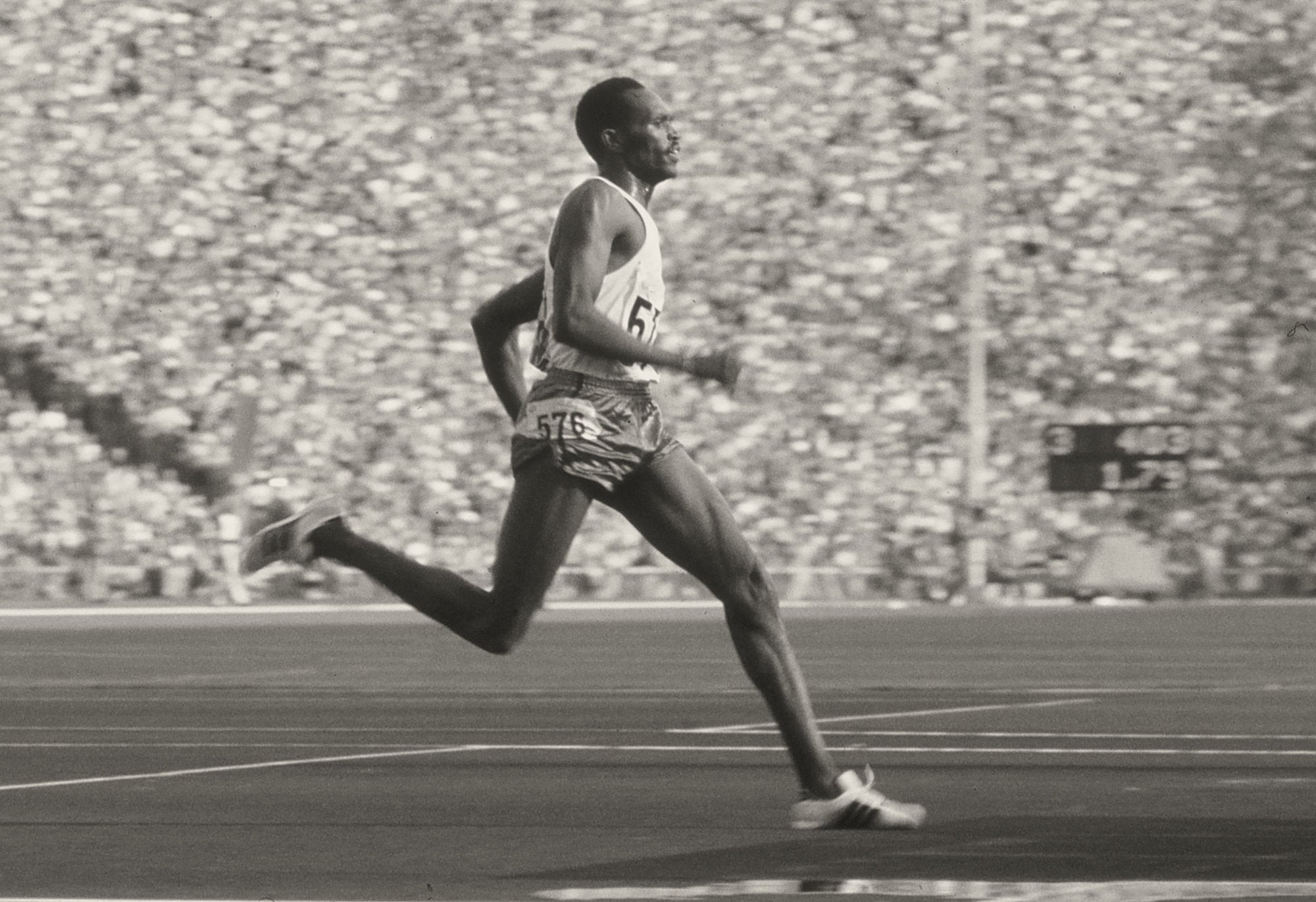
Three Olympic finals in eight days, run by a man whose doctors had told him not to start any of them.
The altitude problem
The 1968 Games were held in Mexico City, roughly 2,250 metres above sea level, where the air carries about a quarter less oxygen than at the coast. For sprinters this was a gift and records fell. For distance runners it was closer to a hazard. Athletes finished on their hands and knees. Some needed medical oxygen.
This is the context for everything that follows.
The condition
Keino had a gallbladder infection and was in significant pain. The medical advice was to withdraw from the Games entirely. He ignored it, which is a sentence that gets written about a lot of athletes and very rarely means anything this specific.
The 10,000
He ran with the leaders and collapsed with two laps remaining, stepping off the track. That is an automatic disqualification. He then got up and finished the race, in a competition he had already been removed from, for no reward of any kind.
The 5,000 and then the 1500
Four days later he took silver over 5,000 metres, beaten narrowly in the straight.
The following day he lined up in the 1500 metres final against Jim Ryun, the world record holder, who had not lost over the distance in three years.
Every reasonable tactic said run conservatively. Altitude punishes early effort more than anything else, and Ryun's strength was his finish. Instead, Keino's teammate Ben Jipcho took the field through a brutal opening lap and Keino went with him and then kept the pace himself from the front.
He won by about twenty metres in 3:34.9, an Olympic record that lasted sixteen years, and the largest margin in a modern Olympic 1500 final.
Afterwards
Keino won another gold in 1972 in the steeplechase, an event he had barely practised. He then spent much of his life running a children's home in Eldoret with his wife Phyllis, taking in and raising orphaned children over several decades.
Why it goes on a wall
Because the story is usually reduced to a man who won a race while ill, and the actual shape of it is stranger than that: he ran three finals in eight days, was disqualified from one and finished it anyway, took silver in the second, and then beat the best 1500 metres runner in the world using the single tactic that altitude is supposed to make impossible.
Three finals, eight days, one gold, on a body that had been told to stay in bed.