
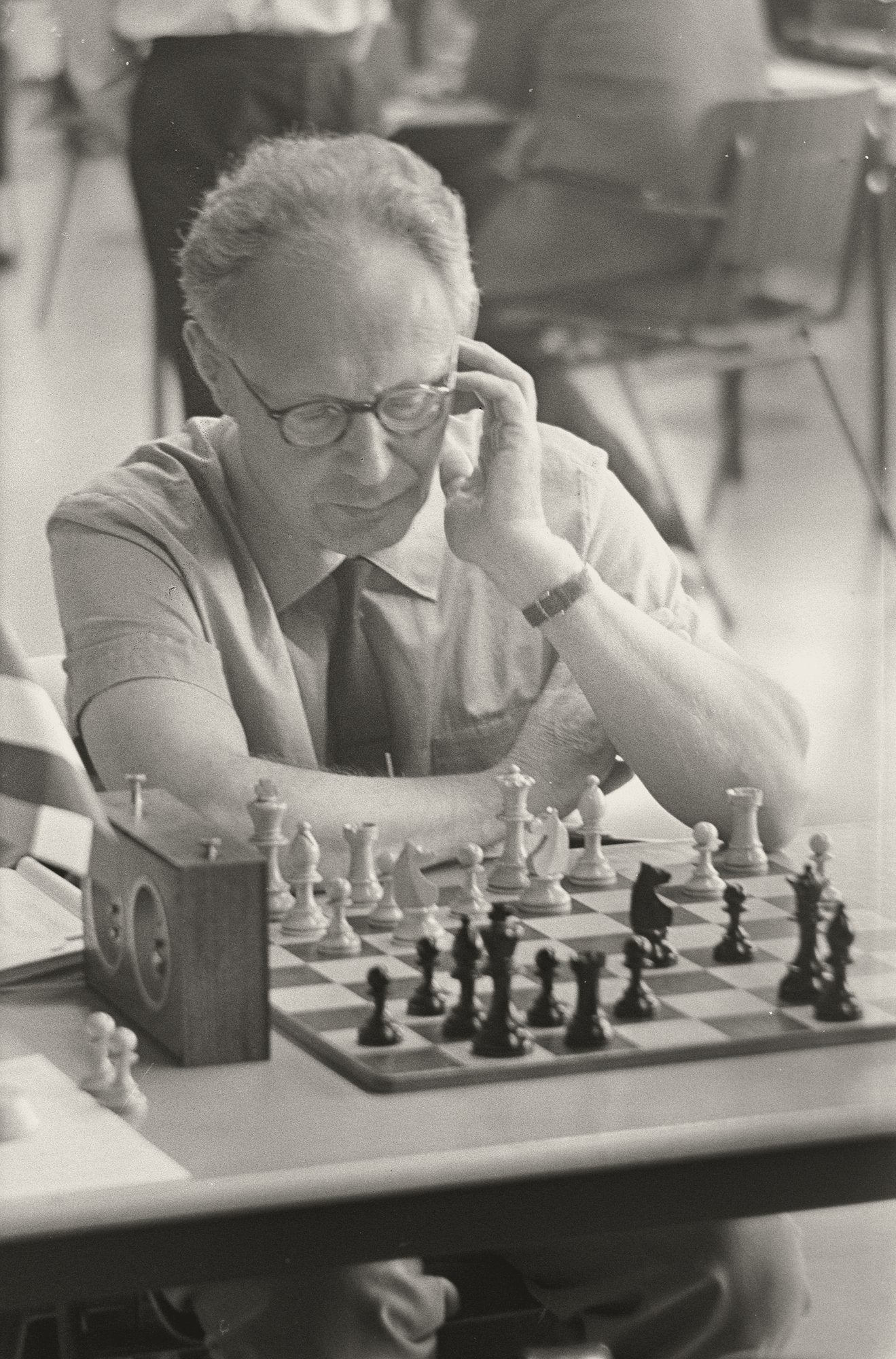
The highest title in chess sat empty for two years. The man who had held it died in 1946, in a hotel on the Portuguese coast, with the crown still his and no one set to take it from him. A match to decide a successor had been discussed before his death, perhaps near agreement; accounts differ, and it hardly matters now, because it was never played. When the game's governing body finally settled the question, it did so with a tournament in 1948, split between two cities, one of them Moscow. A Soviet player won it. His name was Mikhail Botvinnik, and for the next fifteen years he would either hold the world title or be trying to win it back.
The engineer at the board
Botvinnik was born in 1911, in the last years of the old Russian empire, and grew up in Leningrad, the city that had been St. Petersburg and would be again. He trained as an electrical engineer and took the work seriously enough to keep at it for most of his life, holding a doctorate and a post, occupied with power systems while he was also the strongest chess player alive. The two were not, in his mind, separate trades. He came to the board the way an engineer comes to a problem, by measurement and preparation, turning what looked like art into something nearer to procedure.
Openings, in his hands, were not so much memorized as tested. He worked them out at home in long private analysis, the way a laboratory works through a hypothesis, throwing away what failed and keeping what held. He studied the men he would face as cases, gathering their habits and the kinds of positions that made them uneasy. By the time he sat down across the board, a good deal of the contest had already happened in a notebook.
He had waited a long time for the chance. By the late 1930s he was already counted among the few thought capable of taking the title, but the war swept the chessboards aside along with everything else, and years went by. When it was over, the champion was dead and the crown was loose, and the man who had prepared longest was still there. Lines he worked out in those years carry his name on a chessboard even now. He did not play often. He chose his tournaments and gave each the same laboratory attention, so that when he did appear he tended to arrive already knowing more about the likely positions than the man sitting across from him.
A country that took chess seriously
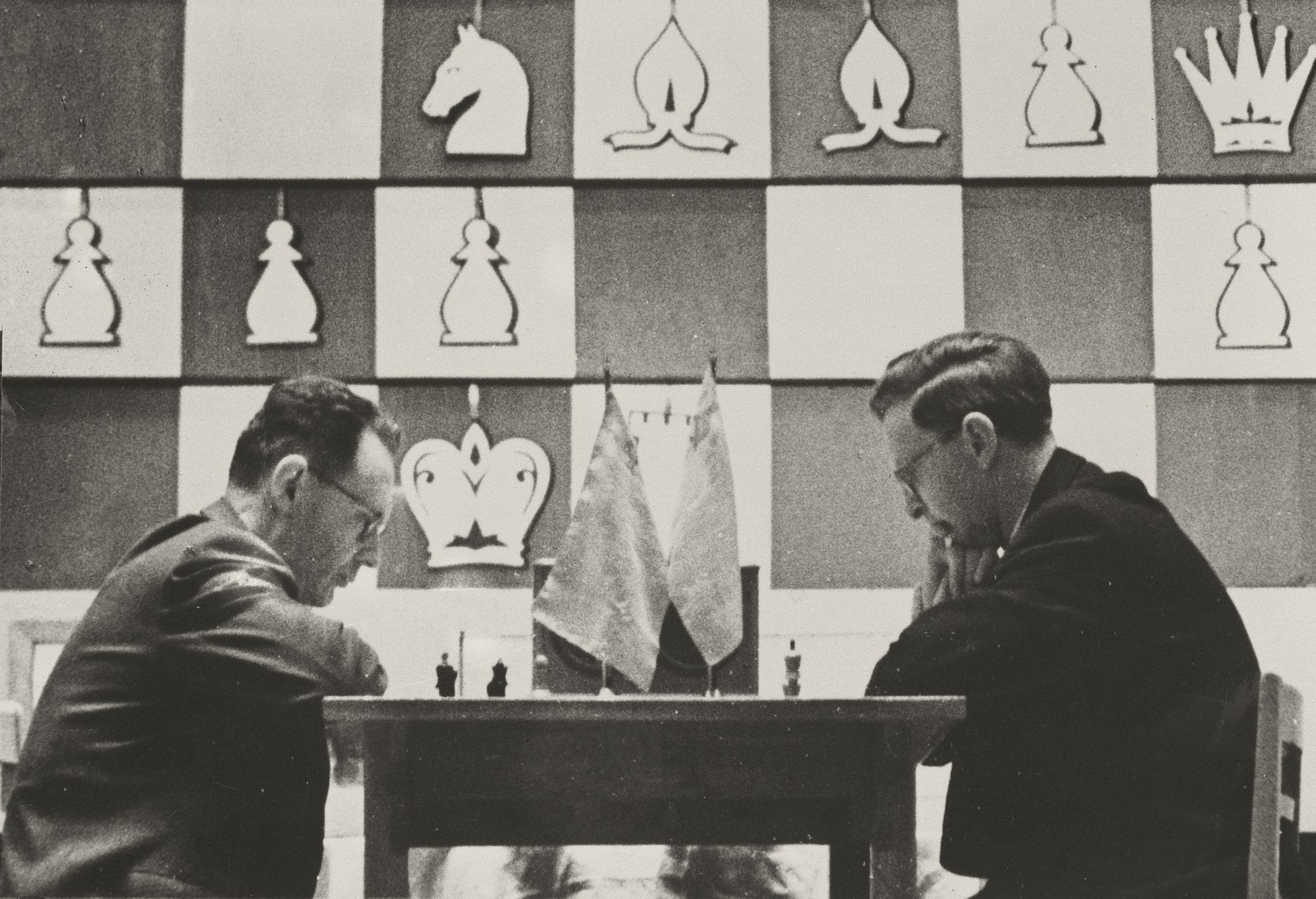
In the Soviet Union chess was not a pastime kept to the edges of things. It was paid for and taught in schools, and it was followed the way other countries followed a national sport. The best players were public figures with salaries and duties, and the game was treated as proof of something the state wished to prove about the minds it raised. Botvinnik was the first man trained inside that system to win the world title, and his victory in 1948 opened a run of Soviet champions that would hold, but for one short break, for close to half a century. He stood at the head of a machine far larger than himself.
He believed in the country that had built the machine. By his own account he was a convinced communist, a party member who saw no quarrel between the discipline he brought to the board and the order he thought the state stood for. It belongs in the picture and cannot be tidied out of it. Whether the belief ever cost him anything, or spared him anything, is not a question that can be settled here.
The room he made uncomfortable on purpose
There is a story about how he prepared that has outlived nearly everyone who could confirm its details. He trained with a radio turned up loud. He had someone smoke while he played, sending it toward him across the board. Botvinnik neither smoked nor cared for noise, and that was the reason. He understood that a hall would not be quiet, that an opponent might light a cigarette at the worst possible moment, that any concentration which relied on comfort would fail the day comfort was taken away. So he practised being disturbed until being disturbed carried no weight. He wanted the discomfort during training, so that in the match there would be none. He was said to be as strict with his body as with his openings, holding to walks and rest and a set routine while a match was on, on the plain reasoning that a tired man counts worse than a rested one.
Twice beaten, twice back
What sets him apart is not that he was champion. There had been champions before, and would be after. It is what he did each time he lost, which is a thing he had to do twice.
The first man to take the title from him was a fellow Soviet, a player of quiet and exact endgames who had once weighed a life as an opera singer and had auditioned, by most accounts, for a great company in Moscow. He beat Botvinnik in a match in the second half of the 1950s. Under the rules of the day the beaten champion had the right to a return match within the year, and Botvinnik used the months between exactly as he used everything else. He went back to his notes. He took the winner apart as a subject, found where it had gone wrong, and came back and won the title again. The man who had beaten him was Vasily Smyslov, and he would sing after all, for the rest of a long life.
The second loss was worse, and stranger to watch. It came from a young man out of Riga, barely into his twenties, whose chess was fast and intuitive, built on sacrifices that could not be calculated all the way to the end and succeeded anyway. For a stretch no one could stand against him. He took the crown from a man old enough to be his father. And then the same thing happened again. Botvinnik studied him through the months that followed, found the flaw the fireworks had hidden, and won the return match. Some said the younger man had been unwell during the second contest, and he often was; his health was poor through most of a short life. The preparation, though, was real, and the result held. His name was Mikhail Tal, and he had become, at that point, the youngest man yet to hold the title.
No one else has done this at that height even once and then done it again. A world champion, beaten, who steps back, studies the man who beat him, and takes the crown back, then repeats the whole thing against someone else. The rule that allowed it, the automatic right of a fallen champion to a return match, did not outlast him.
The rule that closed the door
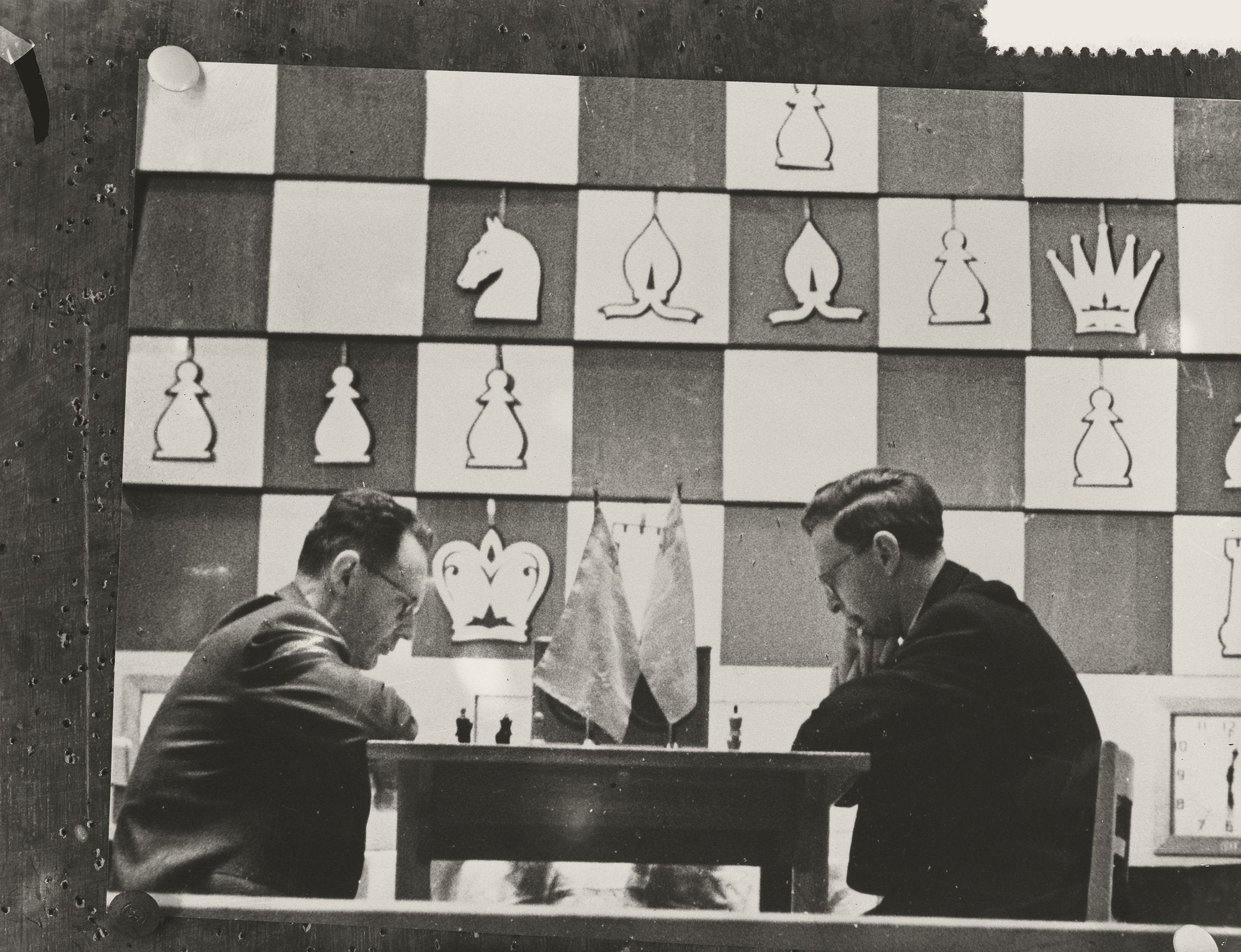
After the second of these returns, the game's authorities did away with the champion's automatic rematch. It had begun to look unfair, a way for a deposed champion to keep his title on the strength of a year's preparation rather than a fresh result. The change reached Botvinnik almost at once. In 1963 he lost the title a third time, to a younger countryman known for a careful, almost airless style, a player who gave nothing away and waited for mistakes. This time there was no return match to prepare. The door that had opened twice was shut. He did not go back into the long qualifying cycle to earn another attempt. He was past fifty. He left championship play and did not return to it.
The school
What he did afterward mattered more than a fourth title would have. He turned the method outward. He ran a school for gifted young players, and across the years the best of a generation passed through his hands. Two of them would hold the world title themselves and shape the game for the rest of the century, one a patient positional player, the other a storm of force and calculation. Anatoly Karpov came through his lessons. So, later, did Garry Kasparov, who would fall out with the old man in time, the way strong students do, but who had first learned to work as Botvinnik worked. The habits he had built alone, in notebooks, in a room he had filled with smoke on purpose, became the shared property of the players who would fight each other for the crown long after he had set it down.
There is a particular irony in it. The two strongest of his pupils would spend years locked against each other for the very title he had once held, passing it back and forth across a decade, each of them working in a way he had shaped. He had wanted the method to travel. It travelled past him, into hands that no longer had any need of the man who taught it.
The machine
There was one last undertaking, and it did not really succeed. In his final decades Botvinnik grew convinced that the way he thought about chess could be set down in full, made into instructions, given to a machine. He spent years on it, working with programmers toward a computer that would not simply grind through every line by force, the way the strongest machines eventually would, but would choose as a master chooses, by knowing which possibilities are not worth a glance. It mostly did not work. The machines that in the end overwhelmed human players did it by raw speed, the very thing he had wanted to design out. He stayed with his own idea long after it was clear the world had gone the other way.
There is something fitting in that failure. He had spent a life insisting that mastery could be built rather than merely born, a thing that could be studied and handed on to someone else. The school proved him partly right. The computer was the same argument carried one step too far. He died in 1995, an engineer to the last, still sure that the thing he did could be explained.
Somewhere there is a print of him on a wall, in a house where people hang the things they do not want to lose, carrying a record that reads at first like a printer's error: one man, one title, lost and won back, and then lost and won back again. Most who pass it will not know what that cost, or that the man who managed it once prepared for the game of his life by having smoke blown into his face until it no longer reached him.
What became of the notebooks is harder to say. Some of the analysis was published. A great deal of it, the private working of forty years, is not easy to trace, and went where such things go once the person who kept them is no longer there to explain.