
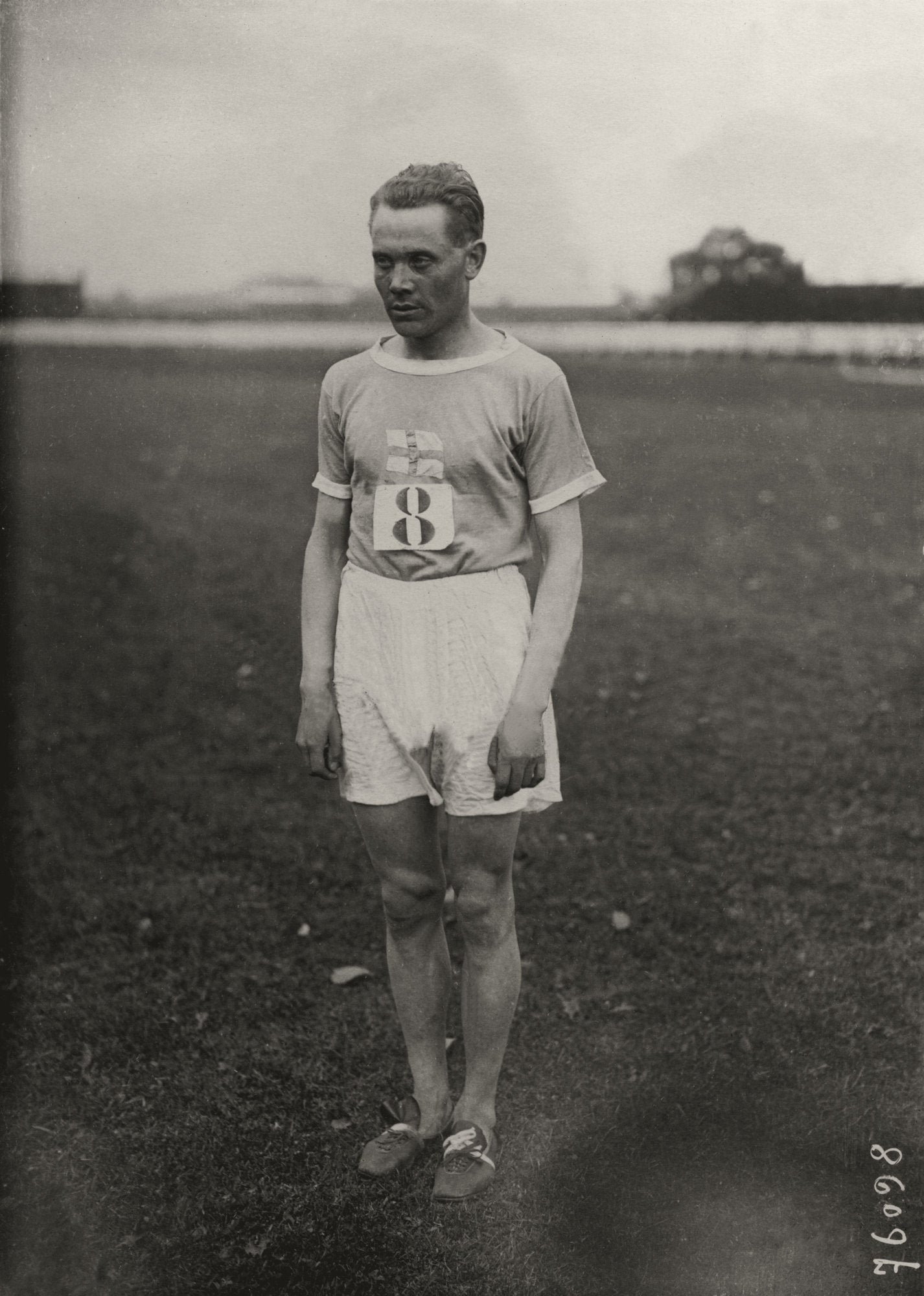
Olympic gold medals, won between 1920 and 1928, with three silvers alongside them.
The watch
Nurmi raced holding a stopwatch, checking split times against a pre-set schedule and discarding it in the closing stages.
The underlying principle, even pacing, is now standard. In the 1920s racing to a schedule rather than to opponents was unusual enough to be remarked on constantly.
Paris, 1924
On 10 July he won the 1500 metres and, approximately one hour later, the 5000 metres.
On 12 July he won the individual cross country in extreme heat. Fewer than half the starters finished; several required medical treatment.
He finished the Games with five gold medals.
The records
Nurmi set official world records at distances from 1500 metres to 20 kilometres, and held the mile record.
The character
Contemporary accounts describe a reserved, private man who trained alone and gave little to the press.
Finland, independent since 1917, adopted him as a national figure regardless.
1932
The IAAF ruled Nurmi a professional over expense payments connected to appearances in Germany, and he was excluded from the Los Angeles Olympics, where he had intended to run the marathon.
The ruling was contested by Finland at the time and remains disputed.
Helsinki, 1952
The identity of the final torchbearer at the opening ceremony was withheld until the moment. Nurmi carried the flame into the stadium.
He was fifty-five.
Why it goes on a wall
Because he turned running from an act of courage into a calculation, won everything with it, and was then ruled ineligible by the people who had built their movement on him.
He ran by the watch.