
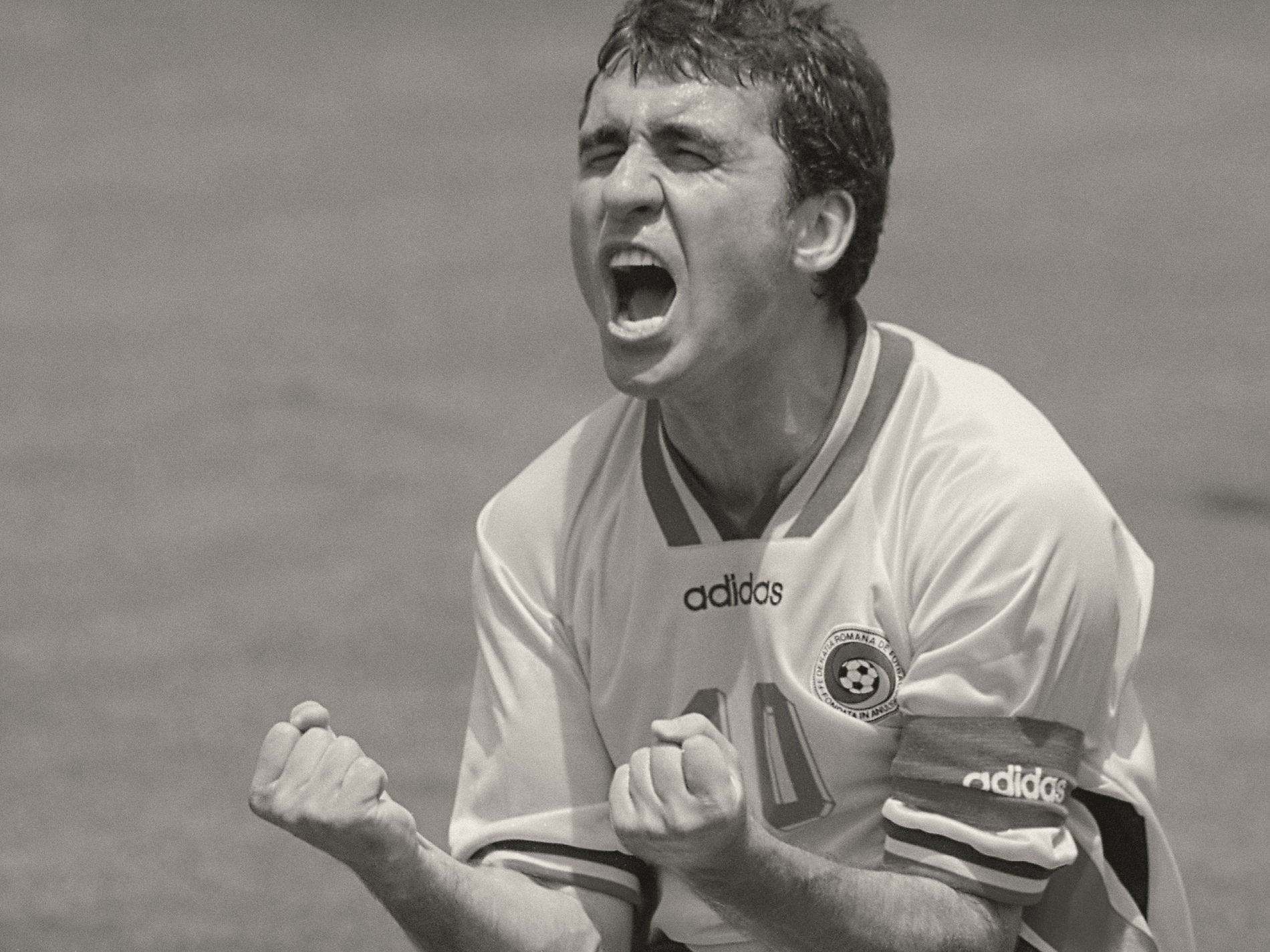
On the third of July 1994, in the Rose Bowl at Pasadena, Romania beat Argentina three goals to two in the last sixteen of a World Cup.
That sentence has not been true of any Romanian side since, and it had not been true before. It remains the high point, and the men who produced it are now in their fifties and sixties, doing other things, in a country that has spent thirty years quietly waiting for the next lot.
There has not been a next lot.
The country they came out of
To understand why the win mattered in the way it did, you have to know what the players had been children inside.
Romania under Nicolae Ceaușescu in the 1980s was an unusually severe place even by the standards of the bloc. The state had decided to pay off the national debt at speed, and the method was to export everything and keep almost nothing. That meant rationing on bread, sugar, oil, meat. It meant apartment blocks kept at temperatures where people slept in coats. It meant electricity cut for hours at a time, and television reduced to about two hours a night, most of it devoted to the activities of one family.
Football survived because it was useful. Steaua Bucharest was the army's club. Dinamo Bucharest belonged to the interior ministry, which is to say the security service. Talented boys were identified early and moved to whichever of the two wanted them, and the word for that process was not transfer. There is a widely repeated account that Valentin Ceaușescu, the president's elder son, took a personal interest in Steaua, and that the interest was helpful to them. He has always described his involvement in more modest terms.
In December 1989 the regime fell in about a week. Ceaușescu and his wife were tried by a military court on Christmas Day and shot in a barracks yard at Târgoviște. Whatever else that did, it opened the border.
Seville, 1986, and four penalties
Three years before the wall came down, Steaua Bucharest won the European Cup. They beat Barcelona in the final in Seville, nil nil after extra time, and then Barcelona took four penalties and missed all four.
The goalkeeper was Helmuth Duckadam. He was twenty-seven, he saved every one, and it is still the only time in a European Cup final that a goalkeeper has done that. Within months he was out of football. The official reason was a rare condition affecting an artery in his right arm, which is the reason he himself has always given. A different story circulated for years, involving a car he should not have had and people he should not have annoyed. He has consistently denied it. What is not in doubt is that a man produced the single best goalkeeping performance in the history of the competition and then vanished from the game before he was thirty.
That is the football culture the 1994 team came out of. Very good, entirely instrumentalised, and capable of losing people without explanation.
Pasadena
The 1994 squad was the first that had been abroad and come back. Hagi had been at Real Madrid and Brescia and would sign for Barcelona within weeks of the tournament ending. Popescu was at PSV. Răducioiu was in Italy. Petrescu was at Genoa and on his way to England. Belodedici, who had crossed the border illegally in 1988 and been sentenced in his absence for it, had by then won a second European Cup with Red Star Belgrade, making him the only man to win that trophy with two clubs from eastern Europe.
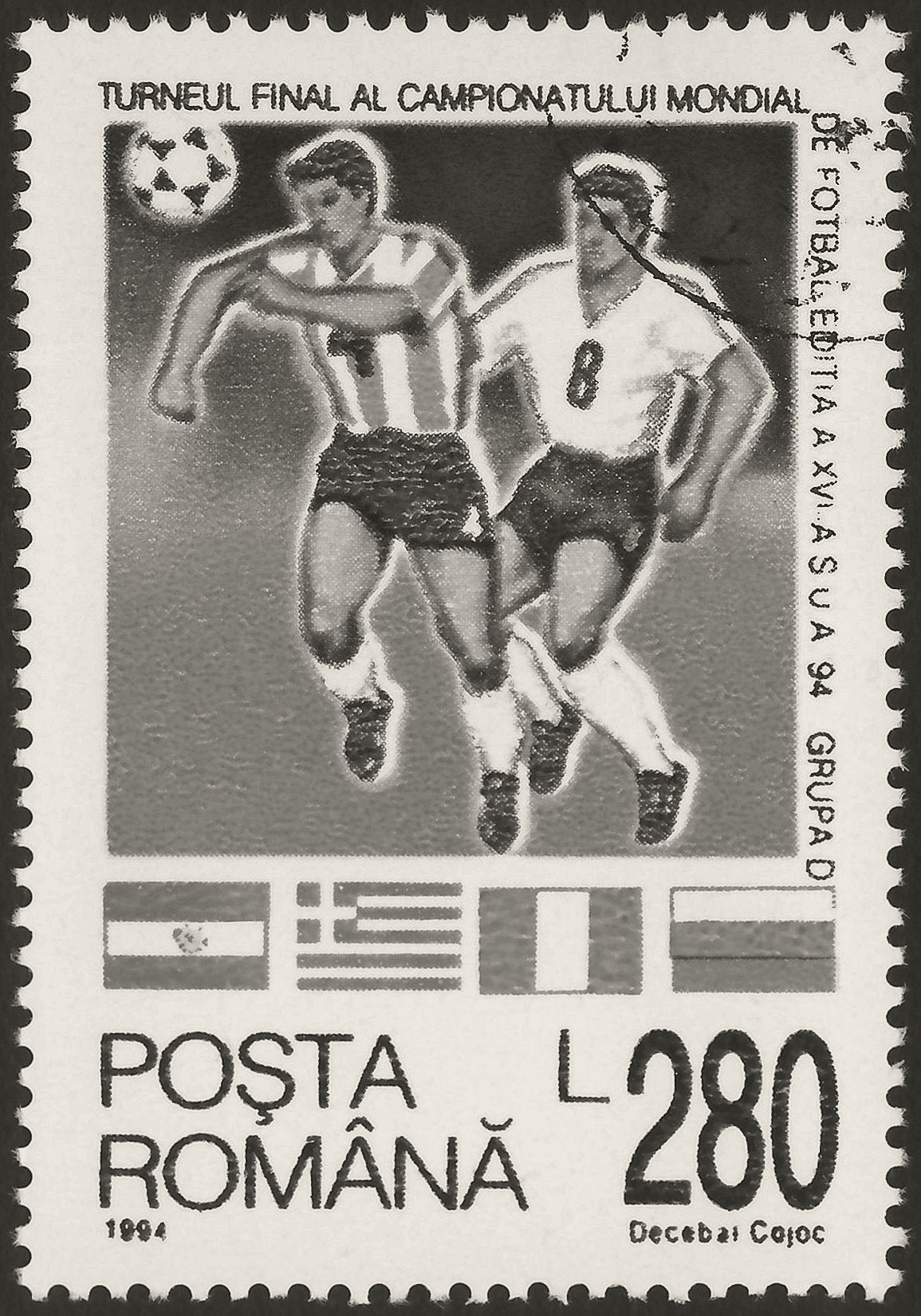
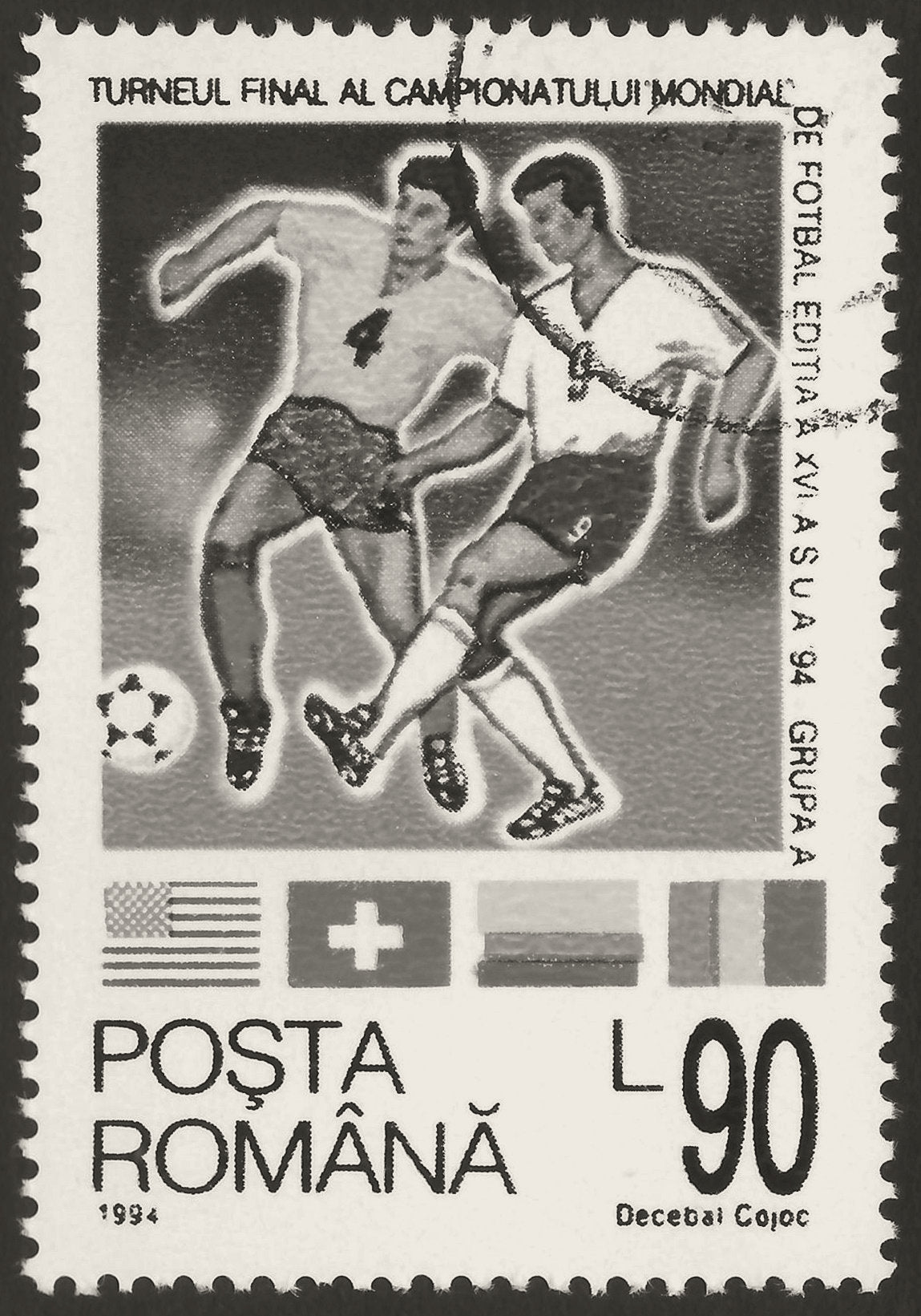
Anghel Iordănescu managed them. The group was Colombia, Switzerland and the United States. Romania beat Colombia three one, then were taken apart by Switzerland four one, then beat the hosts one nil through a Petrescu goal, and went through.
Argentina were next. Diego Maradona had been thrown out of the tournament days earlier after a failed drugs test, and it is customary to mention that, so here it is. It is also worth saying that Argentina still had Batistuta, Balbo, Simeone and Redondo, and that nobody in California was tipping Romania.
Dumitrescu scored in the eleventh minute. Batistuta equalised from a penalty five minutes later. Dumitrescu scored again two minutes after that, from a free kick. Just before the hour Hagi came away with the ball on the break and finished it. Balbo pulled one back with a quarter of an hour to go, and Romania held on.
The lob
The moment that survived is not from that match. It is from the group stage, against Colombia, on the eighteenth of June.
Hagi picked the ball up on the left, wide, a long way out. Around thirty-five yards, at an angle where nobody looks up. He hit it with the outside of his left foot and it went over Óscar Córdoba and into the far corner.
There has been thirty years of argument about whether he meant it. Córdoba was off his line, so the shot makes sense. The angle was severe enough that a cross is the ordinary choice. Hagi has said he meant it, more than once, with the mild irritation of a man who has been asked a hundred times. What is beyond argument is that it was struck with the outside of the boot from a standing start by a player who took perhaps a fifth of a second to decide.
He was called the Maradona of the Carpathians, which he seems to have tolerated rather than enjoyed. The comparison was about the left foot and the low centre of gravity and not much else. Hagi was a different kind of player: less of a dribbler, more of a passer, a man who moved the game twenty yards forward with one touch.
Stanford
The quarter-final was against Sweden, at Stanford, on the tenth of July.
Brolin put Sweden ahead just after the hour. Răducioiu equalised with two minutes left, then scored again in extra time to put Romania in front. Sweden were down to ten men by then. With five minutes of extra time remaining, Kennet Andersson headed an equaliser.
Penalties. Sweden scored five of six. Romania missed two, Petrescu and Belodedici, and went out.
If Romania hold on for five more minutes they play Brazil in a semi-final. That is the size of what turned on it. Instead the team flew home, and were met at the airport by an enormous crowd, which is the part everyone from that country mentions first when the subject comes up.
Istanbul, and the part that came later
Hagi signed for Barcelona after the World Cup and it did not work. Two seasons, a change of manager, not enough football. In 1996 he moved to Galatasaray, which at the time read like a man taking the money and going somewhere quieter.
It turned into the best club spell of his life. He spent five years there, won four Turkish league titles, and in May 2000 played in the UEFA Cup final in Copenhagen against Arsenal. Galatasaray won it on penalties. It was the first European trophy won by a Turkish club and it remains the only one. Months later they beat Real Madrid to take the European Super Cup as well.
Hagi was sent off in that UEFA Cup final, which is the sort of detail his career keeps producing. He was thirty-five, playing for a club nobody outside Turkey had taken seriously, and he had just won the thing.
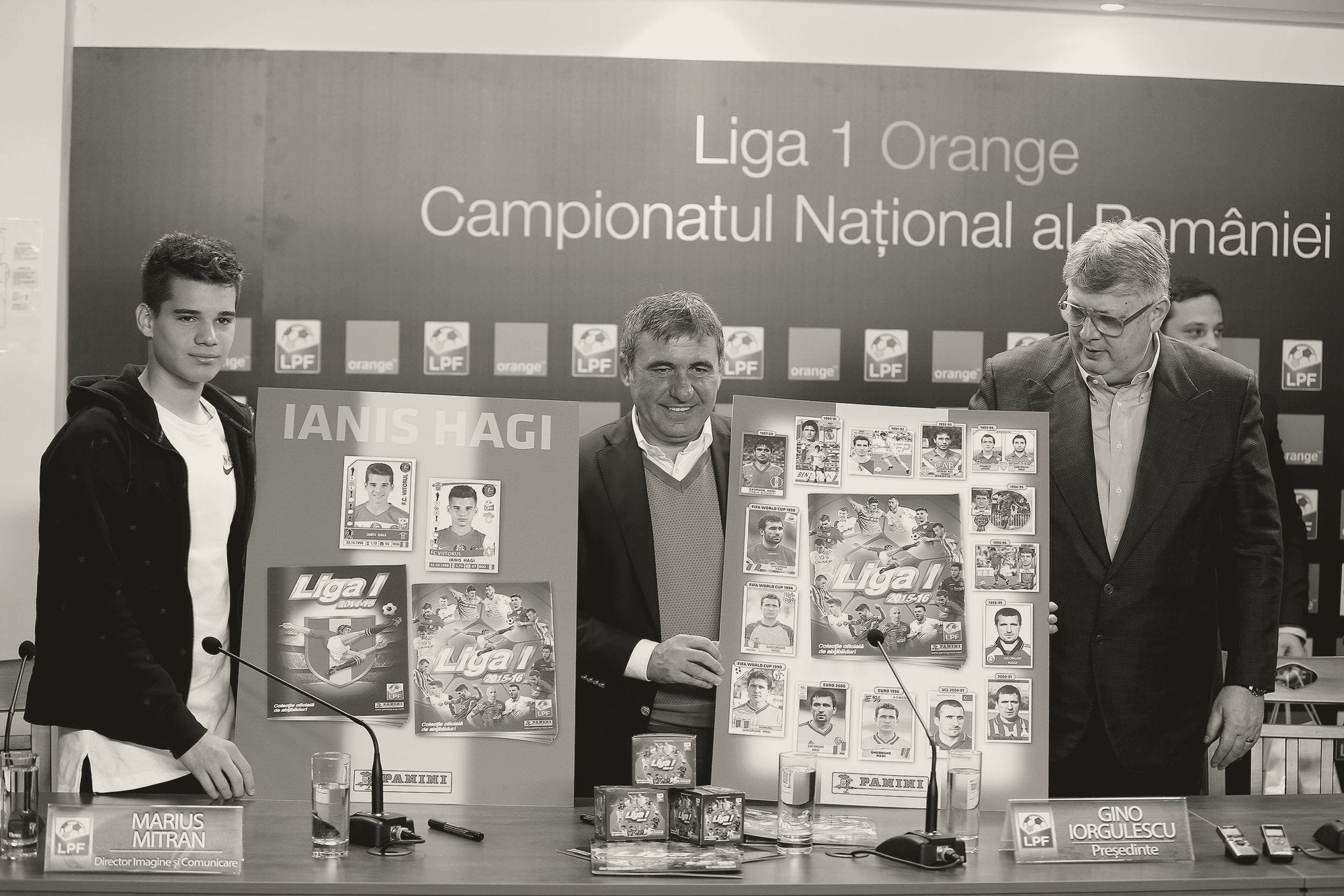
Then there is what he did afterwards, which is the part that says most about him. In 2009 he put his own money into an academy on the Black Sea coast at Ovidiu, near Constanța, and built a club around it. Viitorul Constanța came up through the divisions and won the Romanian championship in 2017 with a squad of teenagers, several of whom were sold abroad within a year. One of them was his son.
It is not difficult to read that as an answer to a specific problem. The system that had produced Hagi was coercive and it was dismantled in 1989, correctly, and nothing was put in its place. Thirty years later the best player the country ever had was funding the replacement himself, on a strip of land outside a port city, one age group at a time.
After
They kept going for a while. Romania qualified for Euro 96 and did nothing. They qualified for France 98 and went out in the last sixteen to Croatia, and the squad dyed their hair blond before their final group match, which is the other thing everybody remembers. For a period in the late nineties the world ranking had them in the top three, which says as much about the ranking as about them, but it was printed and people cut it out.
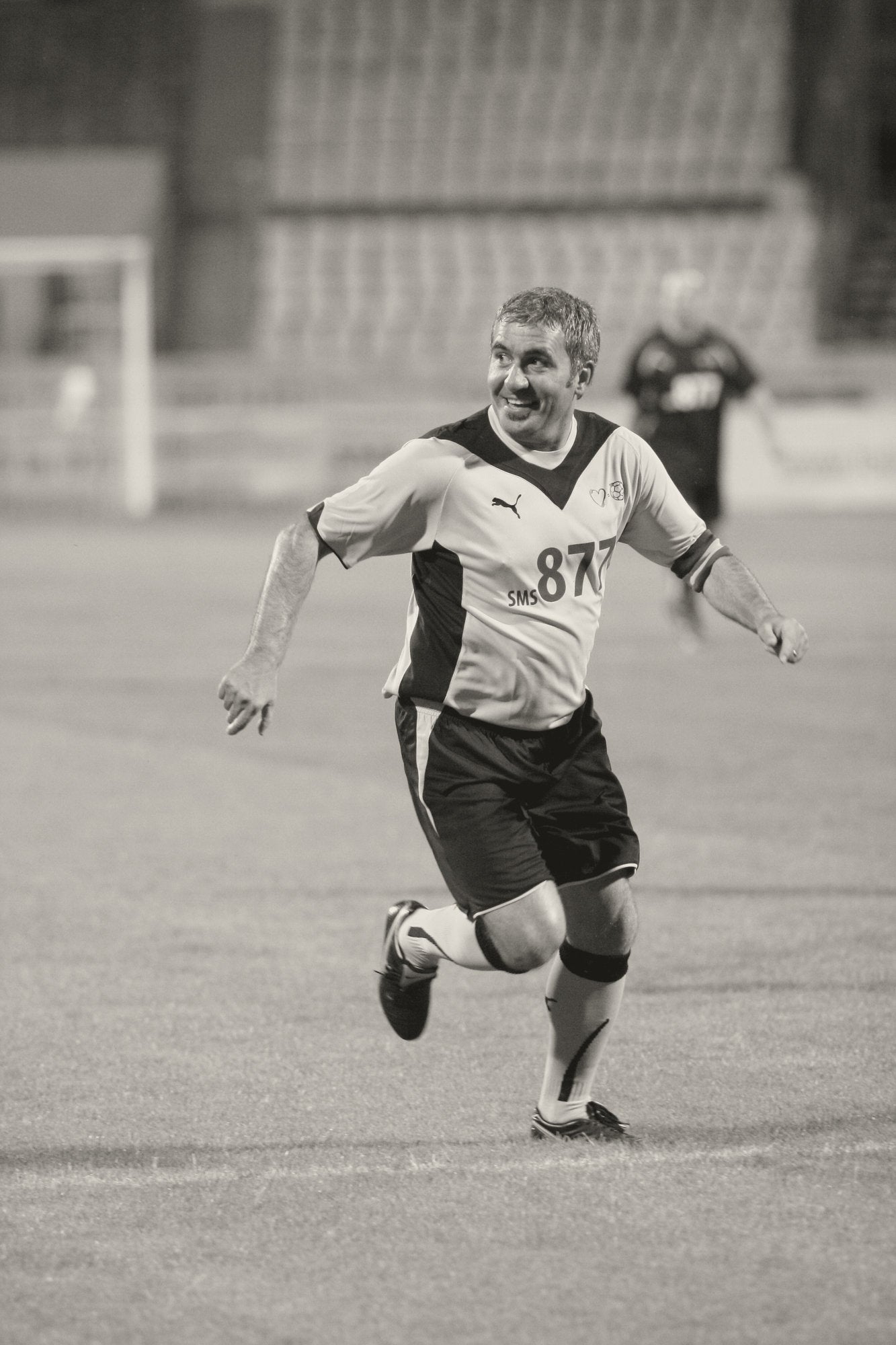
Hagi's last tournament was Euro 2000, where Romania beat England to get out of the group and then lost to Italy. He was sent off in that match. He was thirty-five and it was the end.
Then it stopped. Romania did not qualify for a World Cup for twenty-four years after 1998. The clubs slid out of European relevance. The system that had produced the players, brutal and coercive as it was, had also been an unusually efficient talent net, and nothing was built to replace it. What arrived instead was a market in which a Romanian club was a supplier and nothing else.
So the photographs from 1994 have become a specific kind of object in that country. Not a beginning, which is what they looked like at the time. A ceiling. Yellow shirts in Californian sunshine, a man in his twenties hitting a ball from thirty-five yards with the outside of his foot, and a scoreline against Argentina that people still say out loud in the order that makes it sound impossible.