
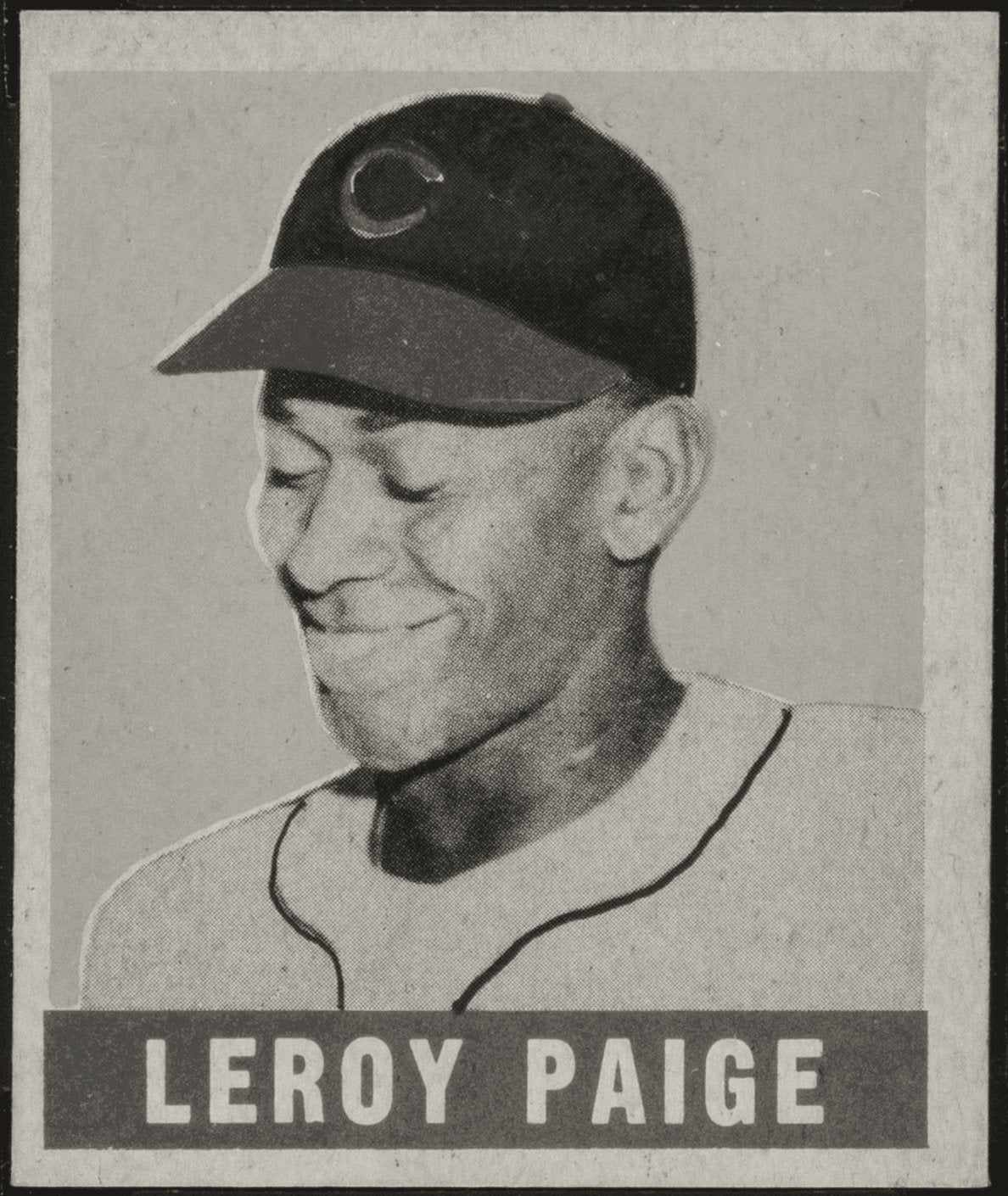
Fifty-nine. Set it down beside the sport it belongs to and it looks wrong, the way a price looks wrong when a zero has been added by mistake. Most pitchers are finished long before forty. The knees go, then the arm, then the appetite to keep asking both to do what they did at twenty-five. Fifty-nine is not an age at which men pitch. It is an age at which they are asked, gently, whether they remember pitching.
And yet the record is plain. On the twenty-fifth of September, 1965, Leroy Robert Paige, fifty-nine years and some two months old, pitched three innings of Major League baseball for the Kansas City Athletics against the Boston Red Sox. He allowed one hit, a double to Carl Yastrzemski, and no runs. He remains the oldest man ever to appear in a Major League game, and the distance between him and the next name on that list is measured in years, not days.
The number is real. What makes it hard to hold is not the arithmetic but the arithmetic's shadow: everything the figure implies about the years that came before it, and the door that stayed shut through the best of them. A man does not arrive at fifty-nine on a big-league mound by luck. He arrives there because the game spent the prime of his life pretending he did not exist, and because he outlived the pretence.
The boy who carried the bags
He was born in Mobile, Alabama, on the seventh of July, 1906, one of a large family, and christened Leroy Robert Page; the family later added the letter that gave the name its familiar shape. The birth year was, for most of his life, a subject of public teasing and private vagueness, a small mystery he was content to keep alive because it suited him, and because a Black man born in Alabama at the turn of that century had reasons not to place much trust in the keepers of official records. The accepted date is 1906. He rarely confirmed it and often, for his own amusement, complicated it.
The name that stuck came from the railway station. As a boy he earned coins carrying travellers' bags, the satchels roped together so that he could haul several at a time and be paid for each. A child who found a way to carry more than his two hands were built to carry. It is as fair a description of the working life that followed as anything the record offers.
He learned to pitch as a boy and never had to learn much more. The gift was there almost from the start: an arm of unusual length, a delivery of unusual ease, and, above all, control so fine that grown men told stories about it for the rest of their lives. By 1926 he was pitching for the Chattanooga White Sox, and the long road had begun.
Two decades on the wrong side of a line
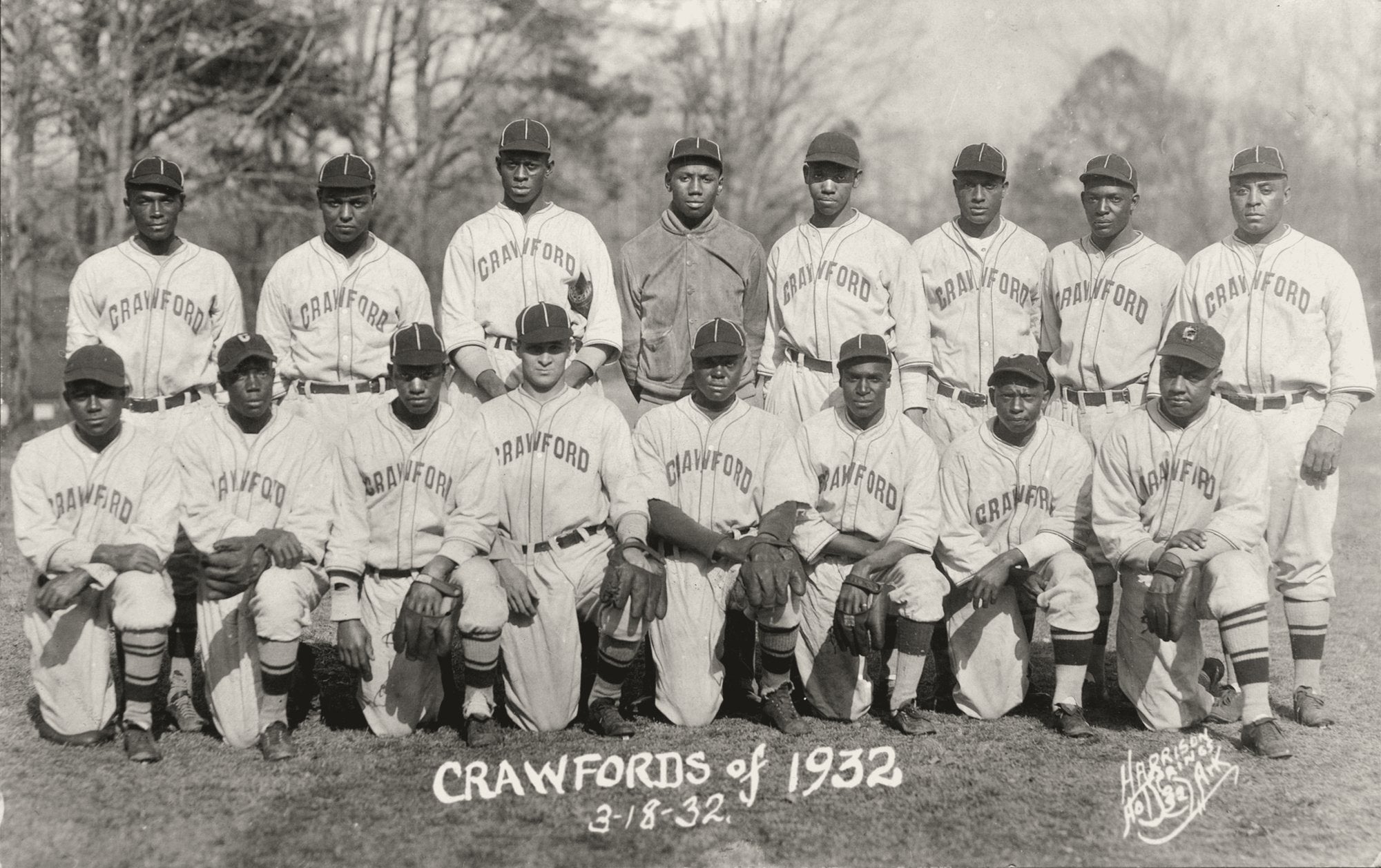
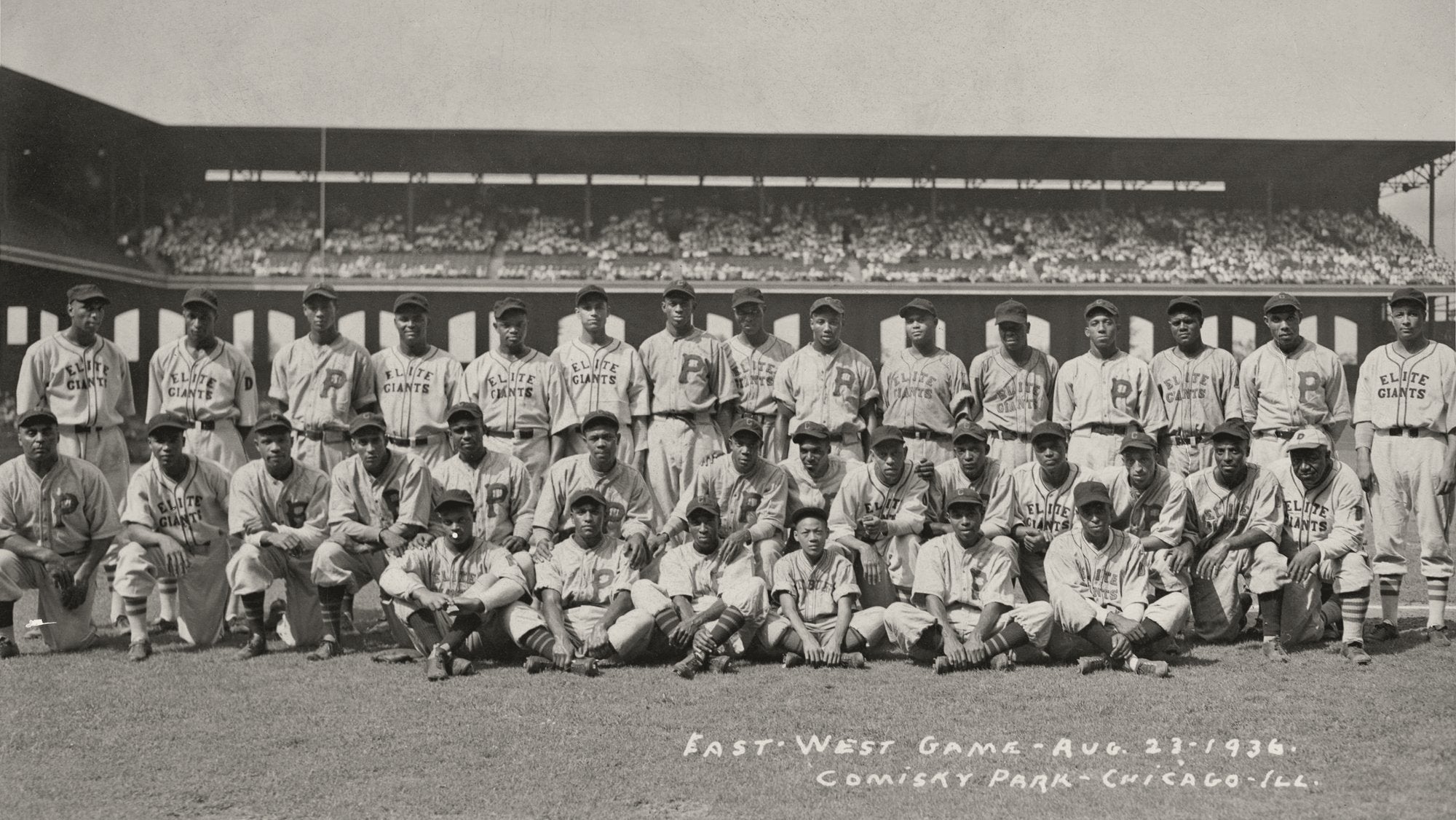
The road ran everywhere the white major leagues did not. From Chattanooga he went to the Birmingham Black Barons, then to the Baltimore Black Sox, then, around 1932, to the Pittsburgh Crawfords, one of the great teams of Negro League baseball, where he pitched to the catcher Josh Gibson and where the two of them became the finest battery in a sport the newspapers of record barely covered. Later there were the Kansas City Monarchs, the club with which his name is most lastingly joined.
Between and around the league seasons there was barnstorming, endless barnstorming, small towns and borrowed diamonds and games arranged for a share of the gate, because for a Black player in those years steady money meant near-constant motion. He crossed the country and then crossed it again. He went south for the winters, to the Dominican Republic in 1937, to Mexico, to Cuba, where the colour line did not follow and where a pitcher was simply a pitcher. Wherever the two baseball worlds were permitted to meet, in the exhibition games that closed each season, he pitched against the best white players of the age and beat them: Dizzy Dean, Bob Feller, the men whose names filled the papers he was kept out of.
This is the plain centre of the story, and it must be stated plainly. For more than twenty years, the years in which a pitcher is at his height, Satchel Paige was barred from the major leagues not by any deficiency of his own but by a colour line, an agreement drawn on no page and honoured on every field. The men who ran the white game knew who he was. They watched him win. They went home and kept the door shut. The record book that a country reads to remember its heroes had no place to write his name.
He answered the exclusion the only way available to him, by pitching, in front of anyone who would pay to watch, more often and against more varied competition than almost any player who ever lived. The estimates of the games he pitched and the men he struck out run past the point of ordinary belief and cannot be verified with the precision the modern record demands. What can be said without exaggeration is that a great many people, across a great many years and towns, saw with their own eyes something the official history declined to record.
Pitches with names
He gave his pitches names, which was part showmanship and part accuracy, because they were distinct enough to deserve them. There was the bee ball, so called because it hummed. There was the hesitation pitch, a delivery in which he paused, for a fraction of a second, at the top of his motion, so that the batter's timing came apart before the ball was even released. There were others, offered under different names on different afternoons, some of them, one suspects, invented on the spot to unsettle a particular hitter.
Beneath the theatre was control of an order rarely seen before or since. The stories, many of them well attested, describe a pitcher who could throw the ball over a chewing-gum wrapper laid down as a plate, who could knock a bottle off a fence pitch after pitch. On occasion, sure of what he could do, he would wave his own outfielders in off the grass and sit them down behind the mound, then strike out the side with no one standing in the field behind him. It was showmanship, and it drew the crowds that paid him, but a man cannot perform that particular act twice unless the control is exactly what he claims. The performance and the substance were the same thing.
He understood, too, that he was selling more than pitching. He was, for much of his career, the single largest attraction in Black baseball, the name on the poster that filled the park, and he knew the value of arriving late, of the slow walk to the mound, of the promise, sometimes kept, to strike out the first nine men he faced. None of it would have survived a single season had the arm not been able to answer for the mouth. It always could.
The oldest rookie the game had seen
In 1947 Jackie Robinson crossed the line at last, and the following summer the door that had been shut against Paige for twenty years came open, far too late to be justice and just in time to be history. On the seventh of July, 1948, recorded as his forty-second birthday, the Cleveland owner Bill Veeck signed him. He debuted days later, the oldest rookie in the history of the major leagues, a phrase that carries its own quiet indictment, because a rookie of forty-two is simply a great player who was made to wait.
He was not brought in as a sentimental gesture, and he did not pitch like one. That season he went six and one, with an earned run average of two and forty-eight, and he helped carry Cleveland to the pennant and then through the World Series, which the club won. In doing so he became the first Black pitcher to appear in a World Series, another of the firsts that trailed him through those years, each one a measure of how long the wait had been.
He returned to the majors in the early 1950s for the St. Louis Browns, again under Veeck, and there, in his mid-forties, he was named to the American League All-Star team in both 1952 and 1953. A man past the age at which most pitchers have become coaches was, twice, among the best in his league by the reckoning of the league itself. He had not declined during the twenty lost years. He had simply been kept where the record could not reach him.
The rocking chair
The last act belongs to 1965, and to a promoter's instinct as much as a pitcher's. Charlie Finley, who owned the Kansas City Athletics, brought Paige back for a single game, twelve years after his previous appearance in the majors, in part as a gate attraction and in part, one likes to think, as an act of respect paid in the only currency baseball keeps. A rocking chair was set out on the field for him to rest in between innings, and an attendant rubbed liniment into the old arm where the crowd could see, and the theatre of it was pure Finley. Some nine thousand people came.
Then the theatre ended and the pitching began, and the pitching was serious. Against the Boston Red Sox, who owned one of the most dangerous batting orders in the game, the fifty-nine-year-old Paige threw three scoreless innings and gave up a single hit, a double to Carl Yastrzemski, a man on his way to Cooperstown who was twenty-six years old that night. No runs. No walks. Three innings, and then the slow walk back, and the end of the longest pitching career the game has known.
It would be easy to file the evening under novelty, the old man and the rocking chair, and to smile and move on. That would be to miss it entirely. A man who has not pitched in the majors for over a decade does not, at fifty-nine, hold the best hitters in the American League to one hit across three innings unless the thing that made him great was very great indeed, and very durable. The rocking chair was a joke. The line score was not.
What they finally called it
For a long time the game had no honest way to hold what Paige was, because its highest honours were built around the very record that had excluded him. The years in the Negro Leagues, the barnstorming, the winters in Havana and Ciudad Trujillo, sat outside the ledger from which greatness was measured. To honour him fully, the game first had to admit that its ledger was incomplete, and that the incompleteness was its own doing.
In 1971 it began to. That year Satchel Paige was elected to the Baseball Hall of Fame, the first player chosen primarily for a career spent in the Negro Leagues, brought in through a special committee established for the purpose. The mechanism mattered less than the admission behind it: that the finest players of a segregated era had been great by any measure the game cared to name, and that their absence from the record was a wound in the record, not in them. He was, by then, sixty-four. He died in Kansas City in June of 1982.
What remains is a shape almost too clean to be true, and yet documented at every point. The best pitcher of his time, kept from the highest stage for the twenty years he was at his height. Admitted at last when he was already the oldest rookie the game had seen. Still standing on a major-league mound, and still getting men out, at fifty-nine. A talent that the colour line was built to erase, and that instead outlasted it, and was standing, unhurried, when the line came down. He liked to say that age was a question of mind over matter, that if you did not mind, it did not matter. The record suggests he meant it, and that for once the saying and the man agreed.