
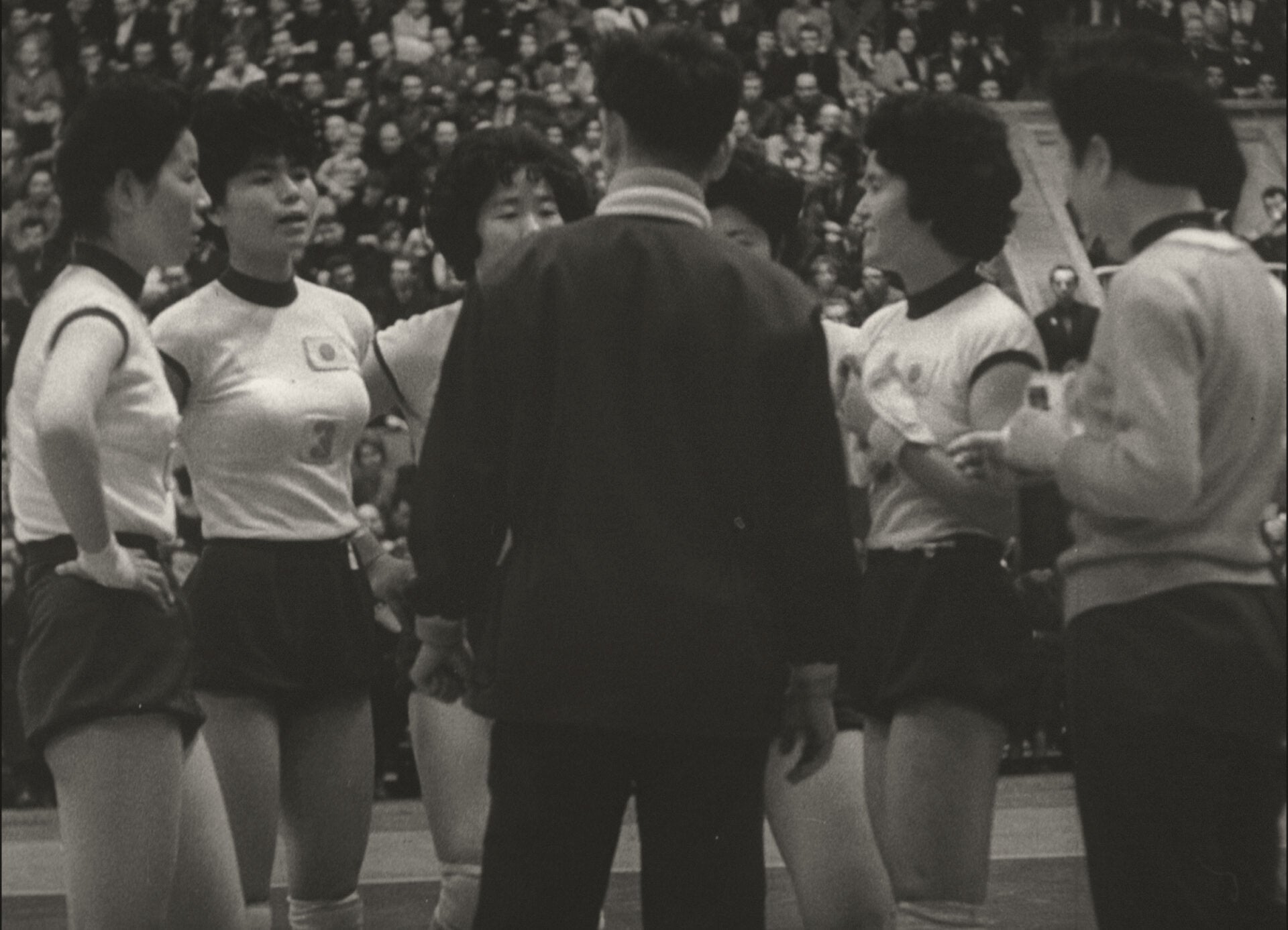
The team came from a factory.
Dai Nippon Boseki, known as Nichibo, was a large Japanese textile company, and its plant at Kaizuka in Osaka Prefecture had a women's volleyball team in the way that large Japanese firms of the period had company teams: as welfare, as recruitment, as a way of binding young female employees to an employer who was also their landlord and often their whole social world.
The women worked. They were spinners and weavers on ordinary factory wages, living in company dormitories, and they played volleyball afterwards. That is not a colourful detail attached to an elite sports programme. It is the actual arrangement. The best team in the world was the recreational side of a spinning mill.
By the early 1960s the Nichibo Kaizuka team was effectively the Japanese national team, because it was better than the national team would have been if selected from anywhere else.
Daimatsu
Hirofumi Daimatsu had been an officer in the Imperial Japanese Army and had survived the Burma campaign, which a great many men did not. He came home, went to work for Nichibo, and took over the women's volleyball team.
His methods have been described in detail, by him and by others, and they are hard to read now. Sessions ran from the end of the working day until after midnight. He hit the players. He fired balls at them from close range for hours, so that they learned to move to the ball rather than flinch away from it. He drove them past the point of exhaustion deliberately, on the stated theory that a person only finds out what they can do after they believe they have finished.
He wrote a book about it afterwards which sold very well and was read, at the time, as a manual for national recovery. Japan in the early sixties was nineteen years out of a catastrophic defeat and was rebuilding at extraordinary speed, and a story about ordinary factory women being driven beyond endurance to beat the world fitted the moment exactly.
The players' own accounts, given over the following fifty years, are not simple. Some have defended him without reservation. Some have said plainly that what happened would not be acceptable now. Several have said both things in the same interview, which is probably the honest position.
The rolling receive
The technique that came out of the Kaizuka gymnasium is the thing that outlasted everybody involved.
Before it, a player who could not reach a ball on her feet lost the point. Daimatsu's answer was to teach the players to dive full length, play the ball, and then continue the movement into a roll that brought them back upright and ready. It is called the rolling receive. It converts a lost ball into a live one and it puts the player straight back into the rally.
It was drilled until it stopped being a decision. Watch any volleyball match at any level anywhere in the world today and you will see it several times a set, performed by people who have never heard of Nichibo Kaizuka or of the man who invented it.
The streak, and the name
In 1961 the team toured Europe and won match after match against sides that had never seen anything like them. Soviet reporters, casting around for a phrase, called them the witches of the Orient. It was not entirely a compliment and it stuck immediately.
They won the world championship in Moscow in 1962, beating the Soviet Union on their own ground.
The winning run is usually given as two hundred and fifty-eight consecutive victories. Figures like that are difficult to audit at this distance and the exact count depends on which fixtures you include. What is not in dispute is that for several years they did not lose to anybody, anywhere, and that the run ended only when they chose to stop.
October 1964
Volleyball entered the Olympic programme for the first time at the Tokyo Games. That was not a coincidence: the sport's inclusion owed a good deal to Japanese enthusiasm for it, and Japan went into the tournament knowing exactly what was expected.
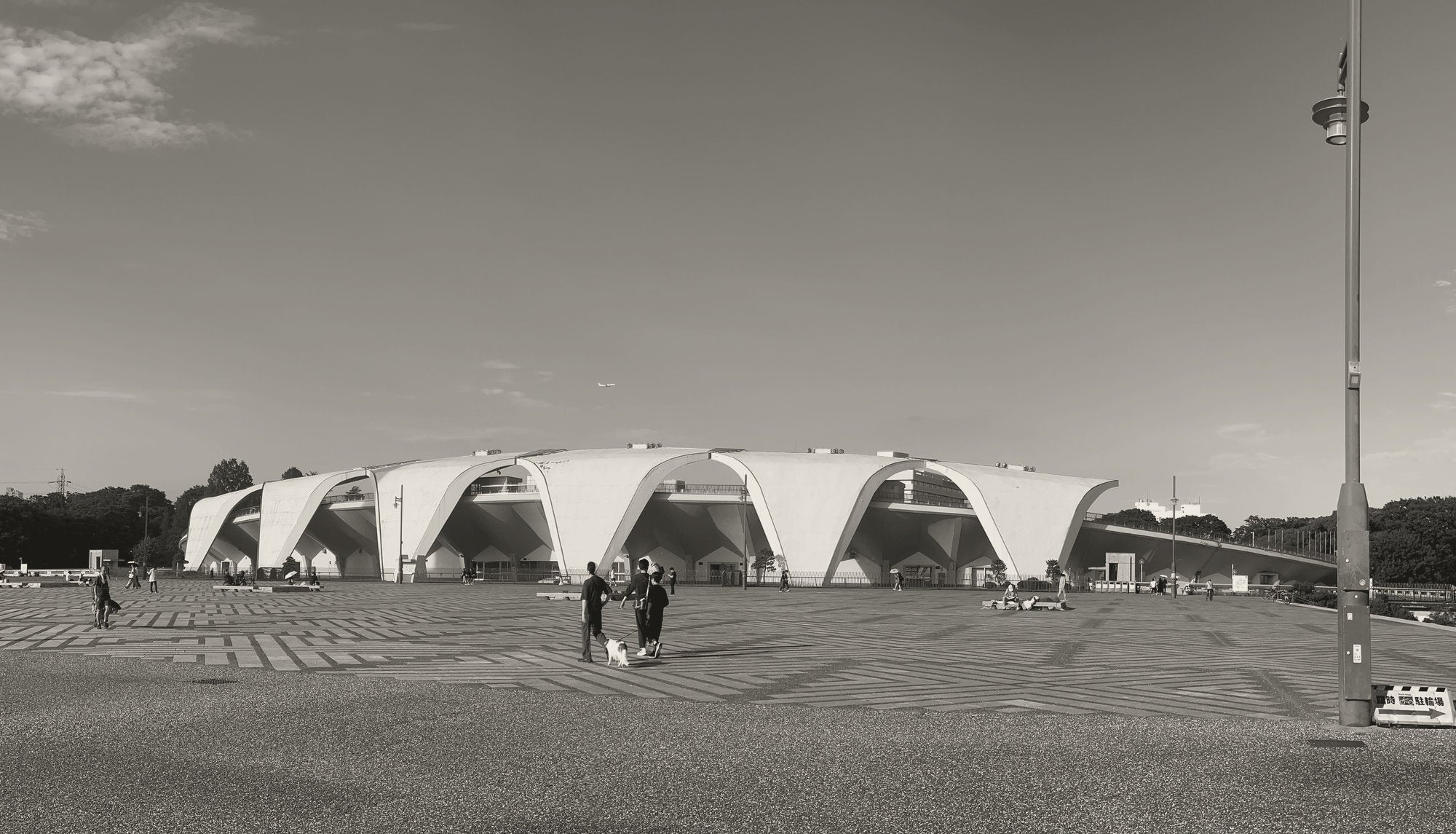
The tournament was played at Komazawa, in the park built for the Games in the south-west of the city. The final, against the Soviet Union, was on the twenty-third of October 1964. Japan won it three sets to nil.
The television audience was among the largest ever recorded in Japan. The figures quoted vary and the highest of them should be treated carefully, but the share was somewhere around two-thirds of everybody watching anything, in a country that had bought television sets in enormous numbers specifically for these Games. This was the point of the whole exercise, for the government and for the broadcasters: a nation that had been an international pariah two decades earlier, hosting the world, on live satellite television, and winning.

Afterwards
Most of the team retired within months. They were in their twenties. Several married quickly, some of them to men they had met through the company, and went into ordinary lives in ordinary places.
That is the part that separates this story from the sporting fairy tale it is sometimes turned into. There was no professional career to move into, no endorsement money, no second act. The company team had served its purpose and the women went back to being employees, and then wives, and the extraordinary thing they had done was over by the time they were thirty.
Daimatsu was elected to the upper house of the Japanese parliament in 1968 and served a term. He died in 1978.
Nichibo merged and was renamed and eventually the textile industry in that part of Japan contracted the way textile industries do. The plant at Kaizuka is not what it was.
What the story turned into
The 1964 team did not stay a sporting result. It became a template.
Japanese volleyball went on winning: silver at Mexico City in 1968, bronze at Munich in 1972, gold again at Montreal in 1976. The men's team won in 1972. For roughly fifteen years Japan was a genuine volleyball power, and the technical vocabulary the sport uses worldwide still contains a good deal of what was worked out in Kaizuka.
The cultural effect was larger. Four years after Tokyo, a comic began serialising about a girl, a volleyball team and a coach who pushed her past what she thought she could bear. It was enormously popular and it was followed by a great many others, in volleyball and in every other sport, until the shape of the thing had a name. The idea that ability is produced by suffering, that the coach who hurts you is the coach who respects you, that the correct response to exhaustion is to continue: all of that has a specific lineage in Japanese popular culture and a good deal of it leads back to one factory gymnasium in Osaka Prefecture.
That inheritance has been argued about seriously in Japan for the last twenty years, particularly in schools, where the same logic produced a long record of injury and abuse in club sport. It is difficult to read the Daimatsu material now without that argument in the background.
The women themselves have generally declined to settle it. Asked, in their seventies and eighties, whether it was worth it, they have tended to say that it was, and then to say that they would not want it done to their granddaughters. Both halves of that are worth taking seriously.
Komazawa now
The two photographs here are of Komazawa Olympic Park, which is where the 1964 volleyball tournament was played and which is still there, in the southwest of Tokyo.
The gymnasium is the low white building with the sweeping concrete arches, finished for the Games and still in use. The tower is the Olympic control tower, a stack of concrete fins that has aged into something between a monument and a piece of municipal furniture. People walk dogs across the plaza in front of it. There are food kiosks. Children ride bicycles around the base of the tower.
There is very little there to tell you what happened. No free photograph appears to exist of the women themselves at a resolution worth printing, which is its own small comment on how the sport was recorded. What survives is the architecture, the technique they invented, and a number that people repeat without checking: two hundred and fifty-eight.