
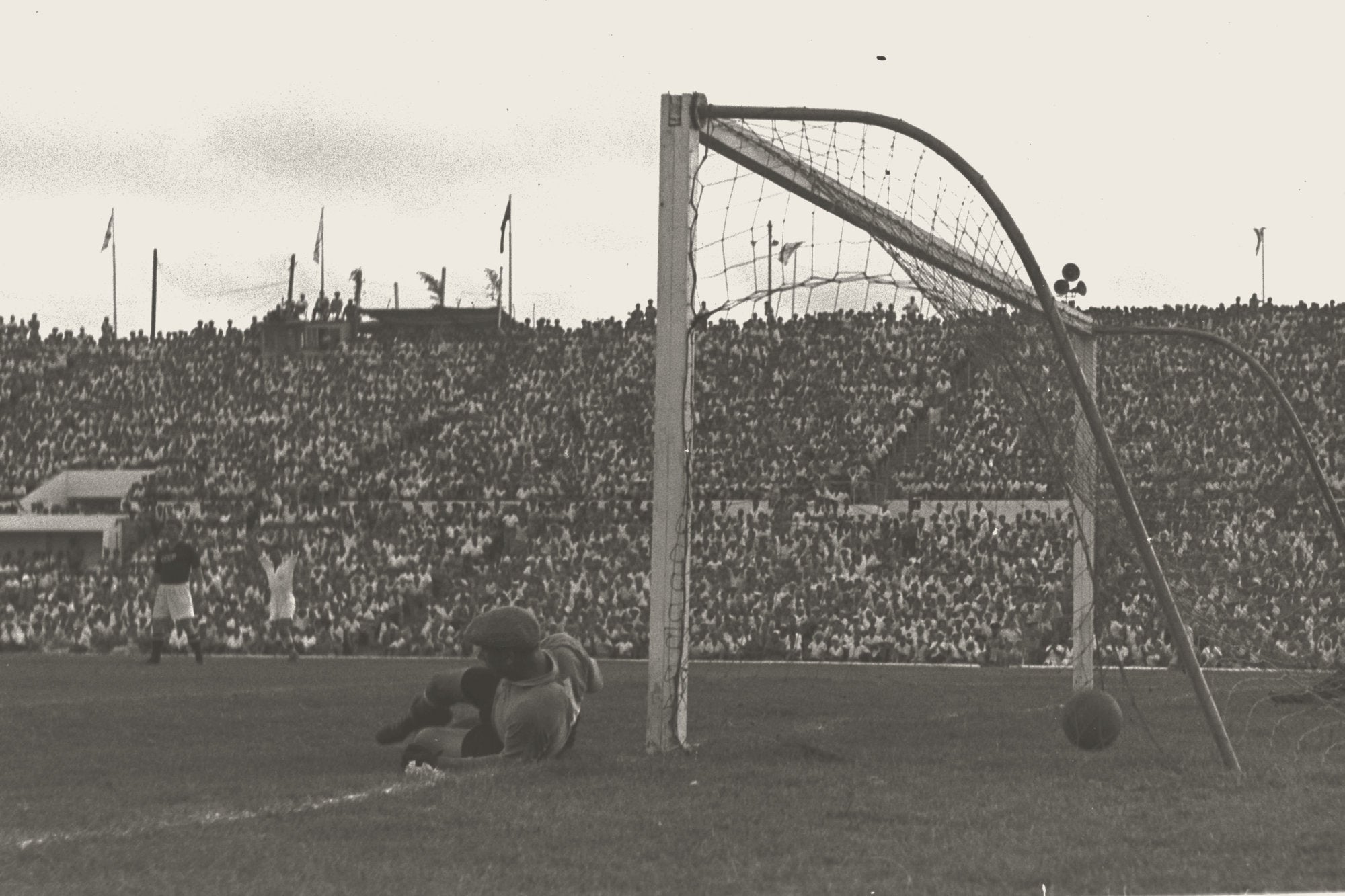
The Ballon d'Or has been given out since 1956. In all those years it has gone to a goalkeeper exactly once, in 1963, to a man from Moscow who had never played club football anywhere else and never would.
That is the whole hook, and it is worth sitting with for a moment before the name arrives. Not the best goalkeeper of a decade. Not one of a small group. One, in seventy years, out of everybody.
His name was Lev Yashin. He kept goal for Dynamo Moscow from 1950 to 1970 and for the Soviet Union for most of that time, and the reason the record has never been matched is not entirely that nobody has been as good. It is also that the award drifted toward attacking players and stayed there. Both things are true. The record still stands.
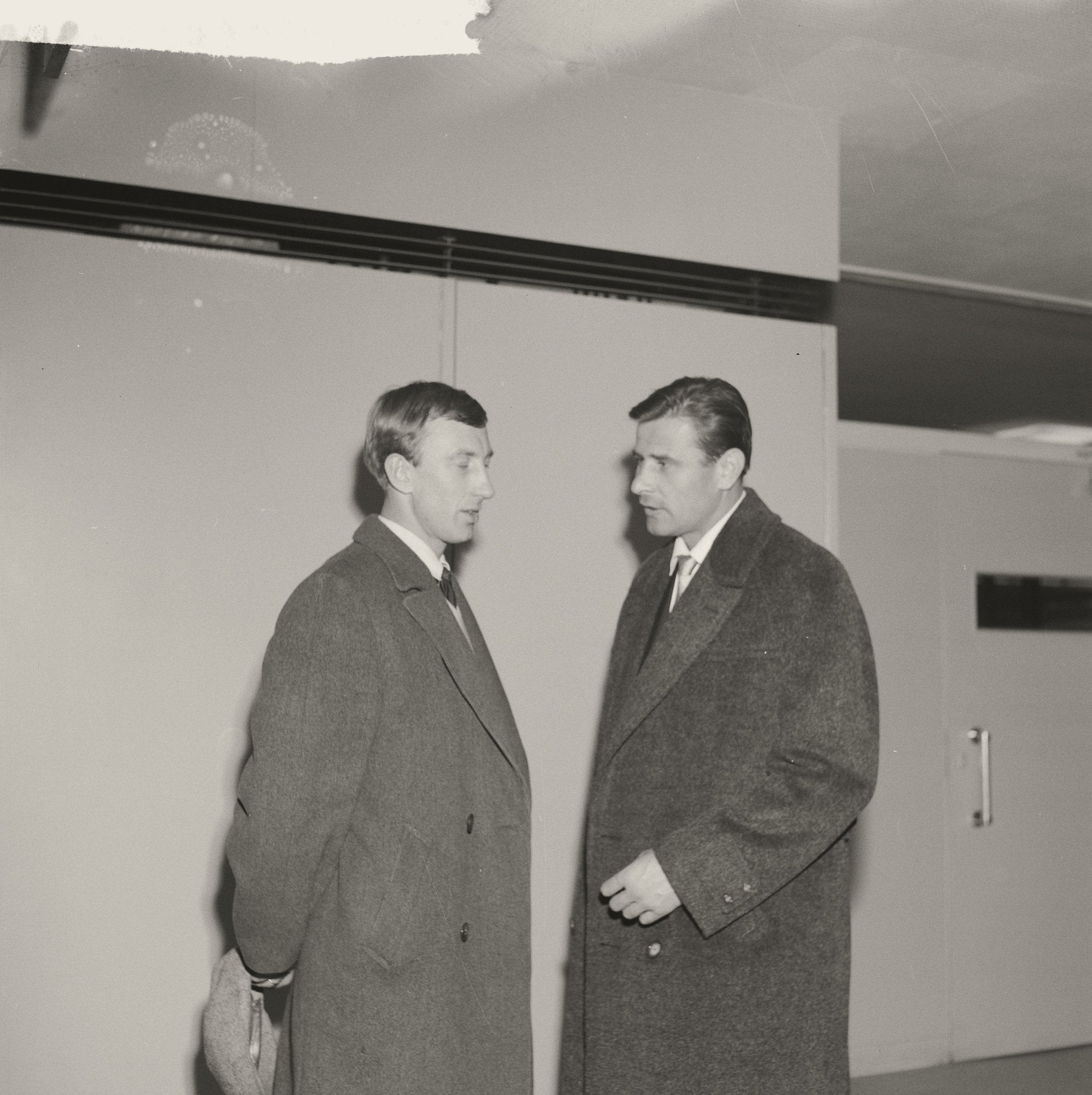
The bench, and the factory before it
He was born in Moscow in 1929, into the sort of household where the question of what a boy would do with his life had a short answer. When the war reached the country his family was evacuated east, and Yashin went into a factory at around twelve years old. This was normal. Children worked, and the work was not light, and it went on for years.
He came back to Moscow after the war and found his way into Dynamo, the club of the interior ministry, which is a detail worth stating plainly rather than dressing up. Soviet clubs belonged to institutions. Dynamo belonged to the security apparatus, the army had its own, the railways had theirs. Where a man played said something about where he stood, and it was not always something he had chosen.
He did not walk into the team. He spent his first seasons behind other goalkeepers, on the bench, in training, waiting. In the same years he kept goal for Dynamo's ice hockey side and was good enough to win a cup with them. There was a genuine choice to be made and he made it in football's favour, at a point when nothing suggested that was the wiser bet.
What he actually changed
The position he inherited was small. A goalkeeper stood on his line, dealt with what arrived, and threw or kicked the ball away afterwards. The penalty area belonged to whoever was tallest.
Yashin took the area. He came off his line for crosses instead of waiting to be beaten by them. He punched when punching was the right answer and caught when it was not. He organised the men in front of him out loud, continuously, which sounds trivial and was not, because it meant a goalkeeper telling senior professionals where to stand. And when the ball was his, he looked up and threw it to a teammate to start something, rather than clearing it into the middle distance and hoping.
None of that is exotic now. All of it is simply what the job is. That is exactly the point. He did not add a flourish to the position, he redrew it, and the redrawing was so complete that it became invisible. A boy watching a match this weekend will see a goalkeeper sprint twenty yards to the edge of his box, take the ball down, and start a move with his hands, and will not think anything of it at all.
The numbers that follow him around are worth handling carefully. A hundred and fifty penalties saved, more than two hundred and seventy clean sheets. These get repeated a great deal more often than they get checked, and the record-keeping of Soviet domestic football was not built for that kind of audit. What is not in dispute is five league titles, three cups, and twenty years in which Dynamo were rarely beaten by anything that came through the middle.
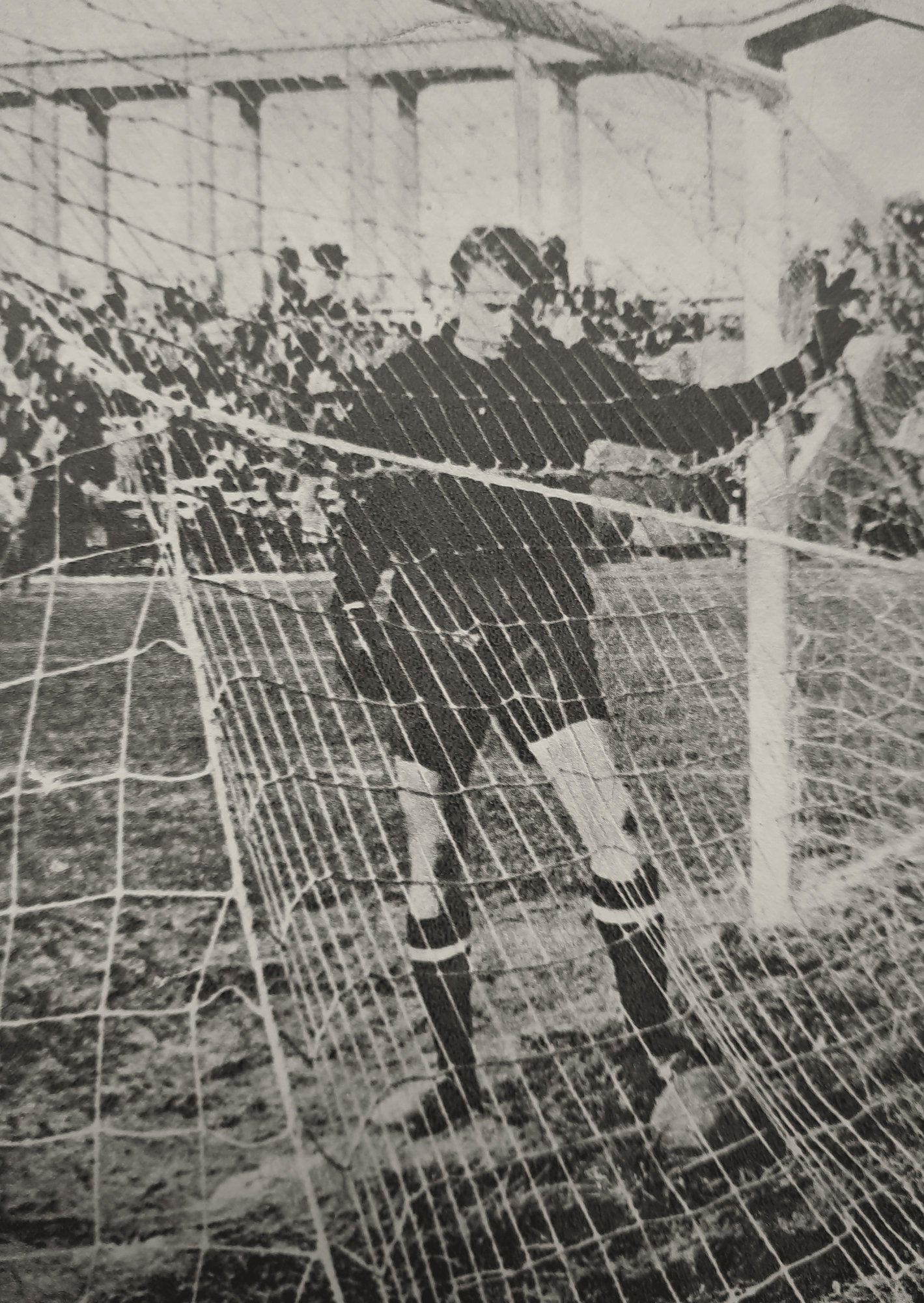
Paris, 1960
The European Nations' Cup, which is now the European Championship, was played for the first time in 1960. Seventeen countries entered. Several of the strongest in Europe did not, on the grounds that it was an unnecessary competition, and one quarter-final never took place at all: Spain was drawn against the Soviet Union and the Spanish government would not let the team travel to Moscow. The Soviets went through without playing.
The final was in Paris on the tenth of July, at the Parc des Princes, and it was Soviet Union against Yugoslavia. The crowd was a little under eighteen thousand in a ground built for far more, in a city that had mostly come to watch the host nation and had been denied that in the semi-final. Yugoslavia led at half time. Metreveli equalised early in the second half. It went to extra time, and Viktor Ponedelnik headed the winner with about seven minutes left.
So the first trophy in the history of European international football was won by a team almost nobody in western Europe watched, in a half-empty stadium, and the goalkeeper who kept it was the best in the world and would not be recognised as such for another three years.
Chile, and the year he was supposed to be finished
The 1962 World Cup went badly. In the group stage the Soviet Union led Colombia four to one and drew four all. One of the Colombian goals was scored directly from a corner, by Marcos Coll, and it remains the only goal ever scored that way in a World Cup. It went in past Yashin. Then Chile beat them two to one in the quarter-final and both goals were the kind that get attributed to the goalkeeper whether or not that is fair.
What happened next at home was not gentle. He was thirty-three, he had been the fixed point of the national team for a decade, and the press decided he was finished. He was booed at Dynamo. There are accounts of stones through windows, though those accounts tend to grow in the telling. What is clear is that a country turned on him quickly and without much interest in the twelve years that had come before.
He kept playing. There was not much else on offer.
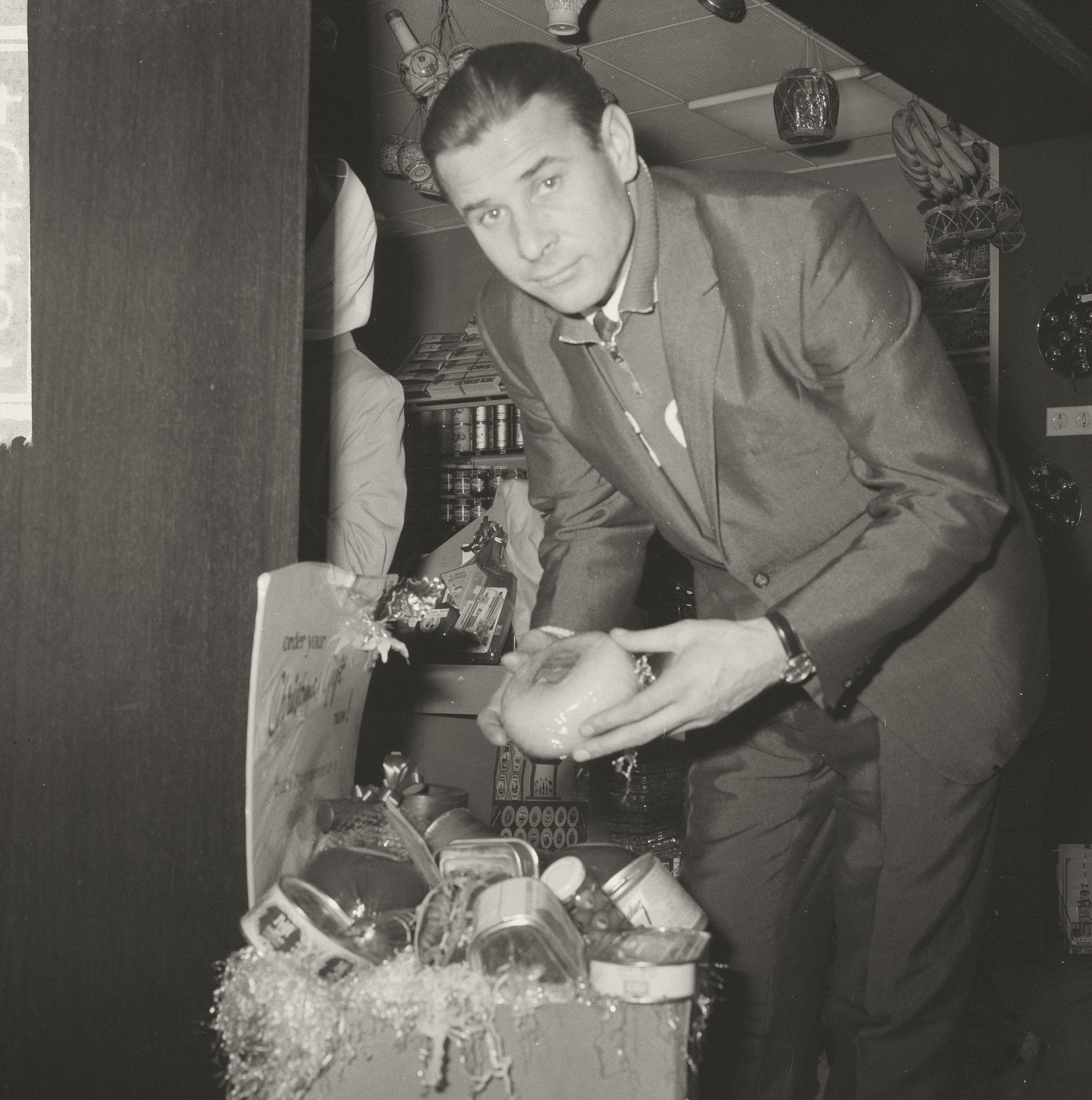
Wembley
In October 1963 the Football Association marked its hundredth year with a match at Wembley: England against a Rest of the World side assembled from everywhere. Yashin was invited and played the first half.
People who were there talk about that forty-five minutes with a kind of care, as though they expect not to be believed. He saved everything. Two of the saves, from Douglas and from Greaves, get described in almost identical terms by people who never met each other. England won the match late on, and it did not matter, because the thing that came out of the afternoon was a reminder, delivered in front of the English press, that the best goalkeeper alive was a thirty-four-year-old Muscovite whose own newspapers had written him off eighteen months earlier.
That December he won the Ballon d'Or. He is still the only goalkeeper on the list.
Madrid, 1964
The second European Nations' Cup was held in Spain, and the Soviet Union reached the final again.
Four years earlier Spain had refused to play them. The Franco government would not permit the national team to travel to Moscow for a quarter-final, and the Spanish federation forfeited. By 1964 the calculation had changed, the tournament was in Spain, and the two countries met in the final at the Bernabéu on the twenty-first of June with the head of state in the stand.
Spain won two one. Pereda scored early, Khusainov equalised almost immediately, and Marcelino headed the winner with six minutes left. It is not a match Yashin is blamed for. It is a match that mattered a great deal more to the people in the stadium than the football justified, and the Soviet party went home having lost a final that had been arranged, in every sense, on somebody else's ground.
Two years later, at the World Cup in England, the Soviet Union reached the semi-finals. They lost to West Germany at Goodison Park and then lost the third-place match to Portugal. That remains the best the country ever managed at a World Cup, under any of its names. Yashin was thirty-six.
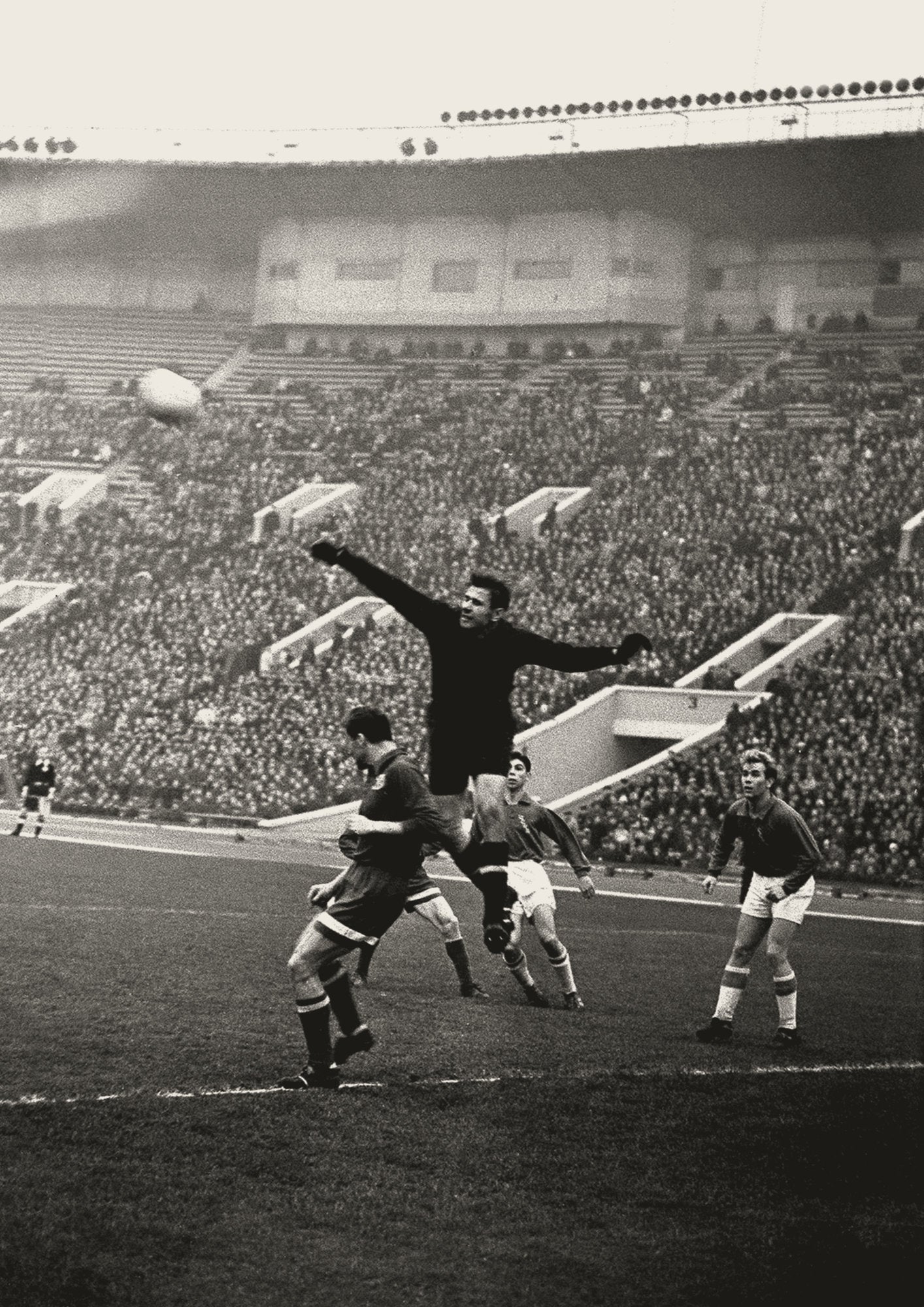
The black
He played in black from head to foot, without a number for much of his career. The practical explanation is that it was the plainest kit available and it made him harder to read against a dark crowd. The other explanation, the one that stuck, is that it made him look like a single deliberate shape at the back of a photograph, which in the black and white film of the period he did.
The nicknames came from outside. The Black Spider in the English-speaking press, the Black Panther elsewhere. He does not seem to have used either. Interviews with him read as unusually flat for a man of his standing: he talks about positioning, about the defenders in front of him, about the state of pitches. He was not building anything.
After
He played his last match for Dynamo in 1970 and had a farewell at the Lenin Stadium the following year, in front of a full house, against a side of players brought in from around the world. Then he went into the club's administration and stayed there, which is what happened to Soviet sportsmen who did not make trouble.
The end was hard. He smoked heavily for most of his life, his circulation failed, and in 1984 his left leg was amputated. He was fifty-four. He lived another six years, increasingly out of view, and was made a Hero of Socialist Labour a few days before he died in March 1990, at sixty. The country he had played for had less than two years left itself.
He never played abroad. This is the part that tends to get skipped, and it is the part that most defines him. The transfers that would have been offered to a goalkeeper of that standard in any other country were not available to him and were never seriously discussed. He spent two decades at one club in one city because that was the arrangement, and the arrangement was not negotiable. Whatever he was, he was that entirely inside a system that has since been dismantled, in front of crowds that were photographed rarely and filmed worse.
What is left is a small amount of grainy footage, a set of numbers that nobody can fully verify, and a single line in a list that has been running for seventy years and has his name on it once.