
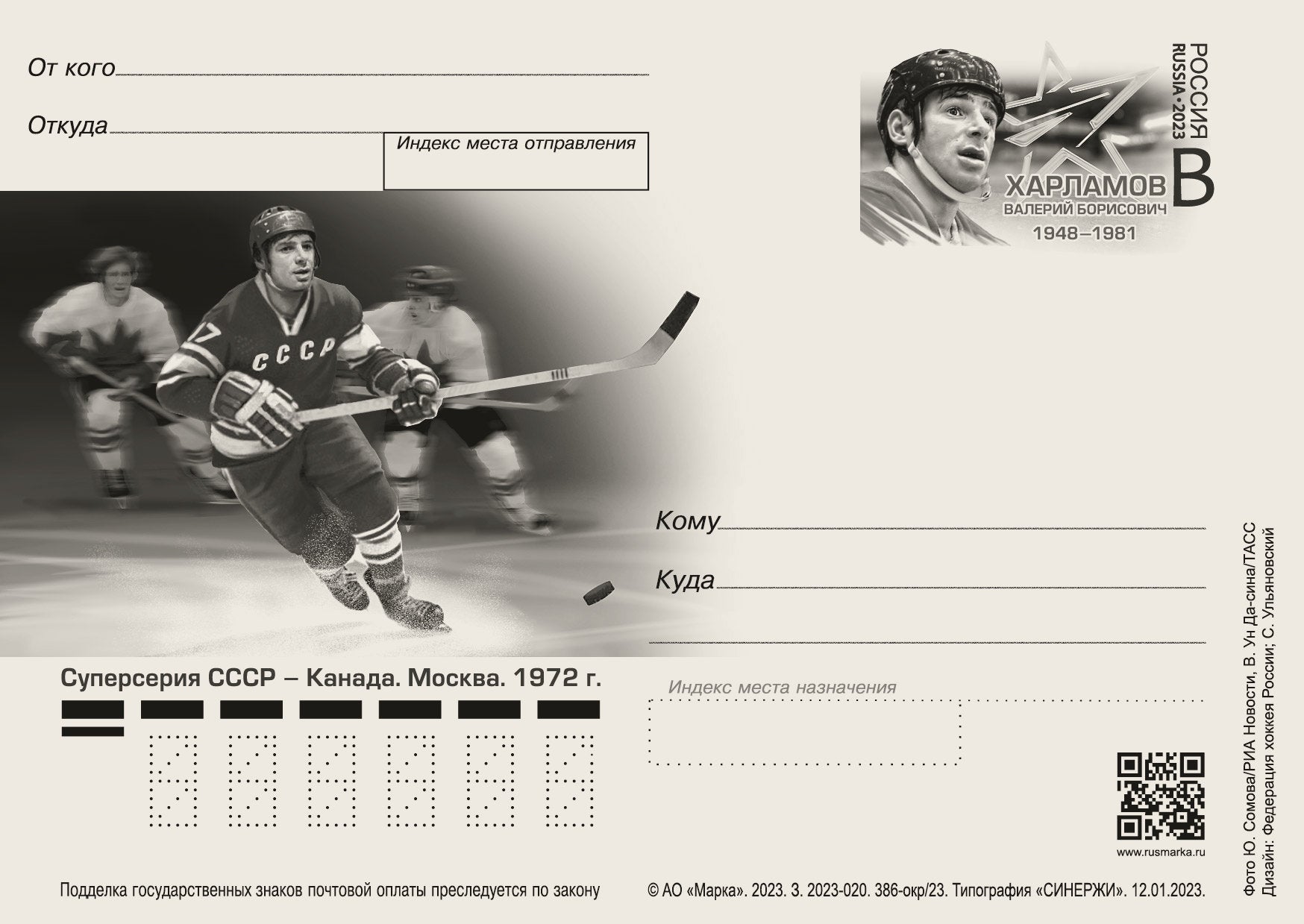
The number on the back was seventeen and it belonged to Valeri Kharlamov, who was five foot eight, weighed a little over eleven stone, and was for about a decade the most frightening forward in the world.
His mother was Spanish. Carmen Orive-Abad had been sent out of the Basque country as a child during the Spanish Civil War, one of thousands of children evacuated to the Soviet Union, and she never went back. She married a Russian metalworker. Their son grew up in Moscow, had rheumatic fever as a boy and was told not to play sport, and went on to become the best hockey player his country produced.
That is the sort of biography the Soviet system liked to publish. In this case it was also true.
An army that did no soldiering
The Olympics of that era were for amateurs. Professional athletes were barred, and the rule was policed against western countries with some enthusiasm.
The Soviet answer was administrative. The Central Sports Club of the Army in Moscow, CSKA, took the best players in the country and gave them military rank. They were officers. They drew army pay. They had never been near a barracks in the ordinary sense and never would be. And because they were soldiers rather than professional athletes, they were amateurs, and the Olympics were open to them.
The consequence was that the Soviet national team was effectively a single club side that trained together year round. Other countries assembled a national team for a fortnight. The Soviets had one that had been playing together, in the same building, under the same coaches, for years.
Anatoli Tarasov built the method in the 1950s and 1960s: skating drills borrowed from ballet, passing patterns rehearsed until they were reflex, an insistence that the puck should move rather than the man. What came out of it did not look like Canadian hockey and was not meant to. It looked like a team that had decided in advance where everybody would be.
The results
Olympic gold in 1964, 1968, 1972, 1976, 1984 and 1988. World championships in a quantity that becomes boring to list, more than twenty of them. Between the early sixties and the end of the country, the Soviet Union lost the world title a handful of times and the Olympics twice.
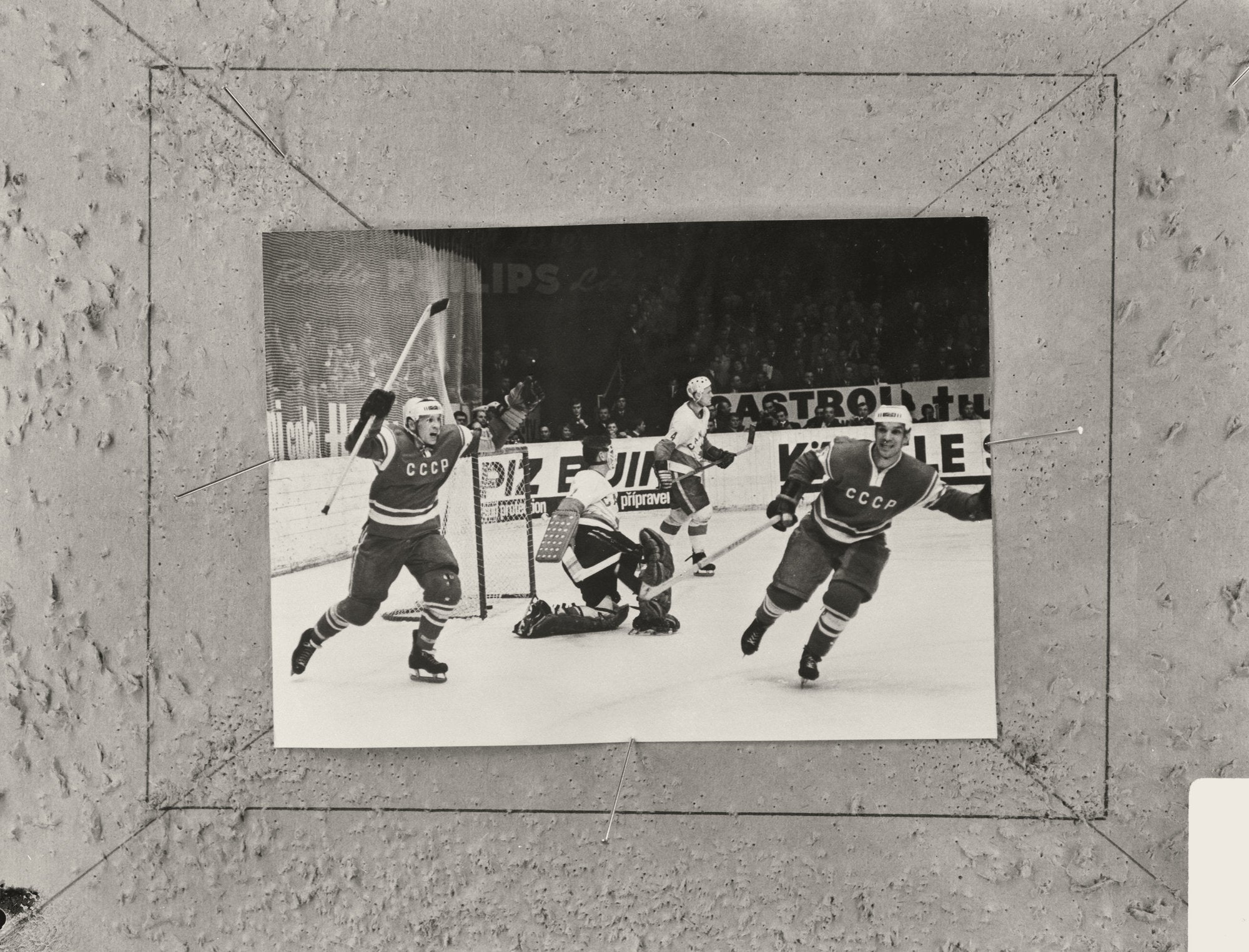
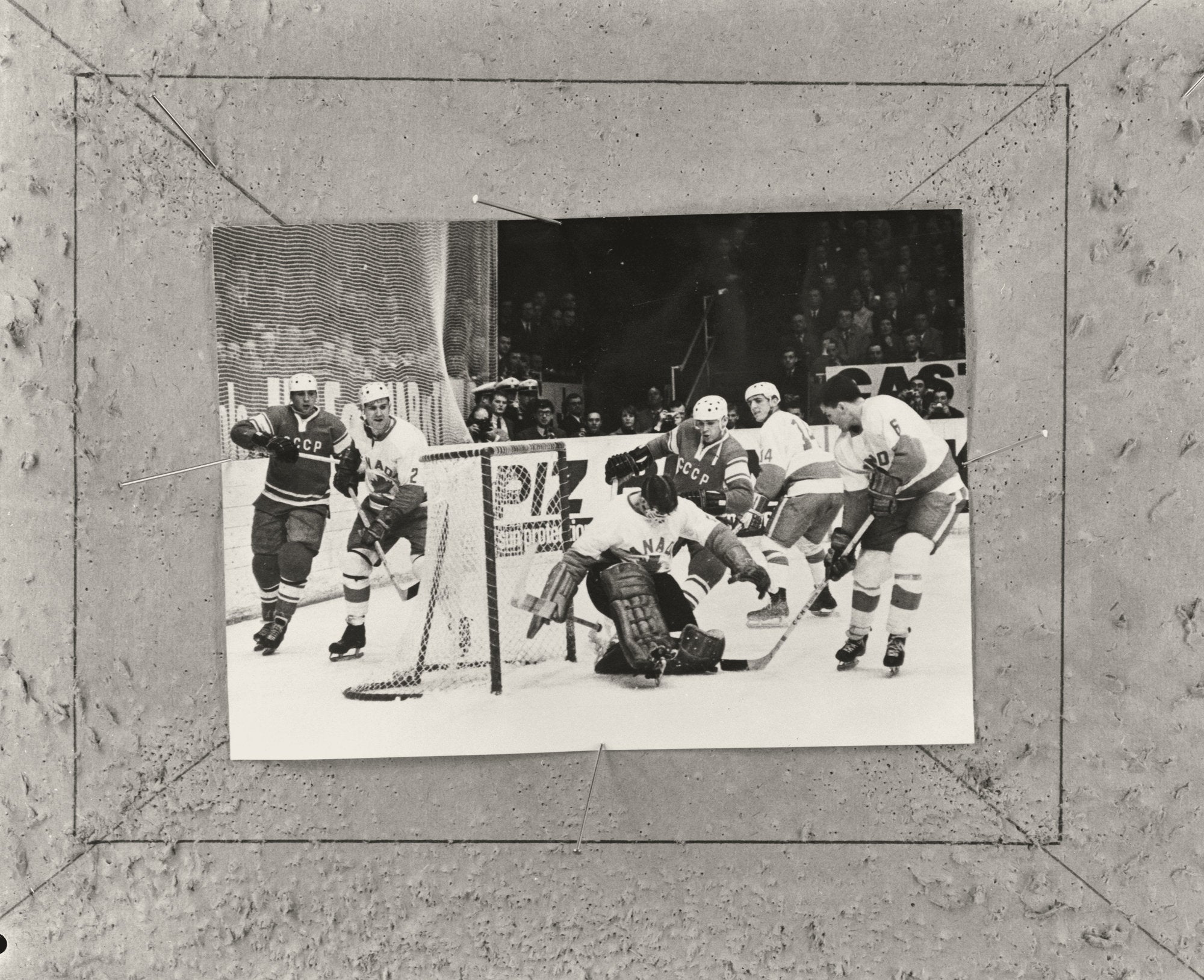
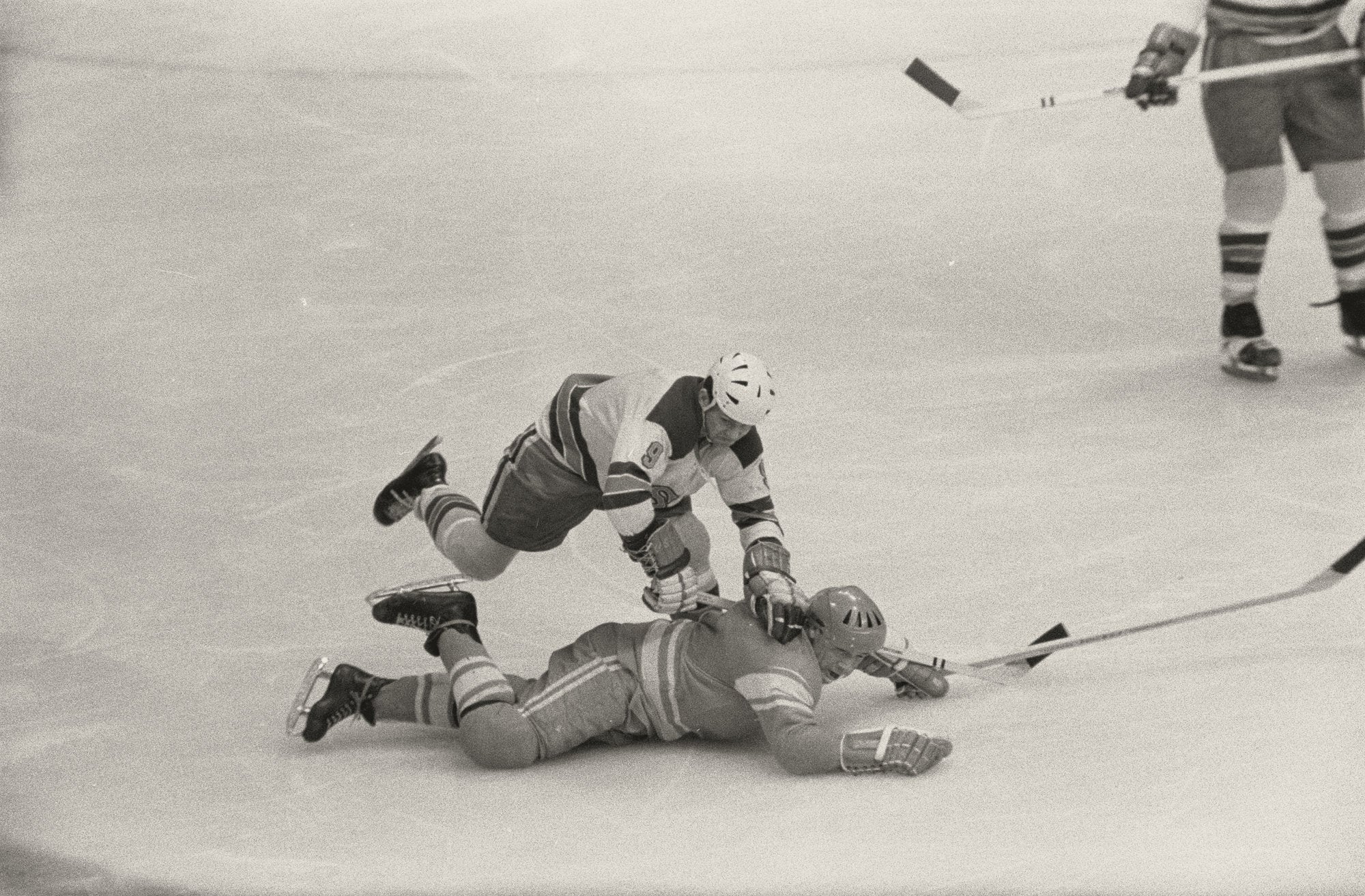
The photographs in this piece are from the world championship in Vienna in March 1967, where they beat Canada two one and took the title again, and from the Grenoble Olympics the following winter, where they won it again. There is nothing unusual about either occasion, which is the point. This was the normal state of affairs for a generation.
1972, and the ankle
In September 1972 the Soviet team played an eight-match series against a Canadian side made up of NHL professionals. The Canadians expected to win eight nil. The consensus in Canada beforehand was not that it would be close.
The Soviets won the first match in Montreal seven three. Kharlamov scored twice and was, by common agreement including the Canadians', the best player on the ice by a distance.
The series ran to eight games and Canada won it, with a goal in the last minute of the last match. What is remembered in Russia is what happened in game six in Moscow. Bobby Clarke skated up behind Kharlamov and slashed him across the ankle with a two-handed swing of the stick. It was a fracture. Kharlamov missed the next game and played the last one hurt.
Clarke has never been especially evasive about it. An assistant coach had made clear that something needed to be done about number seventeen, and Clarke did it. Whether you regard that as a scandal or as the ordinary logic of a series that had stopped being an exhibition depends largely on which country you grew up in.
Tikhonov's camp
Viktor Tikhonov took over CSKA and the national team in 1977 and ran both for fourteen years. He was extraordinarily successful and he is not remembered fondly by the men who played for him.
The players lived at a training base outside Moscow. Not for a pre-season fortnight: as a permanent arrangement, eleven months of the year, for the length of their careers. Married men with young children saw their families on brief authorised visits. The reasoning was that a team kept together and worked continuously would not lose, and to a very large extent the reasoning was correct.
Slava Fetisov and Igor Larionov, two of the best defencemen and centres in the world, eventually said so in public. Larionov published an open letter in a Soviet magazine in 1988 attacking the regime inside the team. Fetisov refused to play and spent a year in an open confrontation with the army and the federation over his right to leave for the NHL. These were not small acts. They were serving officers refusing orders, in public, in the Soviet Union.
Five men who moved as one
The clearest illustration of what the system produced is the unit that played together through the 1980s.
Two defencemen, Slava Fetisov and Alexei Kasatonov. Three forwards, Sergei Makarov, Igor Larionov and Vladimir Krutov. Because the three forwards' surnames began with K, L and M, the line was called the KLM line, and because the whole five went on and came off the ice together it was often just called the unit.
They played together, as a five, for the best part of a decade. Not as a line that was occasionally reunited: as the standing arrangement, at CSKA and for the national team, in practice every day and in matches every week. The result was a group who did not need to look. Passes went to where a man was going to be because there was no realistic possibility of him being anywhere else.
Behind them, for most of the seventies and into the eighties, was Vladislav Tretiak, who is on most reasonable lists of the best goaltenders who have ever played and who never played a game in the NHL, because he was not permitted to.
This is the part that is genuinely difficult to weigh. The hockey was extraordinary and a great deal of it was made possible by an arrangement that treated grown men as property. Both facts are true at once and neither cancels the other.
Lake Placid
The match everybody outside Russia knows is the one they lost.
At the 1980 Winter Olympics the Soviet team, which had beaten a National Hockey League all-star selection the previous year and had thrashed the United States ten three in an exhibition days before the Games, lost four three to a team of American college players.
Tikhonov took Vladislav Tretiak, the best goaltender in the world, out of the net after the first period. He described it decades later as the biggest mistake of his career. The Americans went on to win the tournament and the whole thing became a film and a national memory.
It is a good story and it is told constantly. What is less often mentioned is that the Soviet team won the next two Olympics after it, comfortably.
Kharlamov
He was left out of the squad for the 1981 Canada Cup. Tikhonov's decision. He was thirty-three, he had been in a serious car accident five years earlier and come back from it, and he was not what he had been, but he was still Kharlamov and the omission was public.
Days later, on the twenty-seventh of August 1981, he was killed in a car crash on a road outside Moscow. His wife Irina was driving and died as well. Their two children were not in the car.
The team was in North America. They were told after they had played.
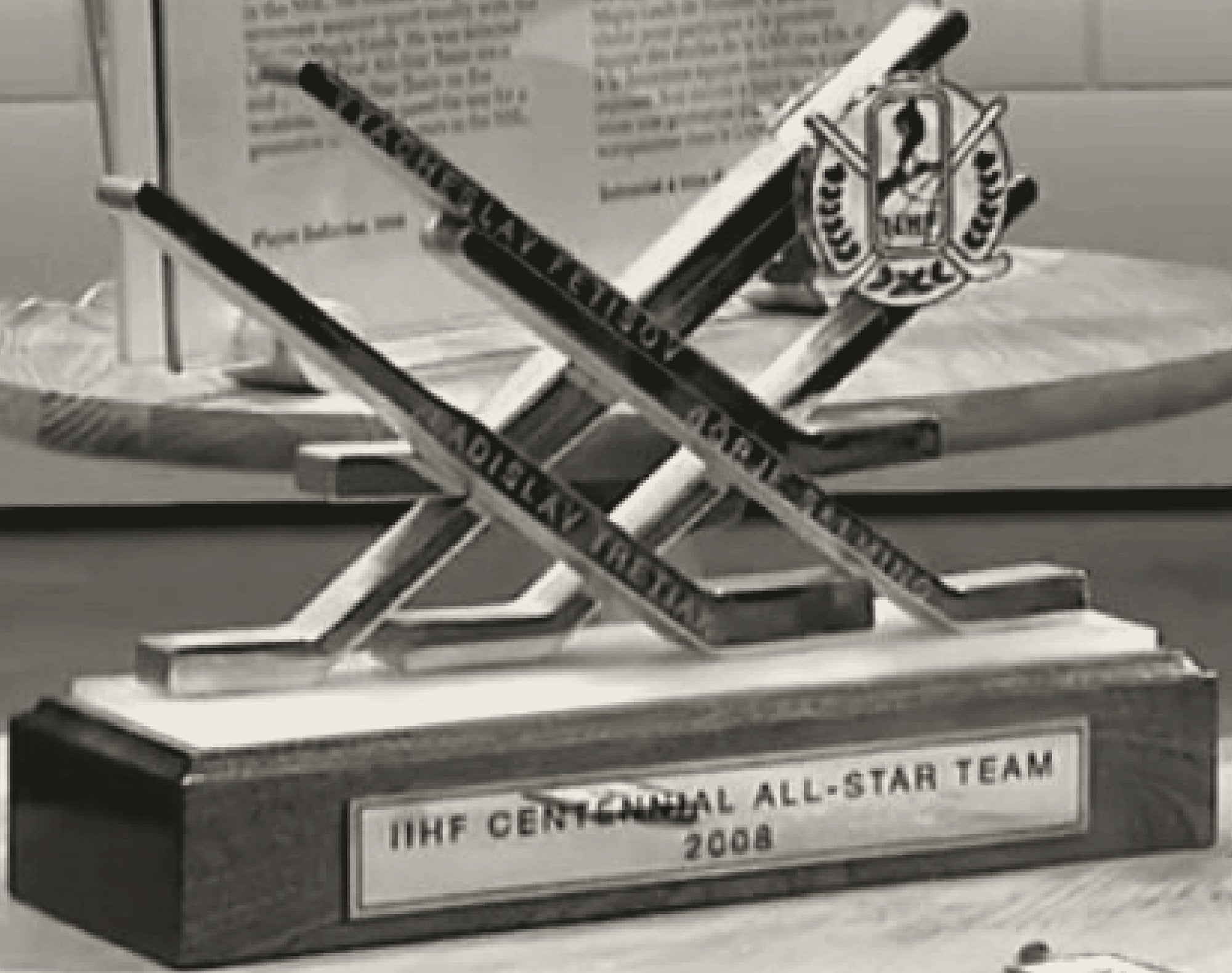
He is the one who gets the films and the streets and the commemorative stamps, one of which appears in this piece, issued in 2023 for what would have been his seventy-fifth birthday. When the international federation picked a team of the century, his name was on it. He is the player Russians name first, ahead of men who won more.
After
The country ended and the arrangement ended with it. Fetisov and Larionov and Makarov and Krutov went to the NHL, most of them past thirty, and several of them were very good in it. Fetisov and Larionov won Stanley Cups in Detroit at an age when most players have stopped, as part of a five-man Russian unit that a Canadian coach put on the ice together because it worked.
CSKA still exists and still plays. It is a hockey club now, with sponsors, in a league. The rank has gone.
What is left of the other thing is footage: men in red, moving the puck in patterns that were rehearsed until nobody had to look, in front of crowds that were photographed rarely, for a state that owned them in a way that is difficult to explain to anyone who did not live under it. They were the best in the world for thirty years and they were not free to leave.