
The number attached to the network Bartali worked for is around eight hundred people saved. Precision is impossible here, for obvious reasons, and we would rather say roughly than pretend.
The cyclist
Bartali won the Giro d'Italia in 1936 and 1937 and the Tour de France in 1938. The war removed the peak years of his career. He won the Tour again in 1948 at the age of thirty-four, ten years after his first, which remains the longest gap between victories in the race's history.
He was, for a decade either side of the war, one of the two most famous men in Italy.
What was happening in Tuscany
After the armistice of September 1943, German forces occupied central and northern Italy and the deportation of Italian Jews began in earnest.
Cardinal Elia Dalla Costa in Florence organised a clandestine operation producing forged identity documents. The printing was done in Assisi, in convents and a printing shop. The papers had to travel to the people who needed them, and photographs had to travel back.
Why a bicycle
Any vehicle attracted checkpoints. Trains were searched. But a famous cyclist covering two hundred kilometres in a training day, in a jersey with his own name on it, was the most ordinary sight in Tuscany.
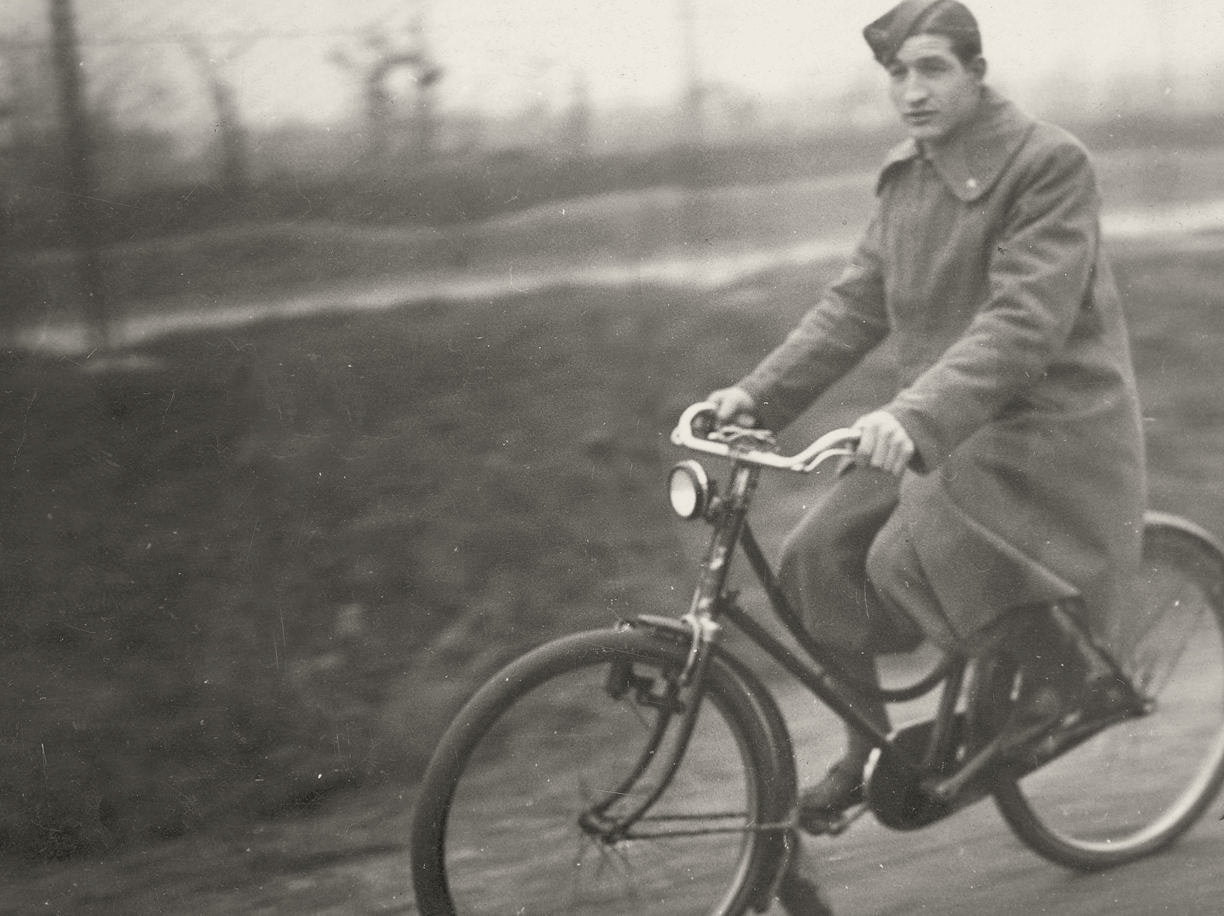
Bartali carried the documents inside the frame tubes and the seatpost of his bicycle and rode the Florence to Assisi route repeatedly through 1943 and 1944.
When stopped, he asked that the bicycle not be touched, explaining that it was calibrated for racing and would be ruined by handling. The request was, by all accounts, respected.
The cellar
He also sheltered a Jewish family, the Goldenbergs, in an apartment cellar he owned in Florence, and is documented as having assisted others.
The silence
He never used any of it. Not in his career, not in retirement, not in interviews, not when it would have been enormously to his advantage in a country rebuilding its self-image after fascism.
His son Andrea has recounted the reasoning: that good is something you do and not something you discuss, and that medals go on the wall while other things stay inside.
The full account emerged after his death in 2000. In 2013 Yad Vashem recognised him as Righteous Among the Nations.
Why it goes on a wall
Because he had the perfect cover and used it, and then spent fifty-five years declining the credit.
Around eight hundred people, and he never mentioned it.