
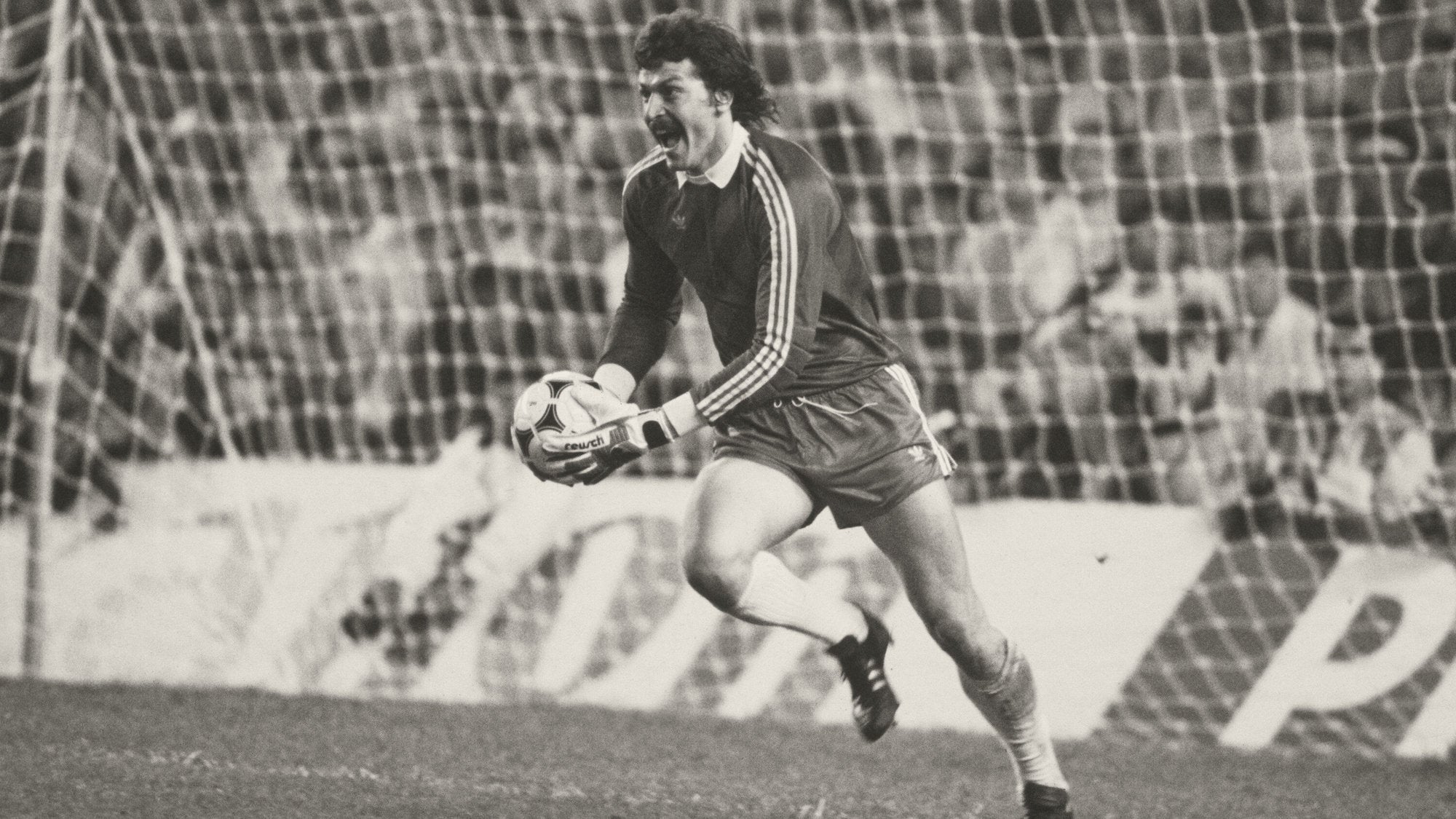
The number is the whole story, so it goes first. In the penalty shootout of the 1986 European Cup final, Barcelona took four penalties and Helmut Duckadam saved four penalties. Not three, with a fourth skied over the bar. Four saves, by the goalkeeper, one after another, in the final of the biggest competition in club football.
It had never happened before.
A final with nothing in it
Seville, the seventh of May 1986. The Ramón Sánchez Pizjuán, a Barcelona side who had reached the final as the heavy favourite, and Steaua Bucharest, the army club of a country most of Europe thought about rarely and understood less. The match itself was poor and it is remembered mainly for what came after it. Ninety minutes, then extra time, and no goal from either side.
Penalties, in 1986, were still relatively new as a way to decide a European final. There was no accumulated wisdom about them, no analytics department with a dossier on where a given player puts it under pressure. There was a goalkeeper, a spot twelve yards away, and a guess.
Three right, then left
Duckadam dived to his right for the first. He saved it. He dived to his right for the second. He saved it. He dived to his right for the third, and saved that too.
By then, everyone in the stadium and everyone taking the next penalty knew where he was going. The fourth Barcelona player had watched three consecutive dives in the same direction and had every reason to place the ball the other way. He did.
Duckadam went left.
Steaua won the shootout two to nil. Barcelona, one of the largest clubs in the world, did not convert a single penalty in a European Cup final. Steaua became the first club from the Eastern bloc to win the European Cup, and remain one of very few to have done it.
The summer that ended it
He was twenty-seven, a goalkeeper entering the years when goalkeepers are usually at their best, and he had just set a record in the most watched club match of the year.
That summer, an accident: he fell and put his weight on his right arm. What the examinations found afterwards was a blood clot blocking the circulation in that arm. There was surgery. There was not a return. The arm that had made four saves in Seville could no longer do the work.
He attempted comebacks, at Vagonul Arad between 1989 and 1991 and at CPL Arad in 1993 and 1994, both in the lower reaches of Romanian football, both brief. Across his entire career, at UTA Arad, at Steaua, and in those two late attempts, he played a hundred and thirty-three league matches.
What a country does with a night like that
Romania named him for the place: Eroul de la Sevilla, the Hero of Seville. The name held. It survived the fall of the regime three years later, it survived the decades in which he was no longer a footballer, and it was the first thing written about him when he died in a military hospital in Bucharest on the second of December 2024, aged sixty-five.
Countries do not usually build a lasting public identity around four minutes. This one did, and it was not sentimentality. What happened in Seville was, in the most literal sense, unprecedented, and it was done by a man from a small town in Arad County against the most glamorous club in Spain, in a final his country was not supposed to reach.
The shape of it
Most sporting careers are a long line with a peak somewhere on it. His is a spike with almost nothing on either side.
That is what makes it worth putting on a wall. Not a great player over a decade, but a man who did something no one had done, on the one night it counted most, and then never got to do anything again. The record stayed exactly where he left it.
Four saves. One night. Nothing after.