
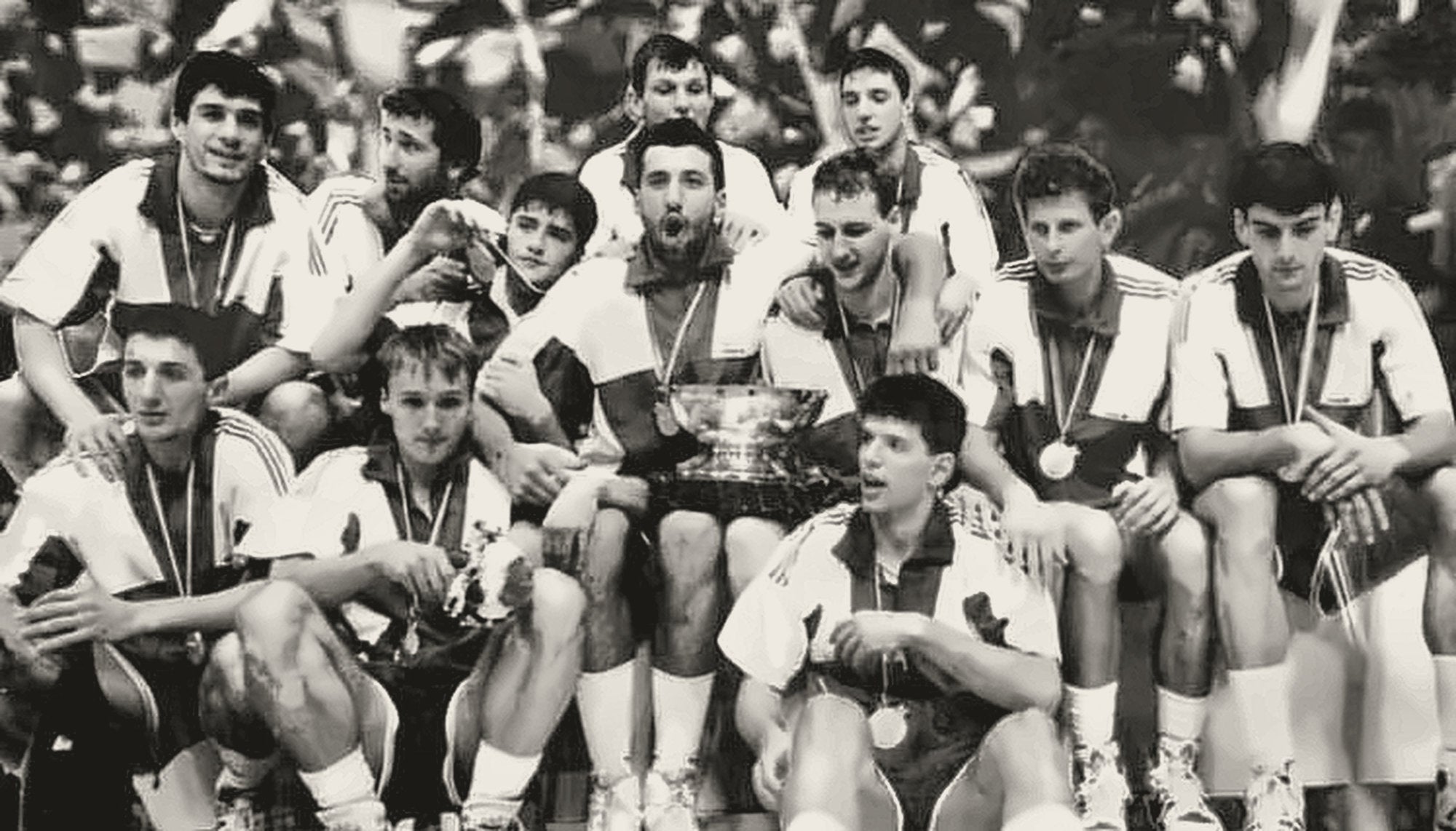
The final of the 1990 World Championship was played in Buenos Aires on the nineteenth of August. Yugoslavia beat the Soviet Union ninety two to seventy five.
Both countries on the scoreboard have since ceased to exist. The Soviet Union had sixteen months left. Yugoslavia was already coming apart while the tournament was being played, and would spend the rest of the decade at war with itself.
That is the fact worth holding onto before anything else. This was not a great team that faded. It was a great team that was legislated out of existence while still at its peak, and the men on it went home to five different countries, some of which were shortly shelling each other.
A school, not a team
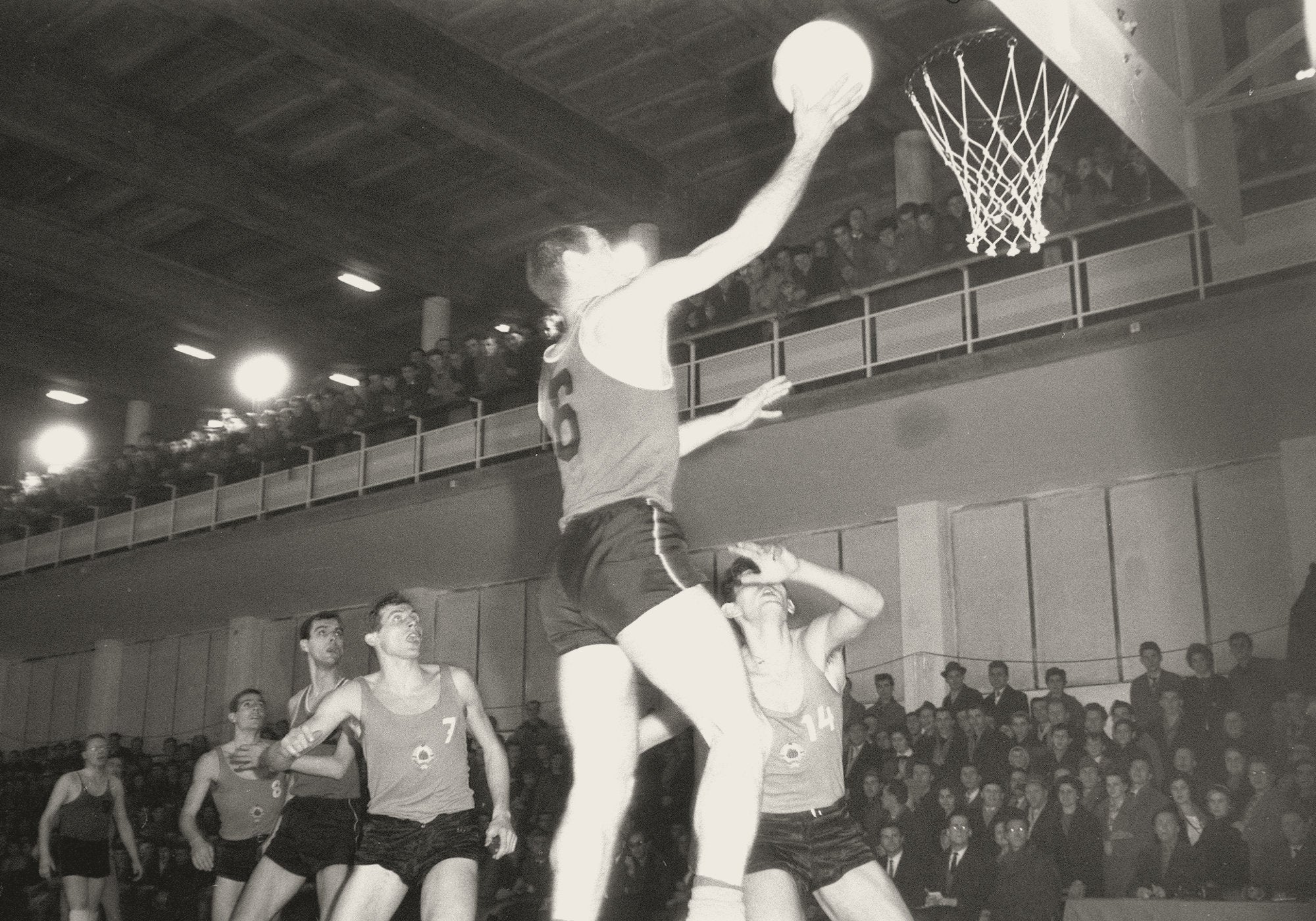
It is a mistake to treat the 1990 side as a golden generation in the usual sense, meaning a lucky cluster of talent born within a few years of each other. Yugoslavia had been producing this standard of player continuously for a quarter of a century, and it did so on purpose.
The country built a coaching system. Aleksandar Nikolić and Ranko Žeravica are the names most often given as the architects, and what they built was not a set of tactics but a curriculum: how to teach a fourteen-year-old to pass with either hand, how to move without the ball, what a big man should be able to do fifteen feet from the basket. Clubs in Belgrade, Zagreb, Split and Ljubljana ran on it. The results were not occasional.
World championships in 1970, in 1978, in 1990. Olympic gold in Moscow in 1980. European titles across the 1970s and again at the end of the 1980s. Silver medals in the years they did not win. Over roughly twenty-five years, a country of around twenty-two million people was consistently the second basketball nation on earth and periodically the first.
The style is worth describing because it survived the country. Yugoslav basketball was built on passing and on tall men with hands. A seven-footer was expected to face the basket, put the ball on the floor, and find a cutter. That is now standard everywhere and it was not then. When people say the modern European game was invented in the Balkans, this is what they mean.
Ćosić, who went to Utah and came back
Krešimir Ćosić is the link between the school and the team that won in Buenos Aires, and he is also the clearest illustration of what the arrangement cost the men inside it.
He went to Brigham Young University in Utah at the start of the 1970s, which for a player from a socialist country at that time was close to unimaginable. He was outstanding there. American professional teams drafted him. He turned it down and went home to play club basketball in Yugoslavia in front of small crowds for ordinary money, because that was the expectation and because the national team was the point.
He won the 1970 world championship at home in Ljubljana and the 1980 Olympic gold in Moscow. He converted to Mormonism while in America and remained a practising member of a faith that had almost no presence in his country. Later he became a diplomat, deputy ambassador for Croatia in Washington. He died of cancer in 1995, at forty-six, and was elected to the basketball hall of fame in Springfield the following year, the first player from outside the United States to be put in it.
By the time the 1990 team was assembled, the world had changed and the younger men could go. Petrović was at Portland, Divac at the Lakers. Kukoč had been drafted by Chicago and Rađa by Boston. The generation that finally got the choice Ćosić had refused was the last one the country produced.
Buenos Aires, 1990
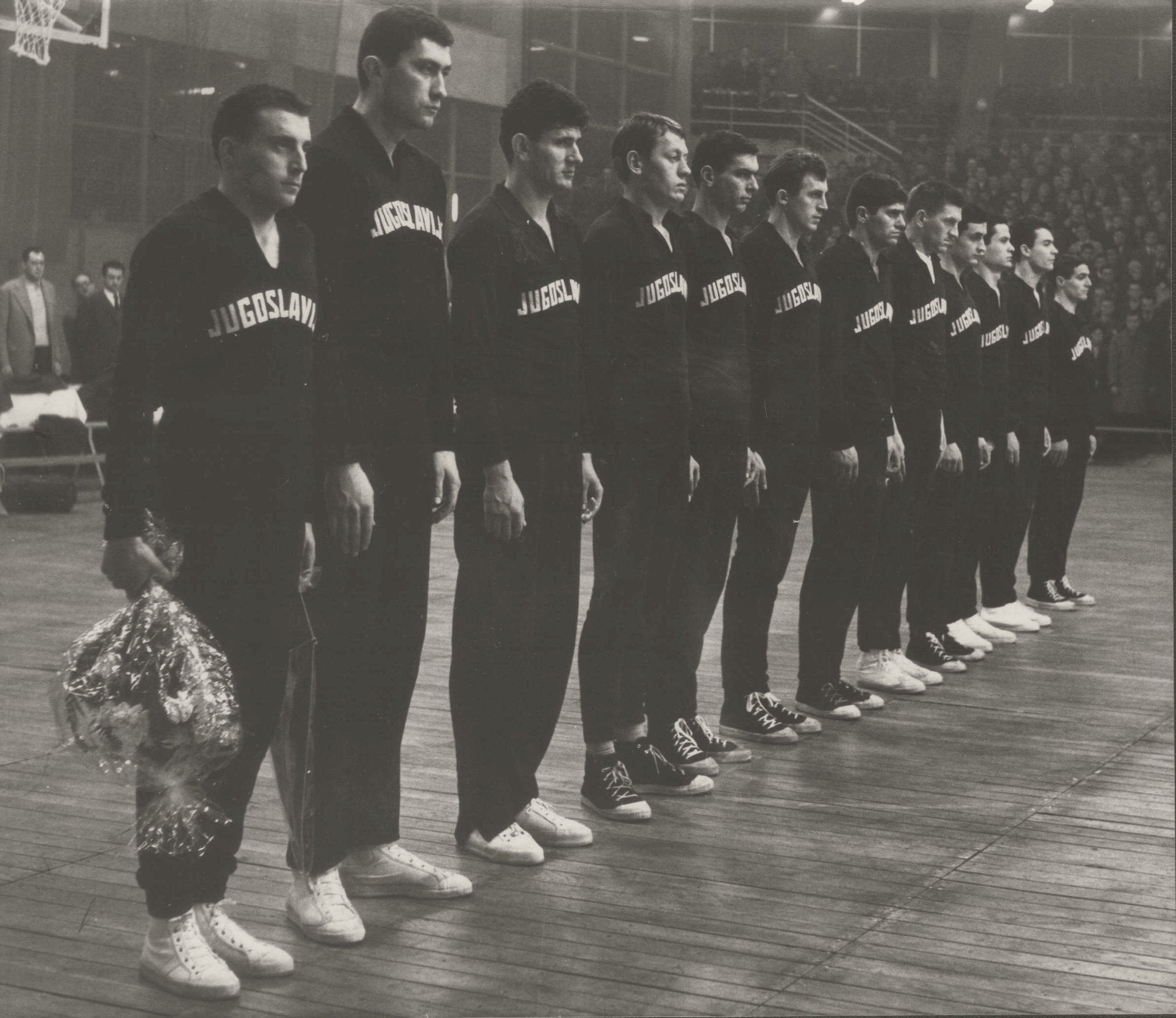
Dušan Ivković coached them. The roster is the sort that gets recited: Petrović, Divac, Kukoč, Rađa, Paspalj, Zdovc, Vranković, Savić, Perasović, Radulović.
They went through the tournament and beat the Soviet Union in the final by seventeen. Kukoč was named the most valuable player, at twenty-one. It was a serious win over a serious opponent, and the widespread view at the time was that if the Americans ever sent their best players to a world tournament, this Yugoslav team would be the one they had to beat.
The Americans did send their best players, in Barcelona in 1992. Yugoslavia were not there.
The flag
What happened at the end of the match in Buenos Aires has outlasted the score.
A supporter came onto the floor during the celebrations carrying a Croatian flag. Vlade Divac, from Serbia, took it from him and threw it aside. His explanation then and since has been consistent: he thought it was a Yugoslav night and a Yugoslav trophy, and the flag of one republic did not belong on the floor.
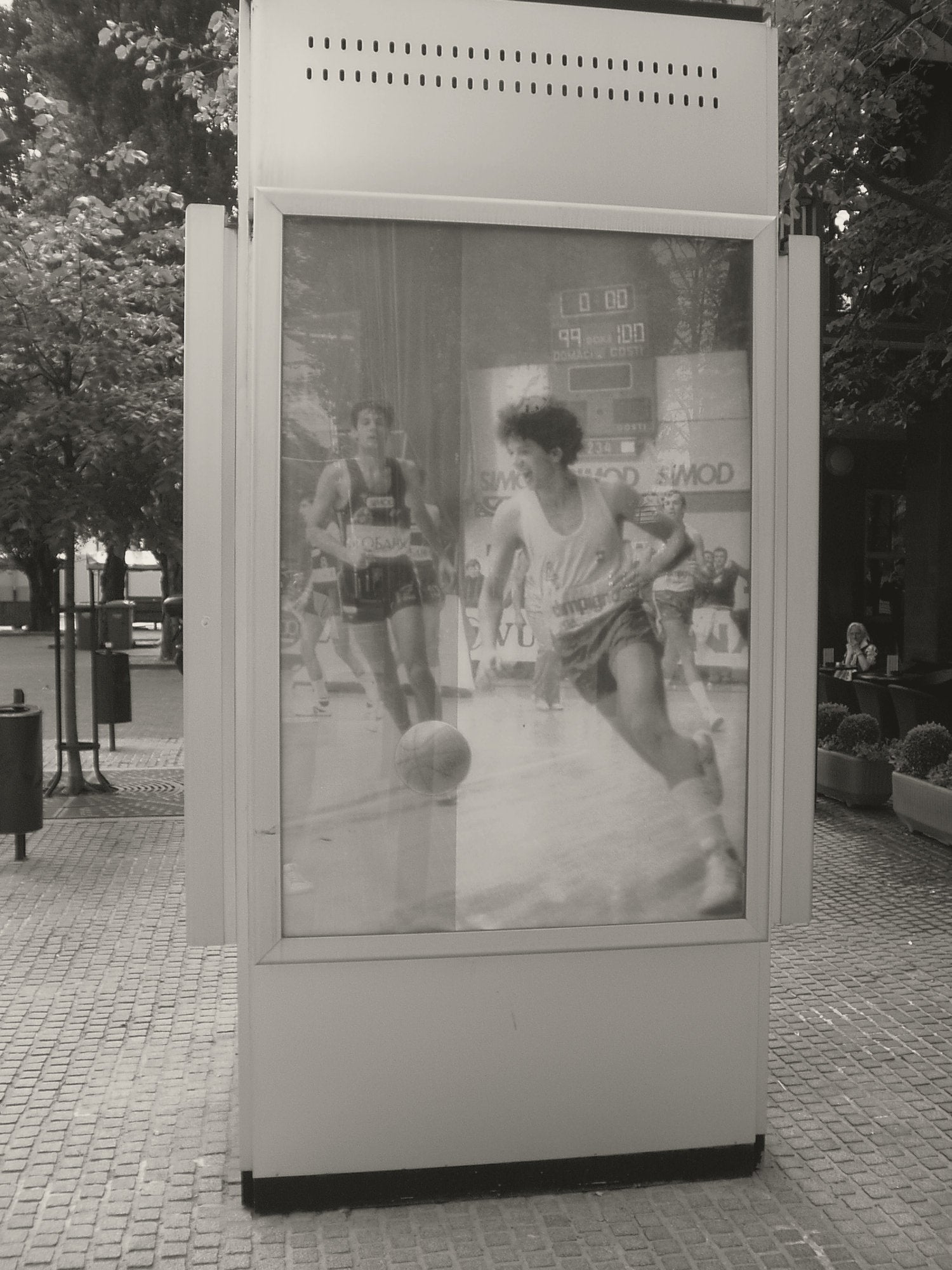
Dražen Petrović was Croatian. He and Divac had been close for years, in the way that people who share hotel rooms and long flights become close. Croatia declared independence the following June. The war started. The two men stopped speaking, and stayed stopped.
Petrović was killed in a car crash on a motorway in Germany on the seventh of June 1993. He was twenty-eight and had just finished the best season of his NBA career. Divac has spoken about the fact that they never made it up more or less every time he has been asked, for thirty years, and there is no version of the interview in which he sounds finished with it.
The whole thing is told properly in the film Once Brothers, which is worth an hour of anyone's time.
Rome, 1991, and the player who was called home
The team held together for one more tournament, just about. Yugoslavia won the European Championship in Rome in the summer of 1991.
By then Slovenia had declared independence and there had been fighting on Slovenian territory. Jure Zdovc, the point guard, was Slovenian. Partway through the tournament he was instructed by the Slovenian authorities to stop playing for Yugoslavia, and he left. His teammates won the thing without him.
That is the last Yugoslav basketball team in the ordinary sense of the phrase. After it, there was no team, because there was no ordinary sense of the phrase left.
Resolution 757
In May 1992 the United Nations Security Council imposed sanctions on the Federal Republic of Yugoslavia. Among many heavier provisions, the resolution prevented participation in international sporting events.
The consequence in football is better known: Yugoslavia were removed from the European Championship in Sweden that summer and Denmark were called up in their place and won it. In basketball the consequence was that the reigning world champions did not go to Barcelona. Individual athletes from some sports were allowed to compete under a neutral flag. Team sports were not.
So the match everyone wanted, the 1990 world champions against the 1992 American team, was never played and cannot be argued about with any evidence. It has instead been argued about without any, continuously, for more than thirty years.
What became of them
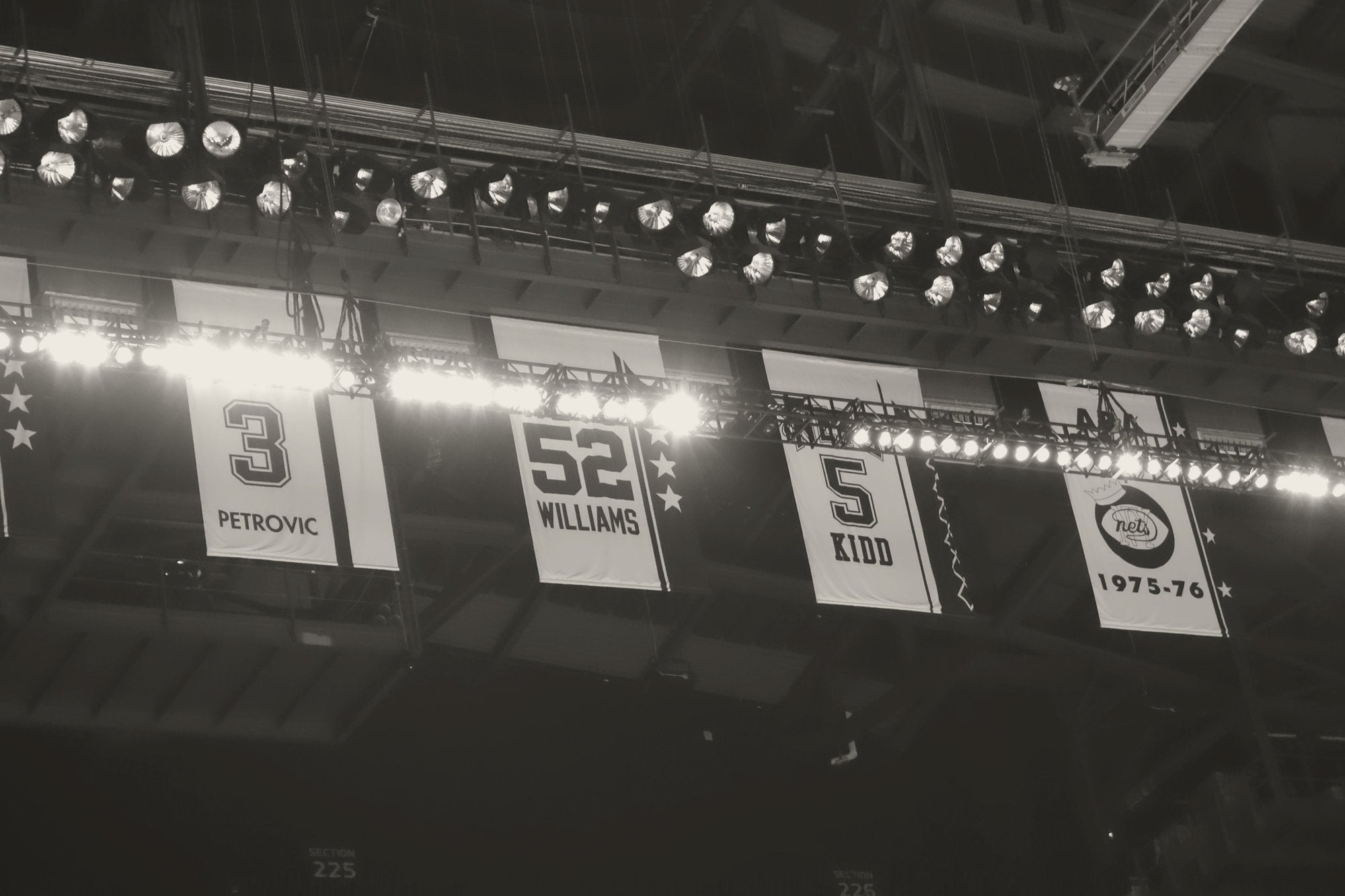
Petrović had two seasons at New Jersey that put him among the best guards in the NBA, and then died. The Nets took his number out of use. He was elected to the hall of fame in Springfield in 2002, nine years after the crash, and there is a museum devoted to him in Zagreb run by his mother.
Toni Kukoč went to Chicago and won three championships there, coming off the bench behind two of the most famous players who have ever lived, and was elected to the hall of fame in 2021. Dino Rađa had a short, hard NBA career at Boston, wrecked by injuries, and went home. Žarko Paspalj lasted a season in San Antonio and returned to Europe. Stojko Vranković spent years as a backup and later ran Croatian basketball.
Vlade Divac played sixteen NBA seasons, at the Lakers, Charlotte and Sacramento, and was one of the first Europeans to be treated as a genuine starting centre rather than a novelty. He went into the hall of fame in 2019. Afterwards he ran the Serbian Olympic Committee and then the basketball operation at Sacramento. He has spent thirty years being asked about a flag.
The film about the two of them, Once Brothers, was made in 2010. Divac drives to Petrović's grave in it. It is not a sports documentary in any useful sense.
After
The players dispersed into new national teams. Croatia won bronze in Barcelona and then silver, losing to the Americans in the final, with Petrović and Kukoč and Rađa. Serbia and Montenegro, competing as Yugoslavia, came back after the sanctions and won the European title in 1995 and the world title in 1998 and again in 2002. Slovenia built its own programme and eventually won a European championship of its own. The school did not die. It fragmented into four or five smaller schools, each of which has kept producing.
What ended was the thing that made the whole greater: one selection drawing on all of it. The teams that came afterwards were good. None of them had every one of those players available at the same time, and none of them ever will.
There is a photograph of the 1990 squad holding the trophy in Buenos Aires. Everyone in it is smiling. Within three years one of them would be dead, two of them would be citizens of countries at war with each other, and the flag on their shirts would have no state attached to it.