
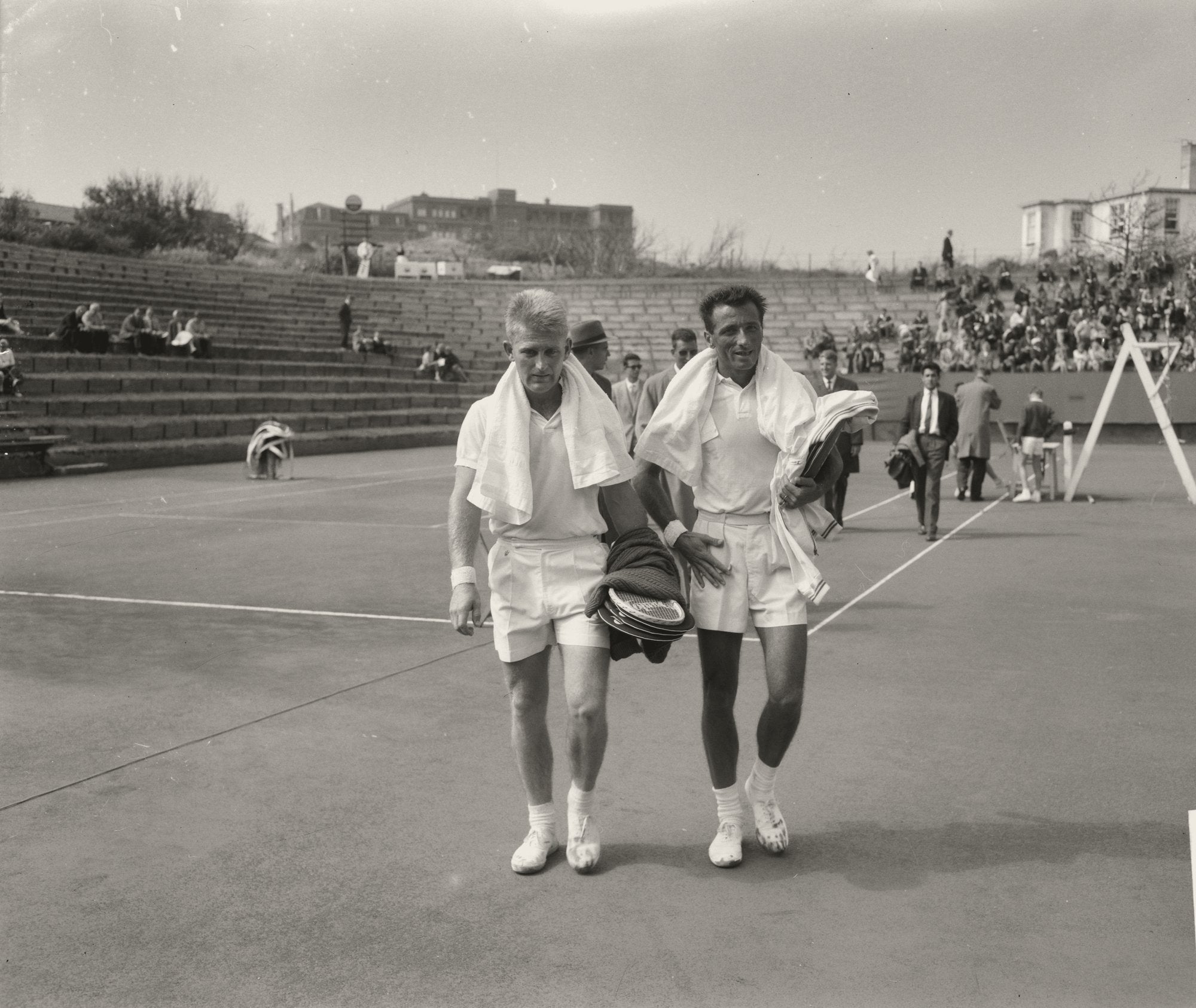
He was blond and broad, built more like a swimmer than a tennis player, and he hit the ball as though he held a grudge against it and had no fear of the consequences. That is the first thing people reached for when they tried to describe Lew Hoad, and they nearly always gave up somewhere after it. The words that came back, from teammates and opponents and the men who wrote it down at the time, were about power and ease arriving together: a ball struck hard enough to alarm you, kept inside the lines by something that looked, maddeningly, like indifference.
On his best days there was no argument to be had. The finest players of his generation have said, without needing to be pressed, that a Hoad in form could not be beaten by anyone then alive. On his worst days he lost to players whose names have not lasted, and he lost to them without visible distress, and that is the detail that never quite fits the story the game told about him afterward. He appeared, at times, not to care whether he won. Men who had given their whole lives to caring found that both unaccountable and hard to forgive. There is a theory that the same looseness which made him unbeatable on a good day was what let the bad days happen at all. It is only a theory. He never said much to settle it.
Two boys from one city
He came out of a working part of Sydney, from a family with no money for what was then a country-club game, in the lean years after the war. There was another boy, born in the same city within a few weeks of him, slight and exact where Hoad was heavy and loose. His name was Ken Rosewall, and the two of them came up through Australian tennis so close together that the newspapers took to writing about them as a pair, almost as brothers. They even won together, holding the Wimbledon doubles as a team while they were still barely more than boys. One of them was all placement and patience. Hoad was force, and not always governed force. For a stretch in the middle of the century they were the whole future of the game in a country that took its tennis more seriously than almost anywhere.
They were still teenagers, in December 1953, when the weight of the Davis Cup came down on them, the old team competition that Australia and the United States handed back and forth in those years like a long private argument. Hoad beat the best of the Americans in a match people were still describing decades later, on a wet afternoon of home grass, in front of a crowd that expected the cup to stay where it was. That is the kind of day that marks a player for good. It marked him. The years that would come to stand for his whole career had started.
The year that stopped one match short
Nineteen fifty-six is the year they still talk about. He took the Australian championship at home. Then Paris, on the slow red clay that was built to punish a big hitter and somehow never laid a finger on him. Then Wimbledon, where he beat his friend from Sydney in the final on the grass. Three of the four titles the tennis year had to give, taken one after another, with only the last of them left, in New York, to hold all four inside a single season.
In the men's game it had been done exactly once before, close to twenty years earlier, long enough ago to seem more like a story than a target. He arrived on the American east coast needing that one tournament, and he came through to the final, and waiting for him across the net was the same friend he had beaten a few weeks before under the English cloud. This time the friend did not lose. The fourth title stayed out of reach. The season that could have been whole finished a single match short of it, and the man who closed the door was the one person on earth who knew his game from the inside, which is either the hardest way for it to happen or the only right one, depending on how much you trust that kind of neatness.
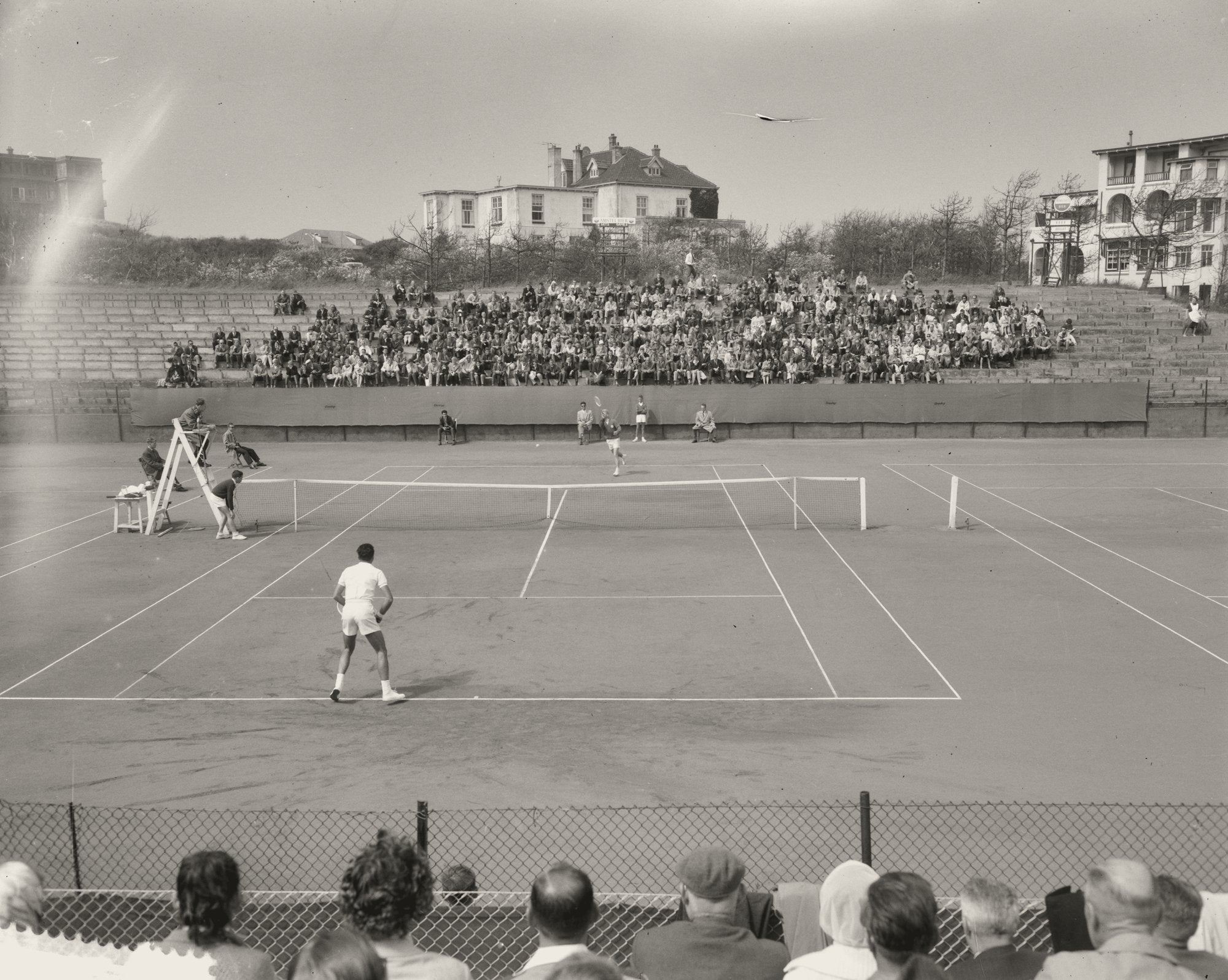
The final they still measure others against
The next summer he went back to Wimbledon and played a final that the people who saw it never entirely recovered from. Accounts of that afternoon tend to give up on the details and reach instead for the feeling that they had watched a thing done about as well as it could be done. There was nothing in it to correct. Whatever the game asked of a man on grass, he produced it that day, and produced it without any show of effort, and then the thing was finished and he was the best tennis player in the world. He was twenty-two. As an amateur, there was almost nothing left in front of him to win.
So he did what the best players of that age did when the trophies ran out. He crossed over.
The wall between the two games
It is hard now to explain how strange the shape of tennis was then. The game the public followed, the one played at the great grass tournaments, was formally an amateur game. The men in it were supposed to play for the love of it and for their expenses and for nothing more. Everyone knew this was a fiction. The best amateurs were kept afloat by payments that were not quite spoken about, appearance money and inflated expenses, a genteel arrangement the sport preferred not to examine too closely.
The real money lived on the other side of a wall, in the professional game, which was not a set of tournaments at all but a travelling show. A small number of the best players in the world signed contracts and vanished from the events everyone knew, and reappeared in halls and arenas, playing on canvas courts unrolled over ice rinks and basketball floors, one town a night, driving through the dark to reach the next. To turn professional was to trade the fame of the amateur circuit for money and a kind of invisibility. The newspapers that had followed you at Wimbledon mostly stopped writing your name.
Hoad was offered the largest sum the professional game had ever put in front of a player to make that crossing. He took it. He was, by any measure, worth it. And almost as soon as he had, the terms of the new life began to work on him.
The tour, and the back
The way the professional game settled who was best was blunt and simple. Two men went out on a long head-to-head tour, playing each other night after night, city after city, and at the end you counted the wins. The reigning figure of the paid game was a fierce Californian who had been grinding along these roads for years and knew precisely what they did to a body. He and Hoad set off on one of those tours, and for a while the younger man was ahead. Then his back began to fail.
Accounts differ on exactly when it started and how fast it came, but somewhere around the age of twenty-three the spine that had let him hit the ball harder than anyone simply stopped holding. There were injections to get him onto the court at all. There were nights he played bent over the ball and a step slow, a rumour of the player who had frightened people the summer before. The Californian, who had stayed sound, pulled ahead and stayed there. The lead Hoad had built drained away into the pain, and a career that was supposed to run another ten years began, without any announcement, to close while he was still in his twenties.
He did not retire in any clean way. He kept playing, on and off, into the following decade, appearing when the back let him and going quiet when it did not. But the force of him, the thing that had made hardened professionals shake their heads, was effectively spent before most men in an ordinary trade have found their feet. The number that has stayed fixed to his name is the age at which it broke.
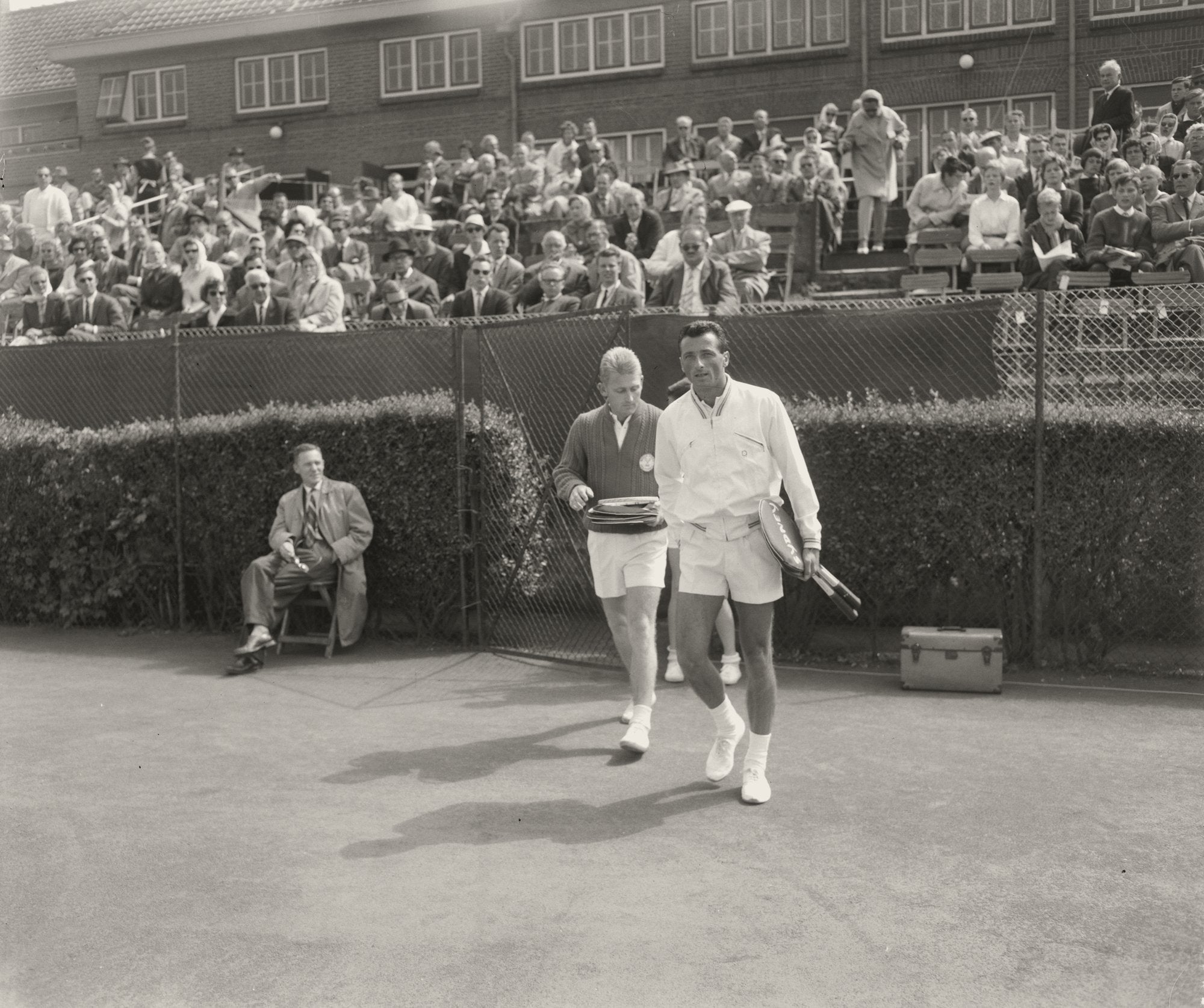
The friend who was given a second life
There is a cruelty in the timing that is worth sitting with for a moment. About a decade after Hoad turned professional, the wall between the two games finally came down, and the tournaments the public loved were thrown open to everyone, amateur and professional alike. The great events became, at last, the place where the best in the world actually met. It was the stage Hoad had been made for. By the time it existed his back had already taken it away from him.
His friend from Sydney, the small exact one born a few weeks before him, had a different body and a different fate. He went on playing at the very top for more than another decade, still winning major titles in his mid-thirties and reaching the game's biggest finals at an age when most men had long retired to the commentary box. The two of them had come up together as near-twins in the newspapers. One got the long, full career and the second life the open game handed out. The other had a summer or two at the summit and a back that closed the account early. Nobody arranged this. It is simply how the two bodies wore.
Spain
What he did with the rest of it has kept his name warmer than the record on its own would have. He went to the south of Spain, to the coast where the sun does most of the year's work, and he built a place with tennis courts and a low white clubhouse and let the game come to him instead of chasing it. He and his wife ran it together. Players who had beaten him and players he had beaten passed through over the years, and so did holidaymakers who had no notion of who he had once been, and by every account he treated the two kinds of guest exactly the same.
The people who went there tend to talk less about his tennis than about the ease of the man, the sense that someone who had briefly been the best in the world at a hard thing carried it lightly and would sooner pour you a drink than describe it. There is a way of telling this story in which the injury is a tragedy and Spain is a sad epilogue. The people who actually walked onto those courts do not tell it like that. They tell it as a man who found a good place to stand in the sun, and stood in it.
What those who saw him say
He died in 1994, on that same coast, a long way in every sense from the wet grass where he had been, for a short while, the finest player alive. He was fifty-nine.
The thing that has never settled, in all the years since, is the size of what did not happen. The men who shared a court with him at his best did not hedge about it. Asked who was the best they ever saw, a surprising number of them gave his name rather than their own, and rather than the names of players who went on to win far more than he ever did. A healthy Hoad, they said, would have won everything there was to win, and would have kept on winning it until it bored him, which by some accounts would not have taken very long.
There is a print of him now, with a number on it. Twenty-three. It looks like a slip at the printer's and it is not. It is the age at which the best pair of hands the game had seen stopped being able to trust the back they were joined to, the point at which a career that should have filled the record books instead went quiet, and crossed to Spain, and poured drinks in the sun for people who mostly never knew what they were looking at.
Most of them never asked. A few did.