
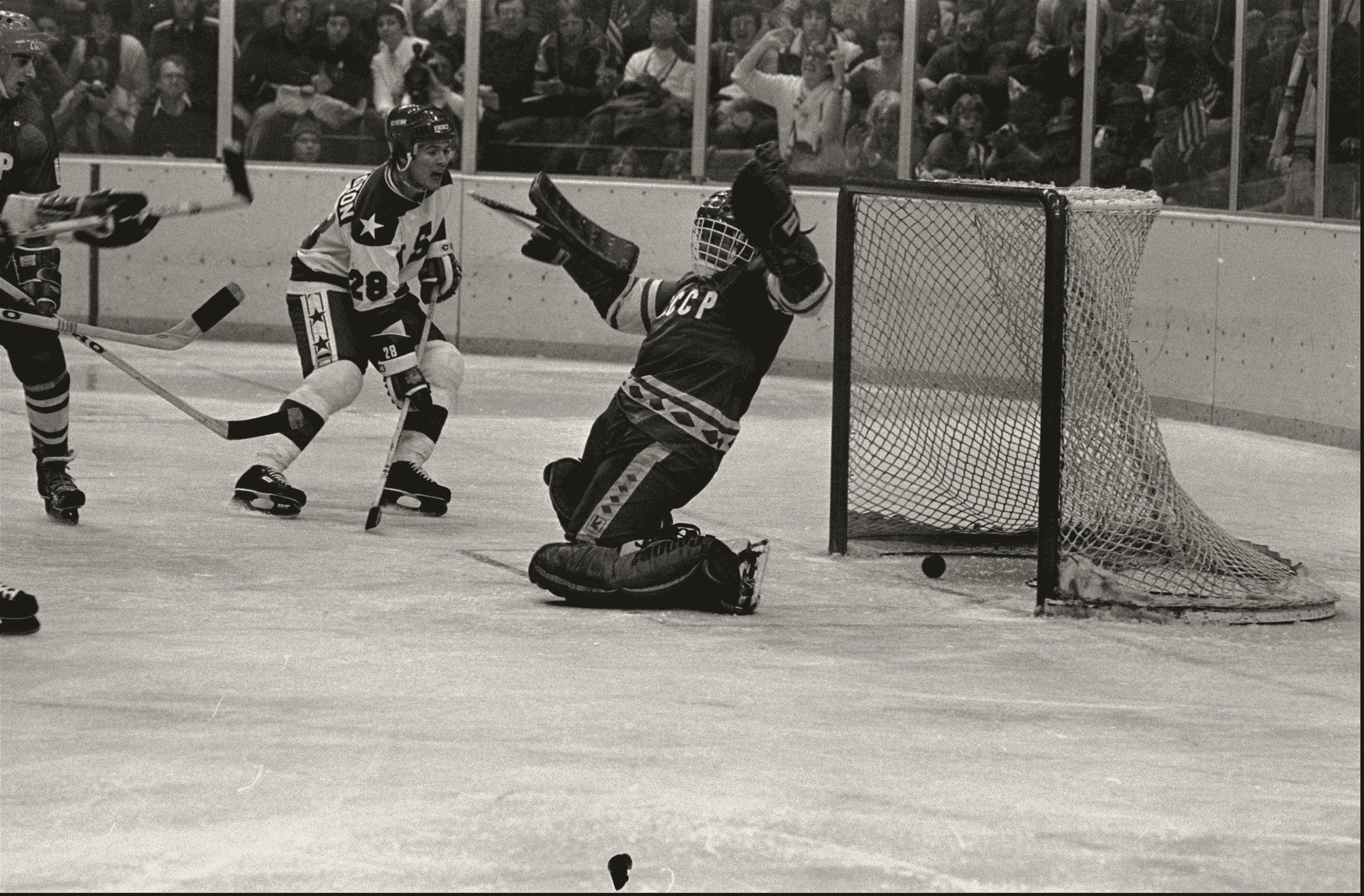
The score. It is on the print because the identity of the game is the scoreline, and because the two teams that produced it were not remotely comparable.
What the Soviet team was
Olympic champions in 1964, 1968, 1972 and 1976. Nominally amateur, in practice a permanent professional squad of servicemen who trained and played together year round.
In the 1979 Challenge Cup they beat a team of NHL all-stars 6-0 in the decider. In an exhibition at Madison Square Garden on 9 February 1980, thirteen days before the Olympic tournament, they beat the United States 10-3.
What the American team was
College players, assembled by Herb Brooks, average age twenty-two. The youngest squad in the tournament and the youngest the United States had ever entered.
Brooks used psychological profiling in selection and deliberately made himself the object of the team's resentment, on the stated theory that they needed something to unite against and it was safer for it to be him.
22 February 1980
The Soviets led 2-1 late in the first period. Mark Johnson scored with one second showing on the clock. The Soviets protested that time had expired. The goal stood.
At the start of the second period, Viktor Tikhonov replaced Vladislav Tretiak, widely regarded as the best goaltender in the world, with Vladimir Myshkin. Tretiak did not return. He later described it as the biggest mistake of Tikhonov's career.
The Soviets led 3-2 after two. Johnson equalised early in the third. With exactly ten minutes remaining, captain Mike Eruzione scored from the high slot.
Jim Craig faced thirty-nine shots across the game. The Soviets did not score again.
The call
Al Michaels, on ABC, counted the clock down and asked the question that became the title of everything written about the game afterwards. Do you believe in miracles? Yes.
The part that is always cut
This was not the gold medal game. It was a match in the medal round group.
Had the United States lost to Finland two days later, they would have finished fourth and taken no medal at all. They trailed Finland 2-1 entering the third period and won 4-2.
Brooks's instruction between periods, widely reported, was that if they lost this one they would take it to their graves.
Afterwards
The team was received at the White House. Eruzione never played professional hockey. Several teammates did. The Soviet Union won the gold again in 1984 and 1988.
Why it goes on a wall
Because the gap between the two teams was not a matter of form or luck. It was categorical. One side were the best players in the world, kept together for a decade. The other were students.
A team of students, four three.