
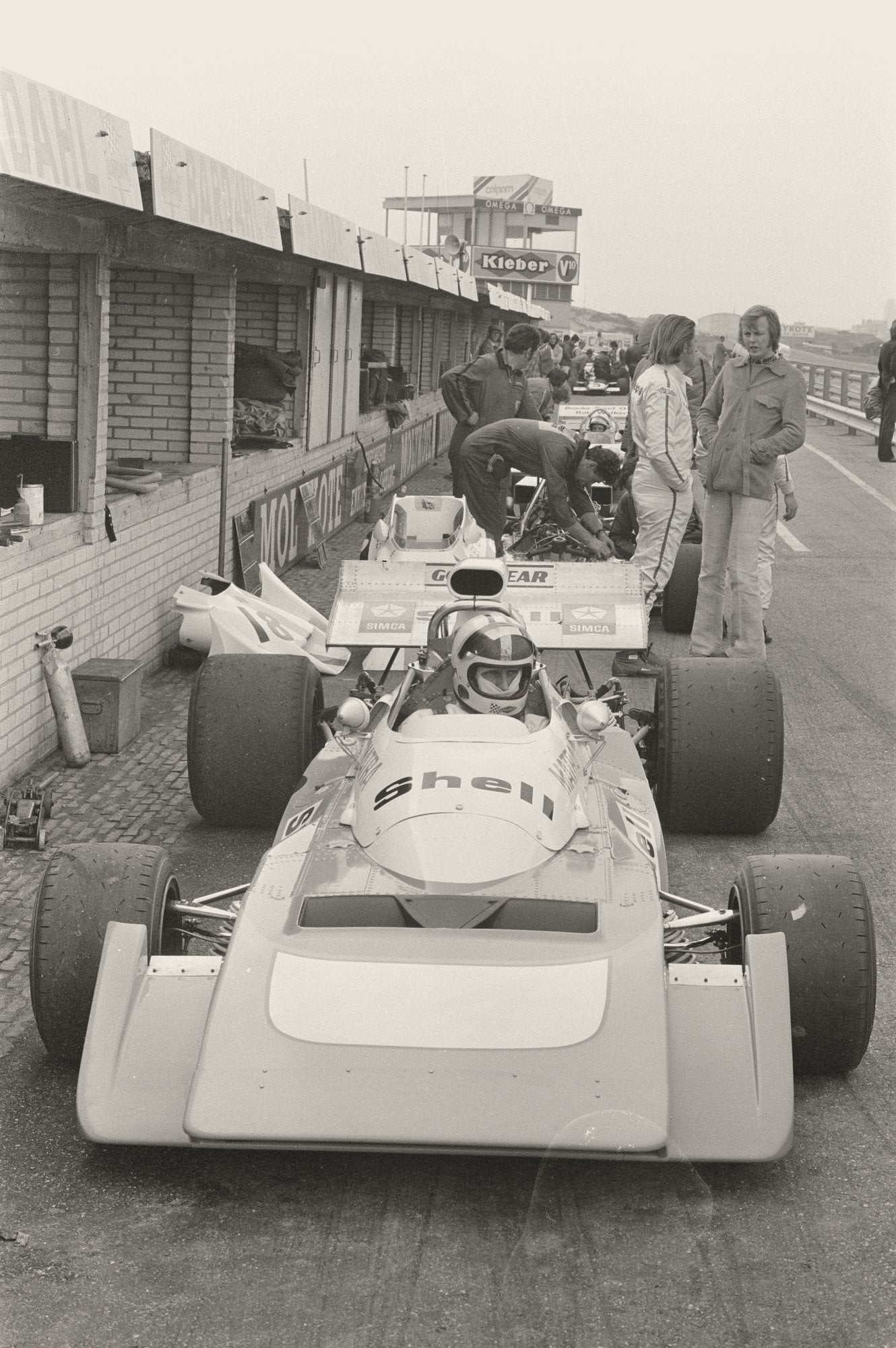
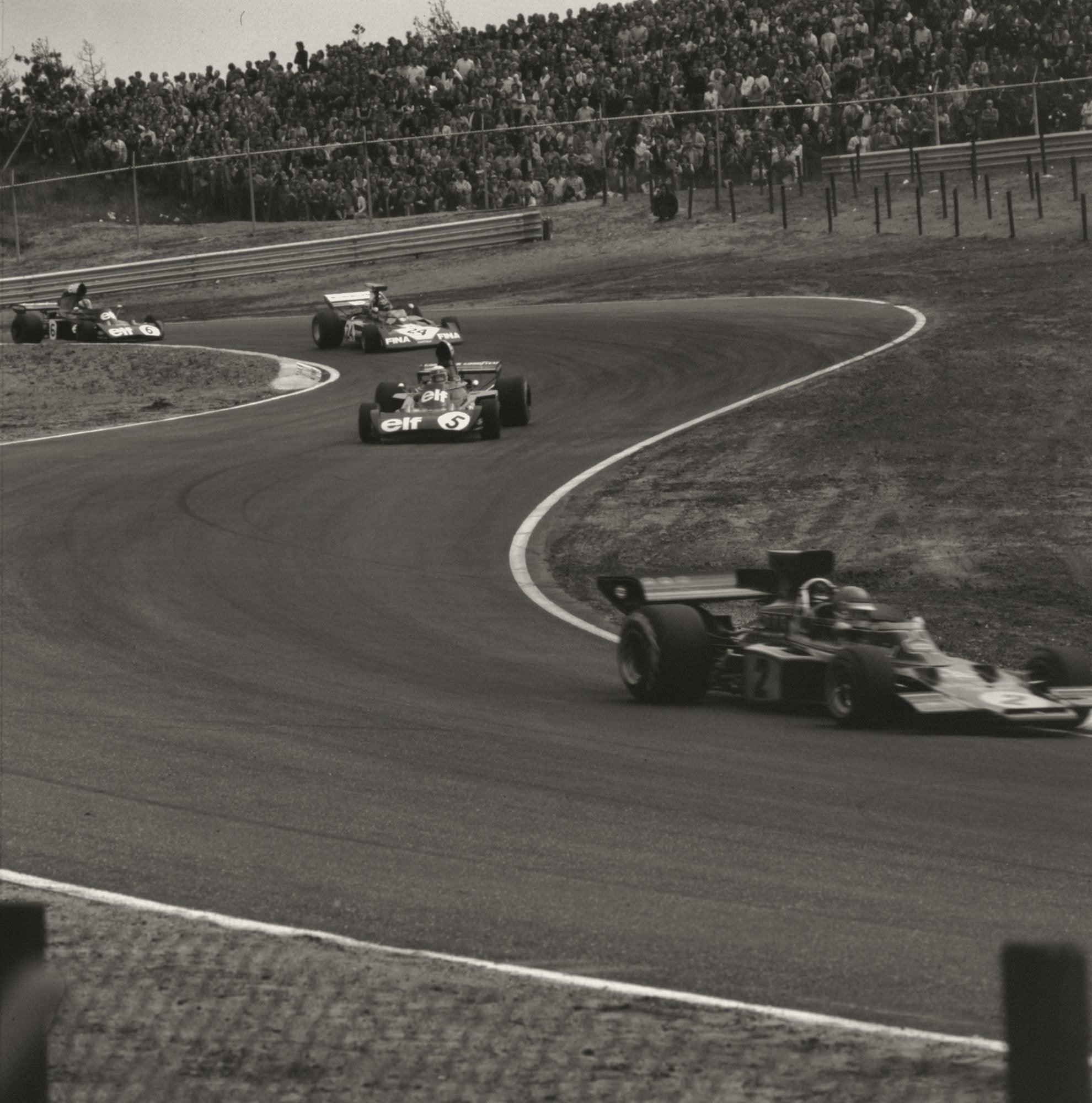
He drove through corners sideways, and he meant to. The back of the car would step out, the nose pointing somewhere that did not agree with the road, and he would hold the whole sliding mass on the throttle until it settled and drove out straight. Other men cornered on rails. He cornered on the edge of a spin and stayed there, lap after lap, as though the loss of grip were a place he had chosen to live.
It cost him. A car driven that way scrubs its tyres and burns whatever margin a careful driver keeps in reserve. It also drew people to the fences. There was a danger in watching him that a spectator could feel in the stomach, the sense that the car was about to leave him and never quite did. A still image of one of those moments looks like the instant before a crash. It never explains why the crash did not come.
They called him the SuperSwede. The name was half affection and half disbelief, the disbelief of people who could not work out how the car stayed on the road. For a run of seasons in the 1970s he was, by wide agreement among those who were there, the fastest man in grand prix racing. Whether he was also the most calculating, or the surest bet for a championship, is a different question, and the answer to it was no.
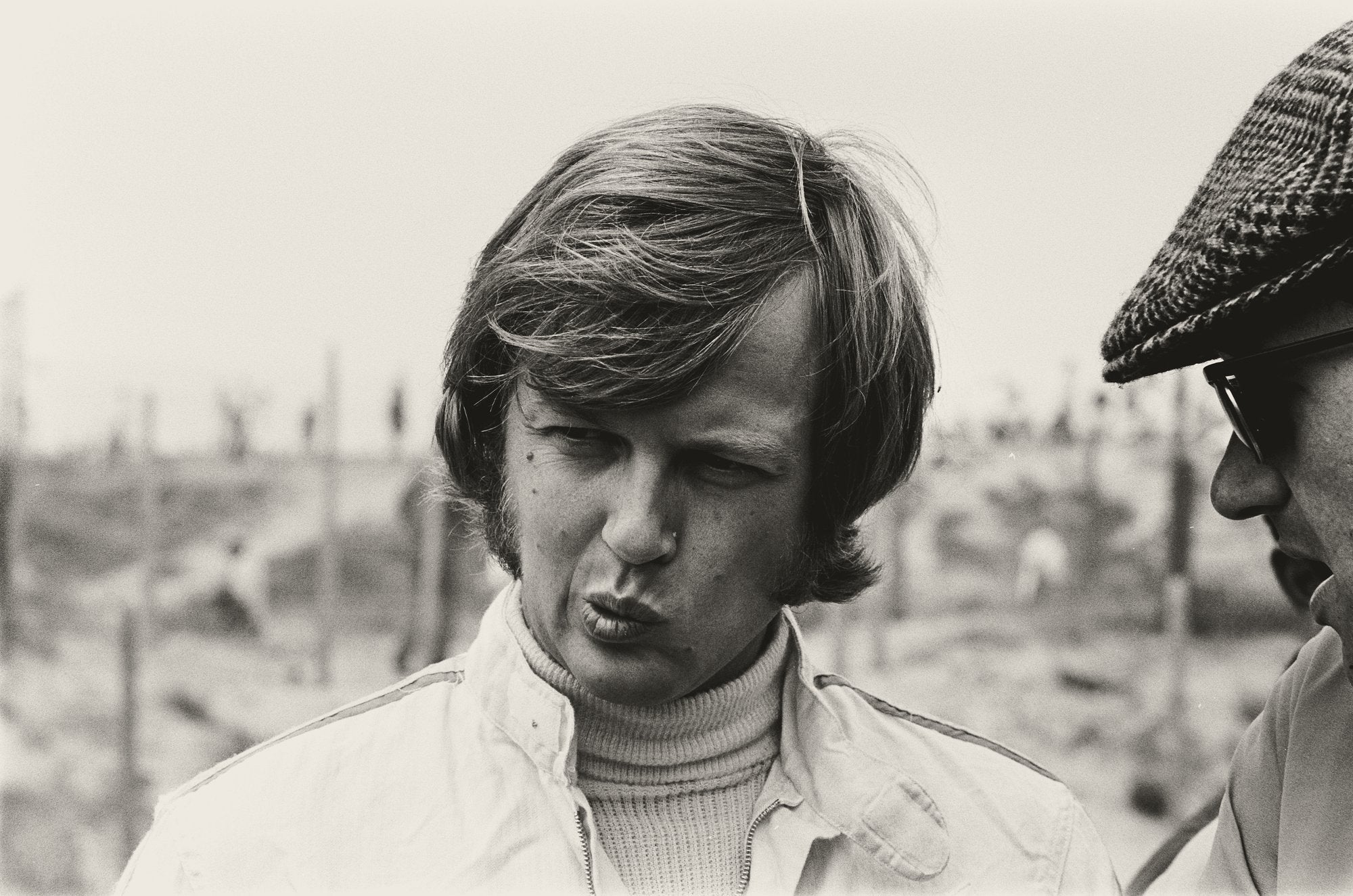
The Swede who came from outside
Sweden was not a grand prix country. It had no great tradition in the sport, no line of champions for a boy to follow, and the racing that mattered happened a long way south, in the warm afternoons of the old European circuits. Peterson came up from outside all of that, through the smaller categories, in the patient way that talent from the margins has always had to travel. Accounts of those early years differ in their detail, and it is not worth pretending to a precision the record does not support. What is agreed is that he arrived in the top flight already quick, already sideways.
By the early 1970s he was among the leading drivers of his day. A country that had produced no champions now had a man who looked, for a while, as though he might become one. He drew a following at home and abroad, the kind that forms around a driver who is exciting rather than merely successful. People came to see the style as much as the result. That distinction would follow him to the end.
Ten wins, and the word that hung on him
The bare figures are these. Ten Grand Prix victories, and two seasons finished as runner-up in the world championship. In none of them was he champion.
Set down like that, the record looks like a case of bad luck, and some of it was. A season can turn on a mechanical failure, on a rival with a better car under him across the year that counts. Peterson had fast cars and unreliable ones. He had years when the machine was not equal to the driver, which is the oldest complaint in the sport and, now and then, a true one.
There was more to it than luck. He was a driver built for the single fastest lap rather than for the long arithmetic of a championship, and the title goes, more often than not, to the man who does the arithmetic. The word that hung on him was nearly. Nearly champion, twice. The kind of driver whose speed everyone acknowledged and whose name never reached the top of the final table. There is a particular ache to that, and he seems to have carried it lightly, at least in public, which is its own form of composure.
The second driver
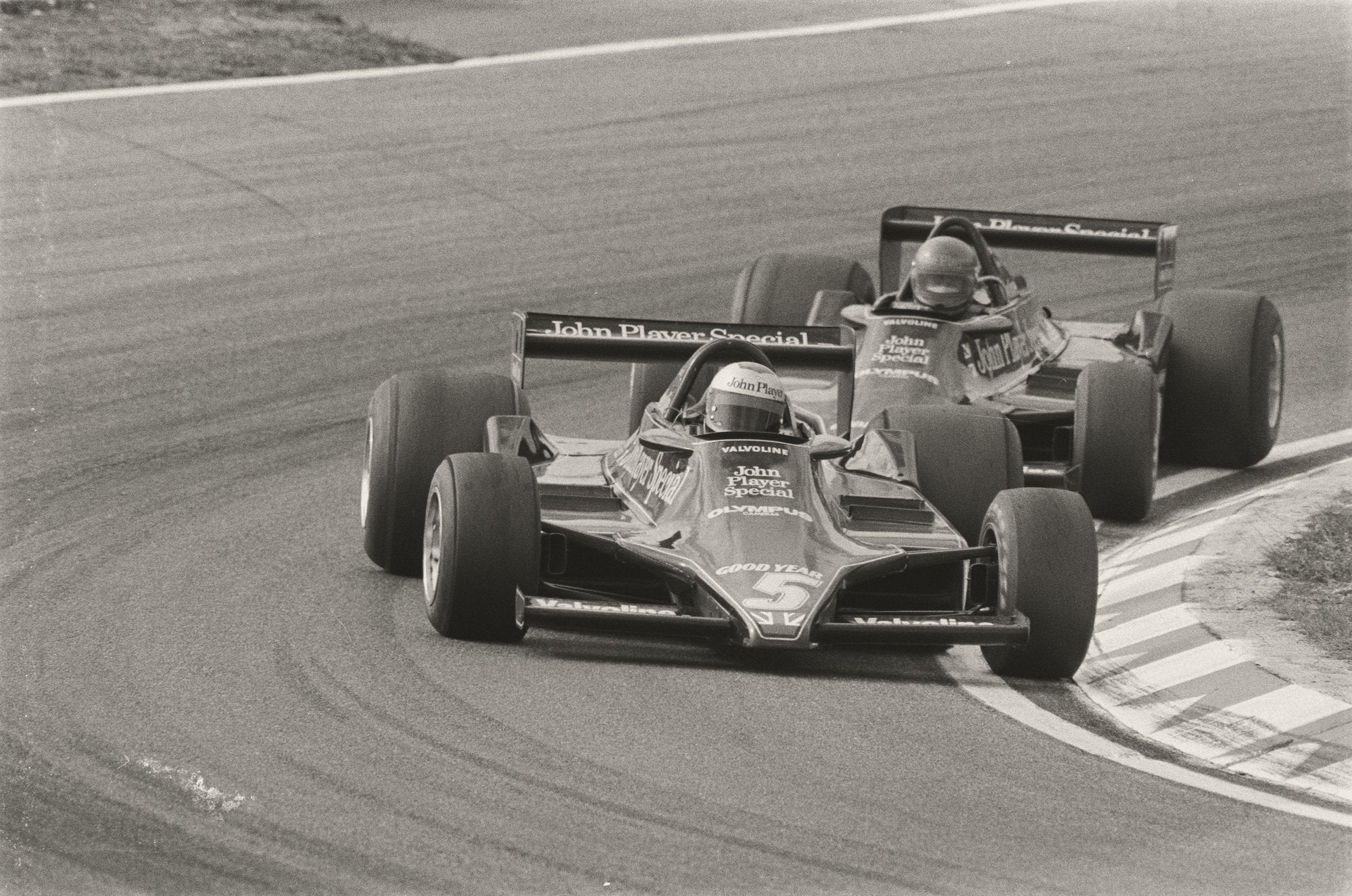
In 1978 he went back to a British team he had driven for years earlier, in the first phase of his career, before other seats and other colours took him away. He returned as the second driver. The first was his teammate, an American, and the team had built the quickest car of the year, a machine that made the front of the grid its own address.
The terms were plain, and Peterson kept them. He would support the American's run at the title and not contest it himself. On the road this was not a small thing to ask, because on many Sundays he was the faster of the two, and everyone in the pit lane knew it. To hold second when you have the pace for first, race after race, is a discipline that does not show up in any result. It shows up only in the races that did not happen, the overtakes not attempted, the gaps allowed to stand.
Team orders were no secret in those years, and no scandal either. A team ran two cars, and when a title came within reach it decided which of the two would chase it and which would fall in behind. The drivers accepted this as the shape of the job, though acceptance and ease are not the same thing. To be named the second driver was to take a role with a low ceiling built into it, and the men who took it were often those already sure of their own speed, asked to hold it back for a season. Peterson held it back all season.
He did it without visible complaint. Andretti went to the front of the championship and Peterson stayed behind him, close enough to win when winning was permitted, careful never to take the points the other man needed. It is a strange thing to be the quickest driver of a season and to spend that season making sure someone else becomes champion. He seems to have understood it as a matter of keeping his word, which is a plainer and older idea than sportsmanship, and harder.
Monza
The Italian Grand Prix that year was held, as it usually was, at Monza, in the royal park north of Milan, on a circuit whose long straights and fast curves carried more history than anywhere else on the calendar.
Monza draws a crowd that treats motor racing as something close to devotion. The circuit sits in an old ducal park, its trees older than the sport, and the noise of an Italian race weekend rolls through them in a way that people who have stood there tend not to forget. The cars come down the straights at the top of their speed and brake late into the corners, and the crowd leans toward every one of them. It is a fast place and, in that decade, an unforgiving one.
The start is where it went wrong. The field funnelled toward the first corners and somewhere in the middle of it the cars touched, and touched again, and the whole pack concertinaed into a chain collision. Peterson's car was caught in it. His legs took the worst of the impact.
Grand prix racing in the 1970s killed drivers with a regularity that is hard to convey now. Men who raced on Sunday were sometimes buried the following week, and the sport carried on, because carrying on was what it did. A bad accident was not, in itself, unusual. What followed this one seemed at first to belong to the better outcomes.
He was pulled from the car alive and conscious. His legs were badly broken, but broken legs were survivable, and there was surgery that night to set them. The early reports were not the worst kind. For some hours it was possible to believe that the fastest man of the season had been hurt and would mend, and would be back in a car by the spring, sideways through the corners as before.
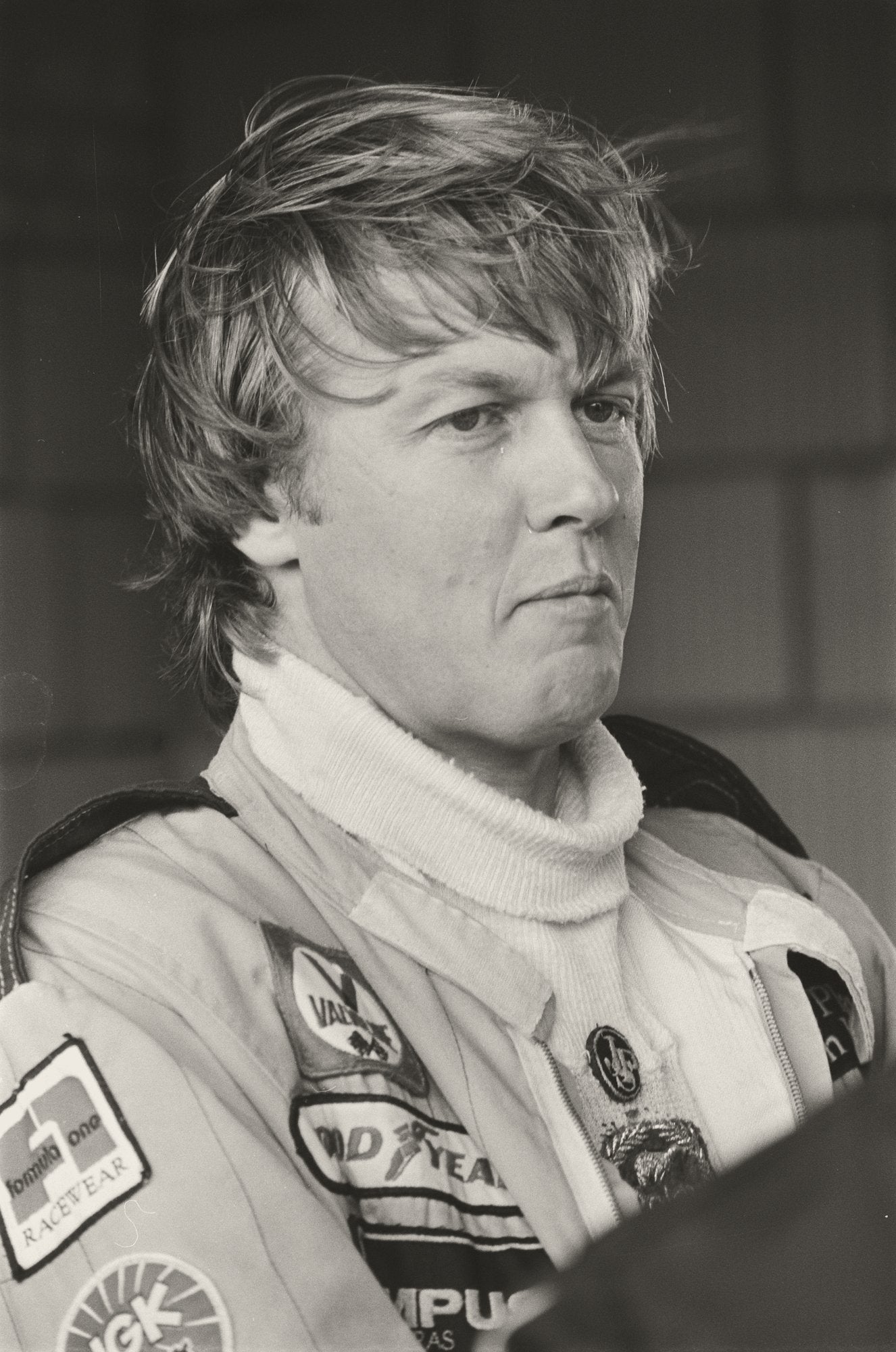
The morning after
He died the next day. The cause was not the crash itself but a complication that came after the surgery, an embolism, the kind of thing that turns a survivable injury into a fatal one without warning. He was thirty-four.
The championship was still being settled in those same days, and his teammate took it. Andretti became champion in a week that gave him nothing to celebrate, the title arriving folded inside a funeral. The picture people kept from that season was not of a car. It was of a man who had won everything the year had to give and could take no pleasure from it.
The sport did what it always did, which was continue. There were races still to run that season, and they were run. A death like this one, though, coming to one of the fastest and best-liked men on the grid, did not pass without a mark. The 1970s had been asking, more loudly each year, whether the game needed to cost this much, and answers of a kind came in the seasons that followed, slowly, and too late for him.
When the final standings were drawn up, Peterson's name sat second. He had scored enough, before Monza, to hold the place when the season closed without him. For the second time in his career he was runner-up in the world championship, and this time the result was completed in his absence, the points already banked, the position secured by a man no longer alive to defend it. Nearly, once more, and now permanently.
What stays
What stays is not the near misses. It is the choice he made in his last season, to be the faster man and the second driver at the same time, and to treat the contradiction as nothing more than a promise given and kept.
There is a temptation to make him a tragic figure and leave it there. The temptation is worth resisting. He was, by most accounts, a cheerful man who loved to drive and did it more beautifully than anyone of his time, and who happened to race in an era that killed drivers as a matter of course. The grief is real, but it is not the whole of him. The style came first, and it lasted longest in the memory of the people who saw it.
Among the drivers of his time he is remembered with a warmth that the record alone would not explain. Those who raced against him spoke of him, once he was gone, as the quickest of them and the least guarded, a man without the hard edges the job tended to grow. Some of that is the softening that death performs on memory. Most of it, by the weight of the accounts, was true while he lived.
Somewhere there is a print of him with a single number on it, ten, the wins from a career that never carried a title to match. Most who pass it will read ten as a success, which it was, and miss the quieter thing the number keeps, which is all that did not happen beside it.
The people who watched him do not, in the end, talk much about the standings. They talk about the way the car moved, the back of it stepping out at the entry to a corner, the long held slide, the odd calm of a man working at the far edge of grip as though it were the middle of the road. They still cannot say how it stayed on the track. Neither, if the accounts are to be believed, could he.