
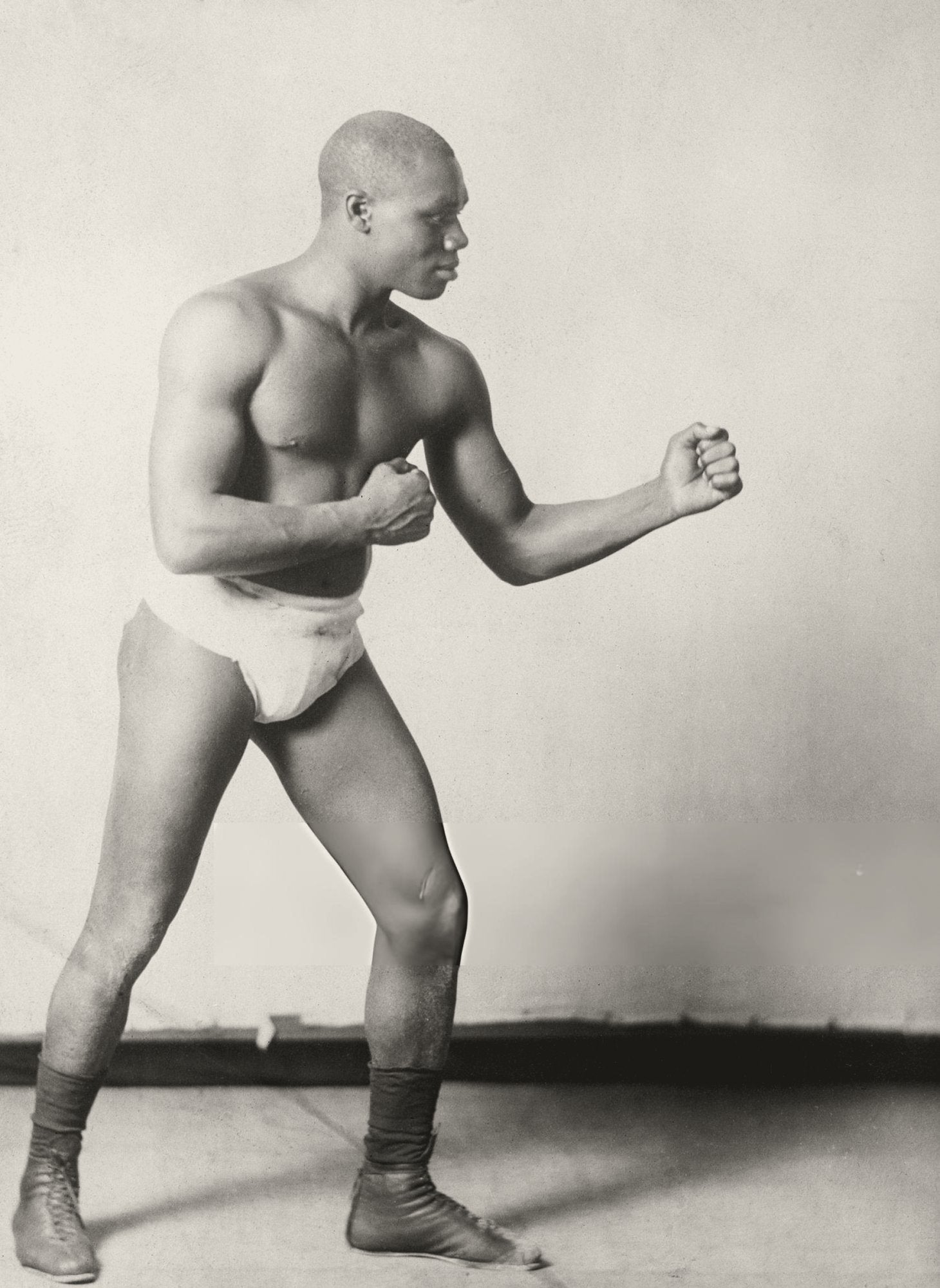
Zero. In something close to twenty-five years of professional boxing, Sam Langford was matched for a world title exactly that many times. Never. He was, by an agreement that has only hardened with the decades, one of the best fighters alive for most of that stretch, and the sport arranged itself so that he would never once be allowed to prove it where it counted.
The number sits there and refuses to make sense. A man good enough to trouble anyone, in an age with several titles going and a champion in every division he passed through as he grew, and not one night with a belt on the line. It is the kind of figure that looks like a slip of the typesetter's hand in the record book. It is not. It is the record.
A small man in a big man's trade
He was born around the turn of the century's corner, in a small place in Nova Scotia, and he came south as a boy to the fight clubs of New England. What he was, first, was small. He started among the lighter men and won there, and then he kept climbing through the weights, not because he had grown but because the money and the reputations sat higher up. By the time he was in with the heaviest men in the world he was conceding pounds by the stone and long inches of reach, a squat, wide figure looking up at the men he was about to hurt.
There were more weight divisions in play than the record now bothers to separate, and he moved through several of them. In the lighter classes he stood across from men who did hold titles, or would, and troubled them badly; some of the best small men of the day wanted no more of him than they were forced to take. The real money and the real names sat up among the heavyweights, and that is where a man who could punch like that was pulled, whatever the scales said. So he went up, and stayed up, and made a working life out of being the most dangerous small man in the largest rooms.
He hit far harder than his size had any business allowing. That much every account agrees on. He also understood the craft, the older word for it was ring science, better than almost anyone he met: where to stand, and how to make a bigger man miss and pay for the miss. Power gets remembered because it is easy to describe. The other thing, the patience and the reading of another man's intentions, is what kept him upright among giants for twenty years.
The line nobody drew on paper
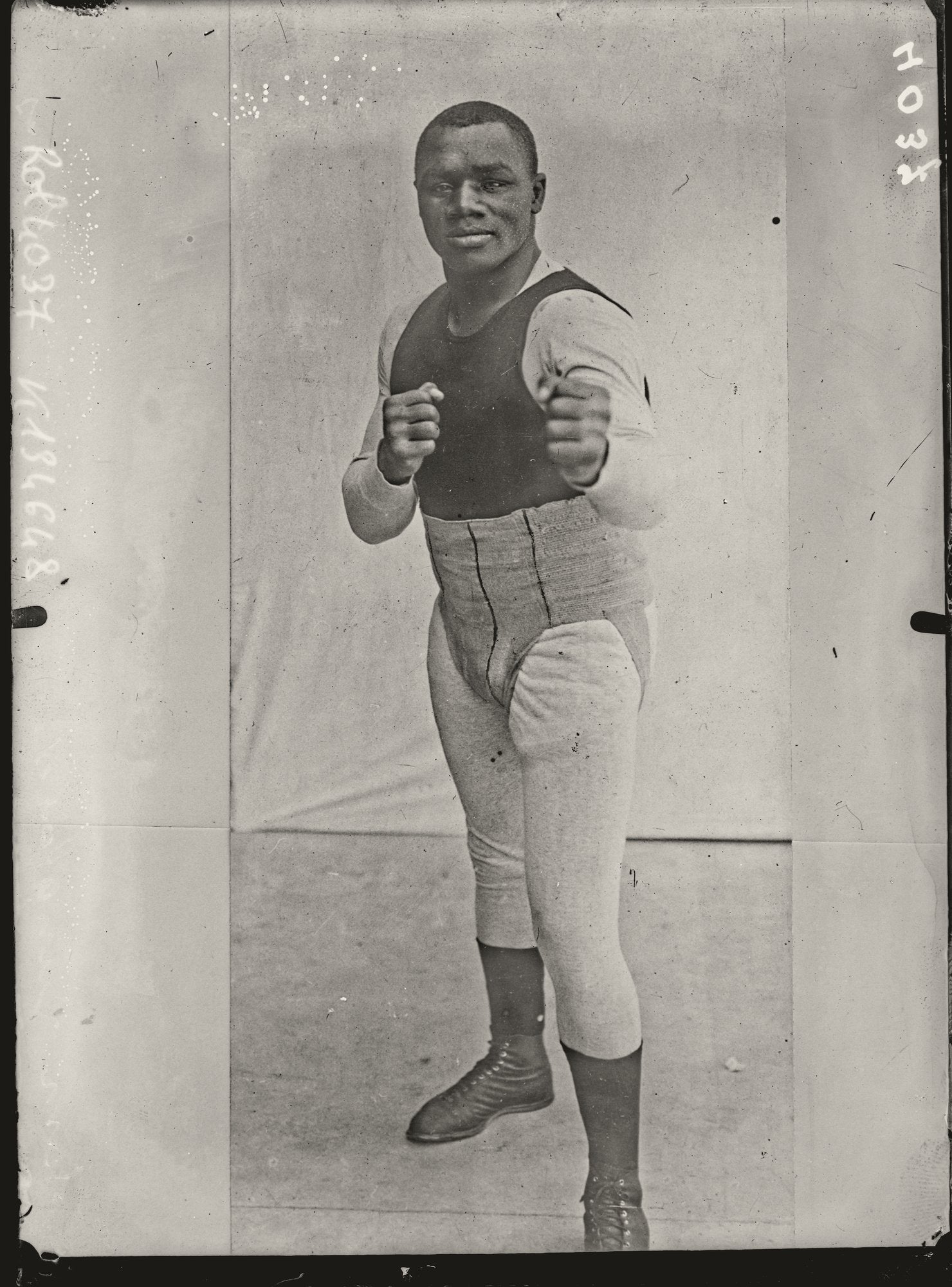
There was a rule over all of it, and it was never written down. They called it the colour line. A white champion was under no obligation to defend his title against a Black challenger, and most simply declined, and the declining was thought respectable. It was possible, in that world, to be the finest heavyweight on earth and to be told that the championship was a private matter that need not concern you.
The line was not a whisper. Champions stated it plainly, as a condition of doing business, and the public largely took it for the order of things. There was even a crude commercial logic beneath the prejudice. A champion who fought Langford risked his title and his drawing power against a man almost nobody could beat, and gained, if he won, the modest distinction of having beaten someone he was expected to beat. The safe course was to look past him, and the safe course was the usual one.
Langford spent his whole career on the wrong side of that line. The shape of it has a particular twist. For a few years the heavyweight title was held by a Black man, Jack Johnson, the one fighter who had punched his way through the barrier and taken the crown outright. Langford and Johnson had met once, early, before either name meant much; the record has it as a points defeat for Langford across fifteen rounds, against a man taller and heavier than himself. Once he wore the belt, the obvious and dangerous rematch was there to be made. He did not make it. The single man who might have opened the door found it more sensible to keep it shut, and it is hard to blame him entirely: against Langford there was a title to lose and not a great deal to win.
So the barrier held from both sides, and the best years went by.
Fighting the same men, over and over
What is there to do, if you are that good and that boxed out? You fight whoever will pay. Langford fought an enormous number of times; the exact total is disputed and, honestly, unknowable, because the bookkeeping of the era was loose and small-hall results often went down wrong or not at all. Hundreds is the safe word. He fought across the United States, over in England, and as far off as Australia, turning up wherever a promoter would meet his price, climbing in against local hopes and anyone else on the bill. Australia took him in for long stretches; when the American rooms grew cold to him he crossed the water and fought where the crowds were still curious. A working fighter of that kind kept no settled home. He went where the next purse was, and the one after that, for years on end.
Mostly, though, he fought the other men in his own position. There was a small group of Black heavyweights shut out exactly as he was, and with the champions closed to them they had almost nobody to fight but each other. So they did, again and again, the same handful of names circling through the same rings for years, until no one could keep a clean count of who had beaten whom and how many times. Two of them might share a dozen meetings or more; the tallies differ from source to source. None of it counted on paper. Inside that closed world it was very nearly the whole of the sport. They wore each other down for purses that shrank as their names aged.
To fight that often is to make the ring an ordinary workplace, clocked into most weeks of most years, the body worn down and patched up between. Nobody does that for glory. They do it because it is the trade they have, and because the doors to anything better are bolted from the outside.
There is something in the arrangement that the eye slides off. These were among the finest heavyweights of the age, and they spent their primes beating one another in front of crowds who would never see them measured against the men who wore the belts. The best fight of a given year might have been two of them, in a hall somewhere, settled and forgotten by the following week.
The eyes
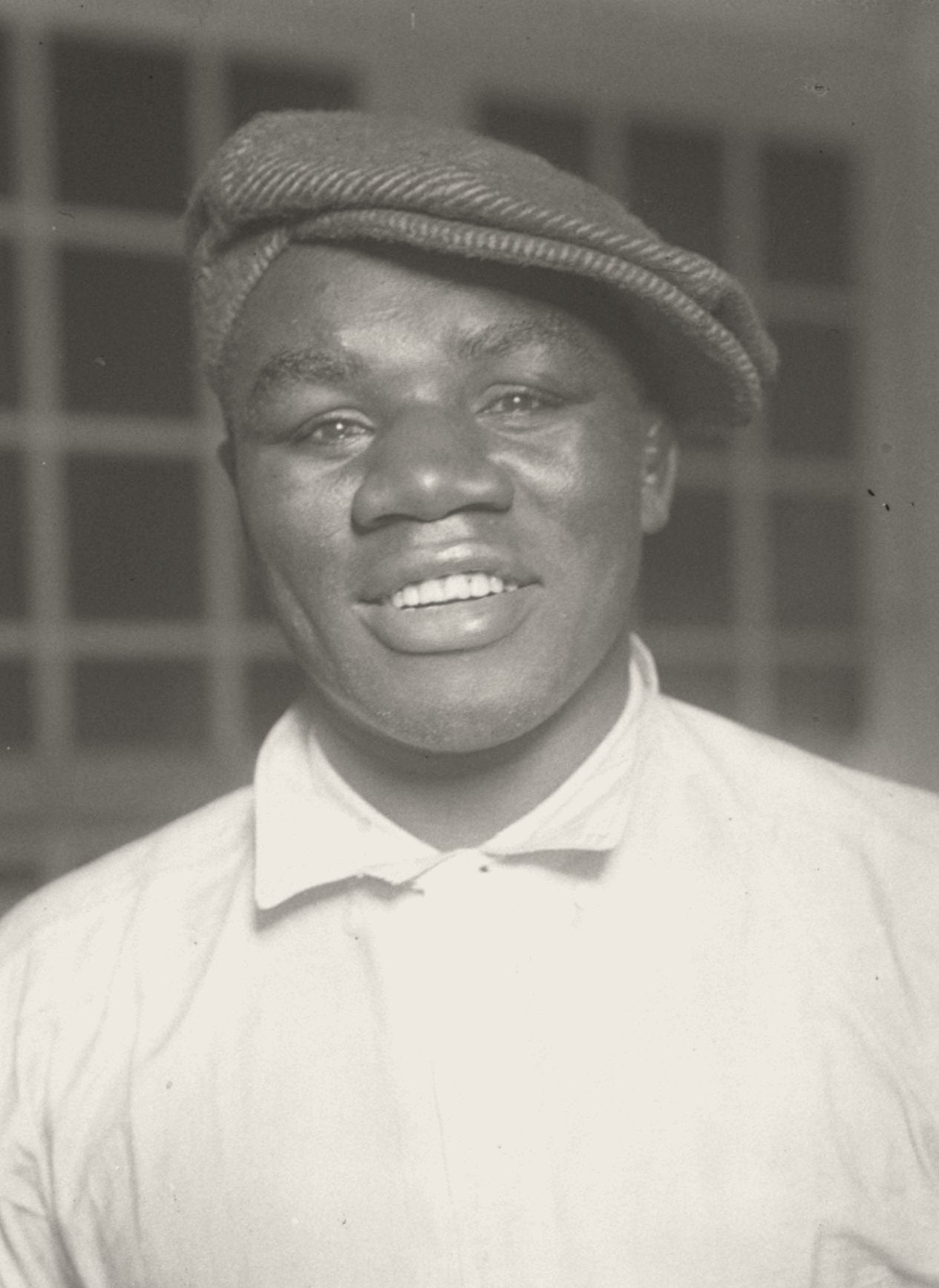
The body goes in this trade, and Langford's went first in a particular place. His sight began to fail while he was still fighting, one eye dimming toward useless, then the other clouding after it. A boxer works off what he can see coming; take the sight away and the whole thing should fall apart. His did not, or not for a long time. He went on getting into the ring half-blind and then nearly blind, working by sound and by the deep habit of thousands of rounds, feeling for a man he could no longer properly make out and hitting him all the same.
It cannot have been safe and it was surely not wise, and there was no one placed to stop it, because the fighting was the living and the living had to come from somewhere. He kept at it into the 1920s, well past the point where a man with choices walks away. His last bouts fall in the middle of that decade, against opponents he could barely tell from the ropes.
Gone, and then found
Then he stopped, and the sport that had used him let him drop out of sight completely. There is a stretch of years where the trail simply goes cold. Nobody set down how the working life ended; it seems to have just stopped.
He surfaced again in the 1940s, and only because someone went looking. A newspaperman tracked him to a rooming house, blind by then and living on almost nothing, and wrote what he found. The piece did the one thing the sport never had: it brought him help. Readers who had never watched him fight, some of whom had surely never heard the name, sent in what they could, and it was gathered up and handed to him, and it was enough to keep the last part of his life in some comfort. The fund that grew out of it was modest set beside the money he had once pulled into arenas, and all of it came from people who owed him nothing. By the accounts of those who saw him then, he took the whole reversal cheerfully, an old blind man glad enough to sit and talk about fights the world had let itself forget. He lived on into the 1950s.
Where they finally put him
The odd part is where history landed. The men whose business it became to rank fighters, to argue the best of all time in the magazines and later the books, kept circling back to him. One of the founders of that whole ranking trade placed him at or near the very top of the heavyweights, title or no title, and plenty have agreed since. He is a fixture now on the lists of the finest boxers who never held a belt, which is an odd country to be king of.
Somewhere there is a print of that number, the zero, the count of title shots he was granted across a quarter of a century, set down plainly and reading like a misprint that no correction will ever reach. It is a hard thing to keep on a wall, and a harder thing to explain, and it says more about the sport of that day than any belt he might have won would have said.
The men he fought so many times, the others locked out alongside him, are mostly gone from the record now, a few names and a scatter of disputed results between them. They held their own championship in halls where nobody was keeping a proper score, and settled it among themselves, over and over, until they were too old or too blind to answer the bell. Langford was the best of them, most likely. The count is disputed. It usually is.