
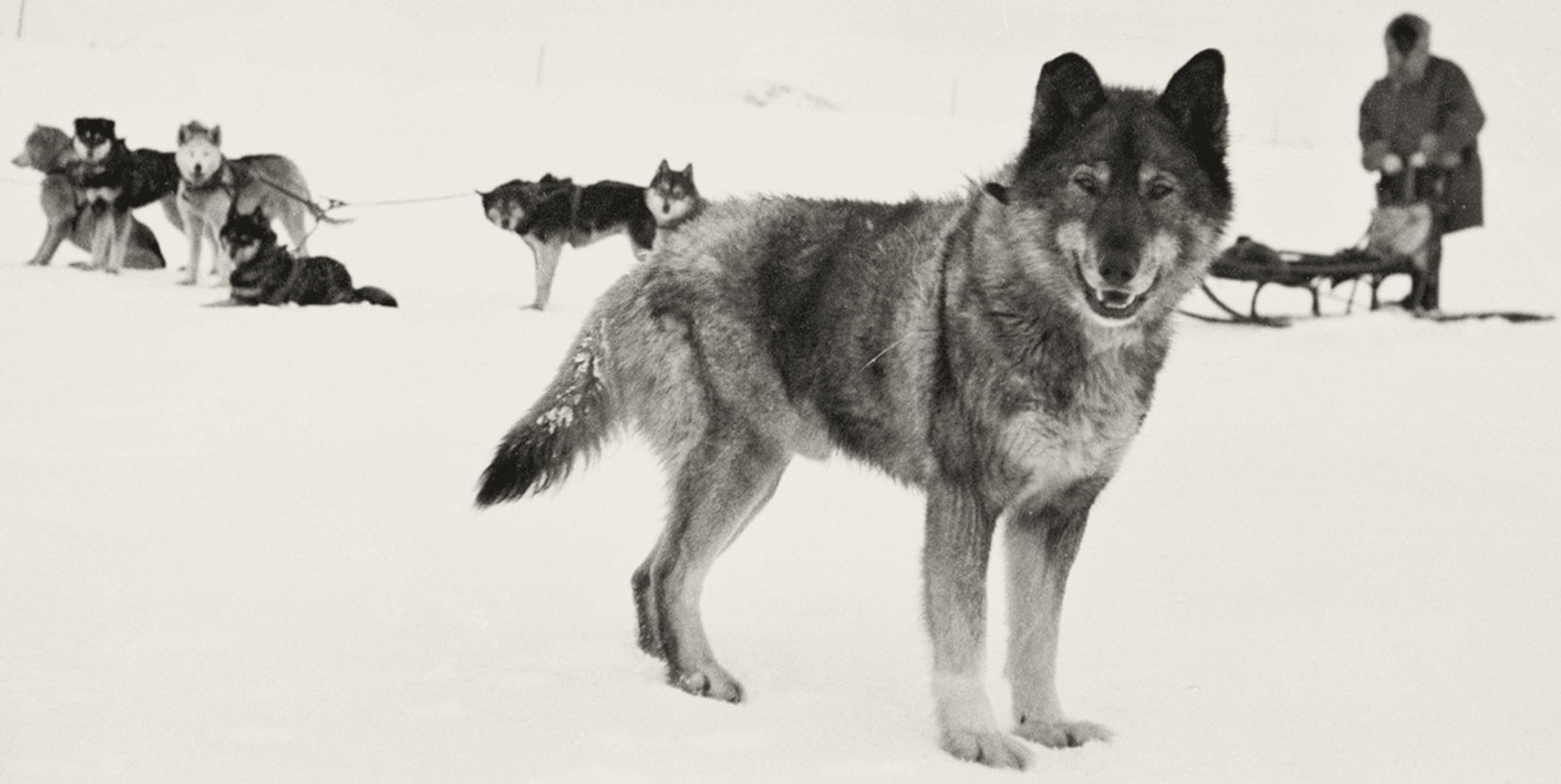
The approximate distance in kilometres covered by Leonhard Seppala's team during the 1925 serum run, including the return leg. It is more than three times what any other team in the relay covered.
Nome, January 1925
Diphtheria was diagnosed in Nome, a town of around fourteen hundred people on the Bering Sea coast, with a substantial Alaska Native population who had no immunity and among whom the mortality rate would be severe.
The town's antitoxin had expired. The nearest usable supply was over a thousand kilometres away.
Why not a plane
The port was iced in until summer. The aircraft available in Alaska at the time were open-cockpit biplanes with water-cooled engines, and the pilots capable of flying them in those conditions were not in the territory. The risk of losing the serum entirely was judged unacceptable.
The relay
Serum was railed to Nenana, and from there a relay of about twenty mushers and one hundred and fifty dogs carried it in stages, running through the night in temperatures around minus fifty.
Seppala and Togo
The longest and most exposed section was given to Leonhard Seppala, generally regarded as the finest musher in Alaska. His lead dog was Togo, a Siberian husky then twelve years old, which is elderly for a working sled dog.
Togo had been a small, troublesome puppy. Seppala had given him away once, and he had escaped and returned.
Norton Sound
The route Seppala chose crossed the sea ice of Norton Sound rather than going around it, saving roughly a day.
Sea ice in a storm is the most dangerous surface a team can be on. It shifts, cracks and can separate from the shore with the team on it. Conditions during the crossing were around minus forty five with gale force wind.
The crossing was made in darkness with Togo navigating. At one point the floe they were on parted from the land ice and Seppala's account describes Togo taking the team across a gap.
The statue
The final stage of about fifty five kilometres was driven by Gunnar Kaasen, whose lead dog was Balto. Kaasen reached Nome at dawn with the serum, in front of the press.
Balto became a national celebrity and has a statue in Central Park. Togo received a fraction of the attention.
This is not a criticism of Balto, who also ran through a blizzard. It is a note about how credit is distributed, which tends to follow the last person through the door.
Why it goes on a wall
Because the hardest and most dangerous part of the job was done by a twelve year old dog that nobody built a statue for.
The longest leg, and someone else got the statue.