
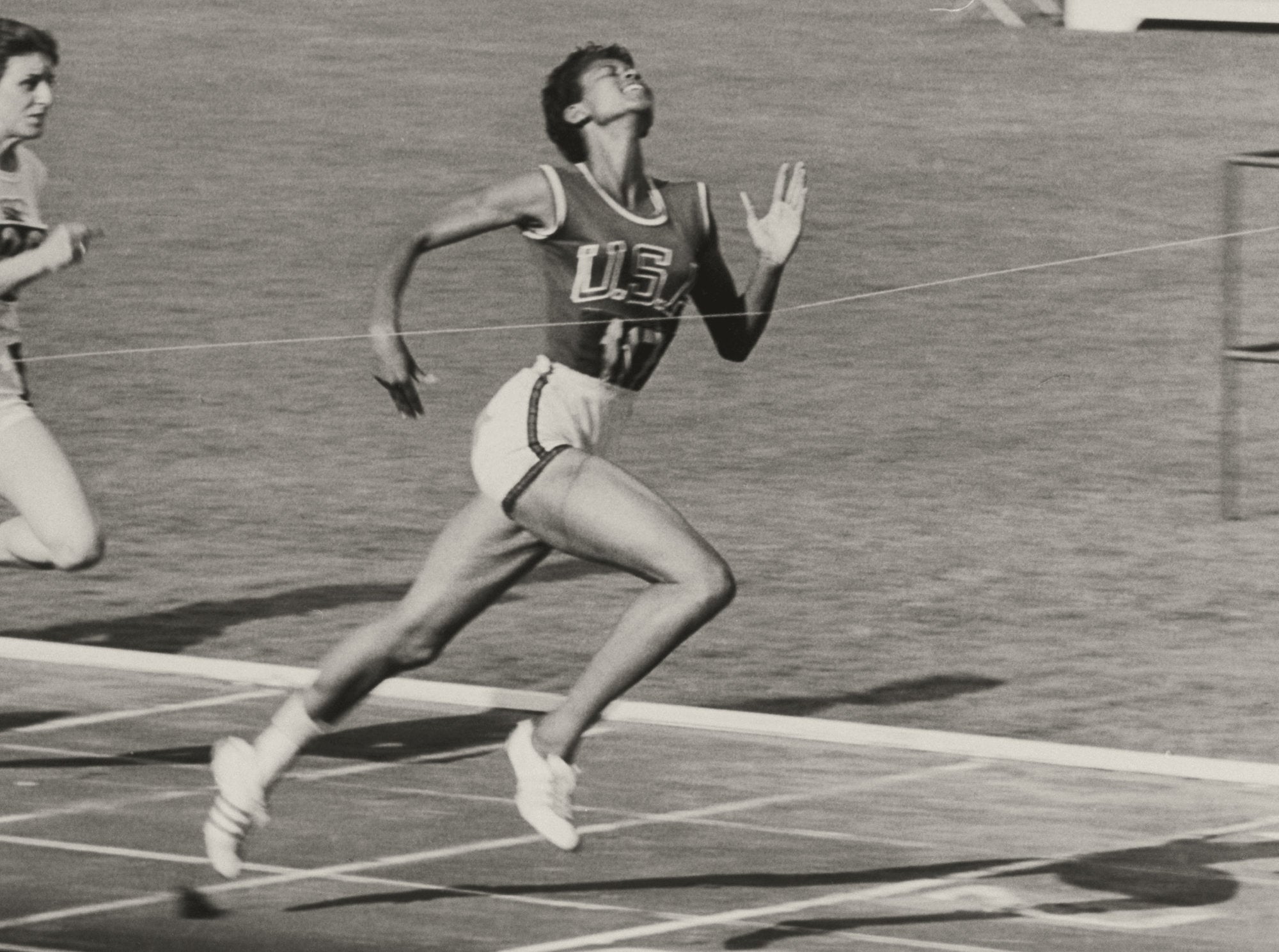
Three gold medals at a single Olympic Games, won by a woman who had worn a leg brace into her adolescence.
The childhood
Wilma Rudolph was born in 1940 in Tennessee, premature and small, the twentieth of twenty-two children in a blended family. She contracted scarlet fever, double pneumonia and then polio.
The polio damaged her left leg. The medical opinion given to her family was that she would not walk normally.
The treatment
Segregation meant the nearest hospital that would treat her was in Nashville, roughly fifty miles from home. Her mother took her there by bus twice a week for two years.
Between visits, the family did the work. Her siblings were shown how to massage the leg and did it in shifts, several times a day, over years.
She wore a steel brace, then a corrective shoe, and discarded both at around the age of twelve.
Melbourne, then Rome
At sixteen she was in the United States team at the 1956 Melbourne Games and won a bronze in the 4x100 relay.
In Rome in 1960 she won the 100 metres, the 200 metres, and anchored the relay, taking the baton after a poor exchange and running down the field to win. Three golds.
She was the first American woman to win three athletics golds at one Games.
Why Rome mattered beyond the results
Rome was the first Games with substantial international television coverage. That changed the scale of what an Olympic performance meant. Rudolph was watched across Europe and America and became, briefly, one of the most recognisable athletes in the world. The Italians named her the Black Gazelle, the French the Black Pearl.
Clarksville
Her home town planned a homecoming parade and banquet. The town practised segregation and the events would have been segregated too.
Rudolph said she would not take part unless both were open to everyone, and they were. They are generally described as the first integrated public events in the town's history.
Why it goes on a wall
Because the medical prognosis and the result are difficult to hold in the same head. A child who was not expected to walk unaided became, at twenty, the fastest woman on earth, in front of the largest audience the Games had ever had.
Three golds, and a brace she took off at twelve.